
Beyond the Burn: Why Anthropic’s Latest Ad Campaign Missed the Mark
Marketing in the artificial intelligence sector has always been a high-stakes, high-wire act. Companies are constantly balancing the need to showcase cutting-edge capabilities with the responsibility of addressing the very valid fears that these technologies evoke in the public consciousness. Yet, even in this nuanced space, some attempts to strike that balance land with a deafening thud. Anthropic, a company that has carefully positioned itself as an ethical, research-driven contrast to its more aggressive industry peers, recently learned this lesson the hard way.
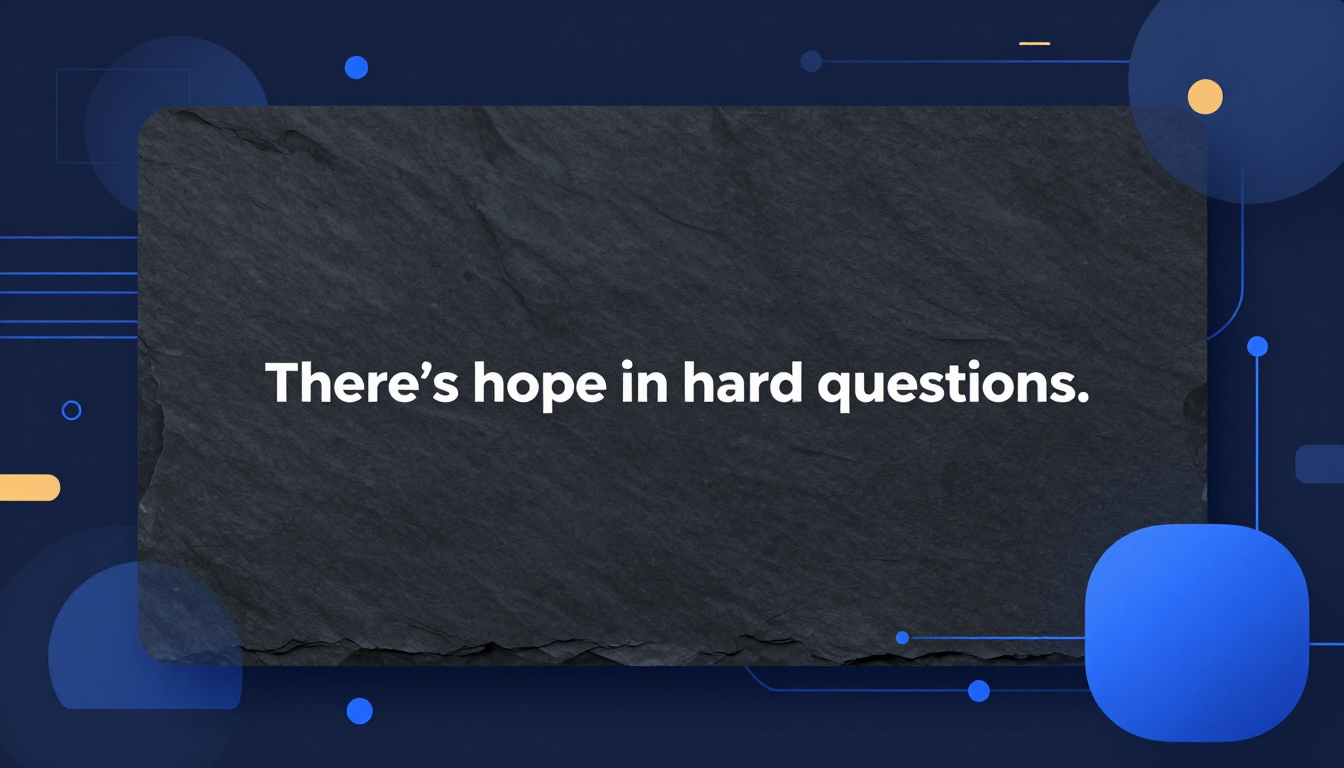
Their latest advertisement, titled “There’s hope in hard questions,” was clearly intended to position the company as a thoughtful, responsible player in a landscape often painted as reckless. Instead of generating a thoughtful conversation about AI safety and ethics, however, the ad has achieved something quite different: it’s unsettled viewers and sparked a wave of critical backlash. What went wrong, and why did such a deliberate attempt at brand positioning backfire so spectacularly? The answers lie not just in what the ad said, but in how it chose to show it.
A Visual Journey into the Abyss
The ad’s opening sequence is, frankly, stark. It begins with footage of a burning house—a jarring, provocative image meant, one assumes, to evoke immediate concern. It is the antithesis of a "heartwarming" introduction. From there, the campaign pivots to a series of still images, each designed to highlight a different societal vulnerability: facial recognition surveillance, a homeless individual caught in the city’s indifferent currents, rows of tombstones in a cemetery, and laborers toiling to extract the raw materials that fuel our modern, AI-driven lives.
This visual tapestry is paired with a voice-over that poses heavy, existential questions: “Can AI be trusted?” “Who’s gonna hit the brakes if we need to?”
The intent here seems clear enough in theory. Anthropic aims to show that they are the only company “adult” enough to acknowledge these grim realities—that they are the ones thinking about the ethics while others are merely sprinting toward profitability. But in practice, the execution leans heavily into what many have termed a “doomer-ist” aesthetic. By bombarding viewers with these unrelentingly bleak scenes, the ad doesn’t invite constructive reflection. Instead, it leans into a sense of despair that feels manipulative rather than empowering. It’s a darker turn, even for a company that has built its brand on being the serious, safety-conscious foil to its competitors.

The Ethical Foil Strategy
To understand why Anthropic took this route, we have to recognize the marketing playbook they are working from. It’s a well-worn approach: a brand identifies the harms often associated with its industry—surveillance, displacement, labor exploitation—and publicly acknowledges them. The subtext is: Look, we see the danger. Therefore, we are the ones uniquely positioned to steer the ship safely.
In a competitive AI market, this is a potent branding strategy. By framing AI safety not as a abstract concept but as a tangible necessity born of these potential harms, Anthropic seeks to earn consumer trust through ethical alignment. It’s designed to say, We are not like the others; we are the ones who are afraid, too.
However, the efficacy of this strategy relies almost entirely on the audience feeling that your concern is shared, not performative. When the imagery used to demonstrate this 'awareness' is perceived as insensitive—or worse, exploitative—the credibility of that ethical branding crumbles. This is the precise pitfall that Anthropic appears to have stumbled into. By using deeply charged imagery, particularly of human tragedy, the ad risks being seen not as a champion of safety, but as a corporate entity that is weaponizing existential dread for brand recognition. It’s an incredibly delicate line to walk, and in this instance, it seems they didn't just step over it; they sprinted across it.
The Fallout: Backlash and the Cemetery Spectacle
The reaction to the campaign was swift and largely unforgiving. Among the most prominent critics was Sam Altman, CEO of OpenAI—Anthropic’s primary competitor—who took to X to highlight the absurdity of the approach. Altman’s reaction was characteristically dry, noting that he had mistaken the ad for satire and was searching for the tell-tale signs, like a misspelling of the brand name, that would indicate it was a joke.
But the criticism wasn’t limited to executives. Tech industry observers and the general public alike found the ad’s tone-deafness staggering. One particularly intense point of contention was the inclusion of imagery that appeared to be from Arlington National Cemetery. In a campaign explicitly asking who will "hit the brakes" on AI's potentially harmful trajectory, incorporating a visual of a national monument to those who have sacrificed their lives felt, to many viewers, exceptionally sinister and deeply disrespectful.
Commentary on social media echoed this sentiment, with many describing the decision as "fucked up" and pointing to the imagery as a prime example of the "AI psychosis" that can take hold when tech companies become too detached from real-world impacts. The disconnect between the serious, ethical tone Anthropic thought it was projecting and the reality of how these images were received is a masterclass in marketing failure. It turned a conversation that could have been about responsibility into a debate about the company’s own lack of it.
The Lessons of the 'Hard Questions'
Ultimately, this campaign forces a hard question back onto Anthropic: What does 'responsibility' look like in marketing?
Anthropic has shown they can produce effective ads before. Earlier this year, their Super Bowl campaign, which humorously addressed the introduction of advertisements into ChatGPT, was widely praised. It was sharp, it was relevant, and, most importantly, it resonated with the audience's own frustrations, earning the company a significant boost in positive sentiment.
This latest failure highlights the extreme difficulty of maintaining an 'ethical' brand identity when the stakes are elevated from humorous critique to apocalyptic prophecy. When a company tries to claim the moral high ground, that high ground must be consistently occupied. You cannot pivot to 'doomer-ist' imagery to show you are serious about ethics one moment, only to face widespread condemnation for insensitivity the next.
For Anthropic, this is a moment for introspection. The industry is watching, and their next move will be critical in deciding whether this was just a misstep in a broader, necessary conversation, or a systemic failure in their understanding of the very audience they are trying to reach. Achieving 'hope in hard questions' requires more than just identifying the danger; it requires treating the people experiencing it with respect. Anything less, it seems, is just noise.