
Why Your Campaign Structure Matters More Than Your Bids
Here's something most PPC managers learn the hard way: you can have the best keywords in the world, but if your campaign structure is a mess, you're setting yourself up for wasted spend and mediocre results.
I've seen it too many times. Someone dumps fifty keywords into one ad group, writes three generic ads, and wonders why their quality scores are tanking. The answer isn't a higher bid — it's better organization.
Campaign structure is the backbone of any successful PPC effort. It determines how your ads get matched to search queries, how relevant your messaging feels to potential customers, and ultimately whether you're paying for clicks that convert or just burning budget on impressions that go nowhere.
The good news? Getting it right doesn't require a PhD in marketing. It requires discipline, a clear framework, and the willingness to resist the urge to lump everything together because "it's easier."
It's not easier. It's just comfortable. And comfort is expensive in paid search.

The Hierarchy: Campaigns, Ad Groups, Keywords, and Ads
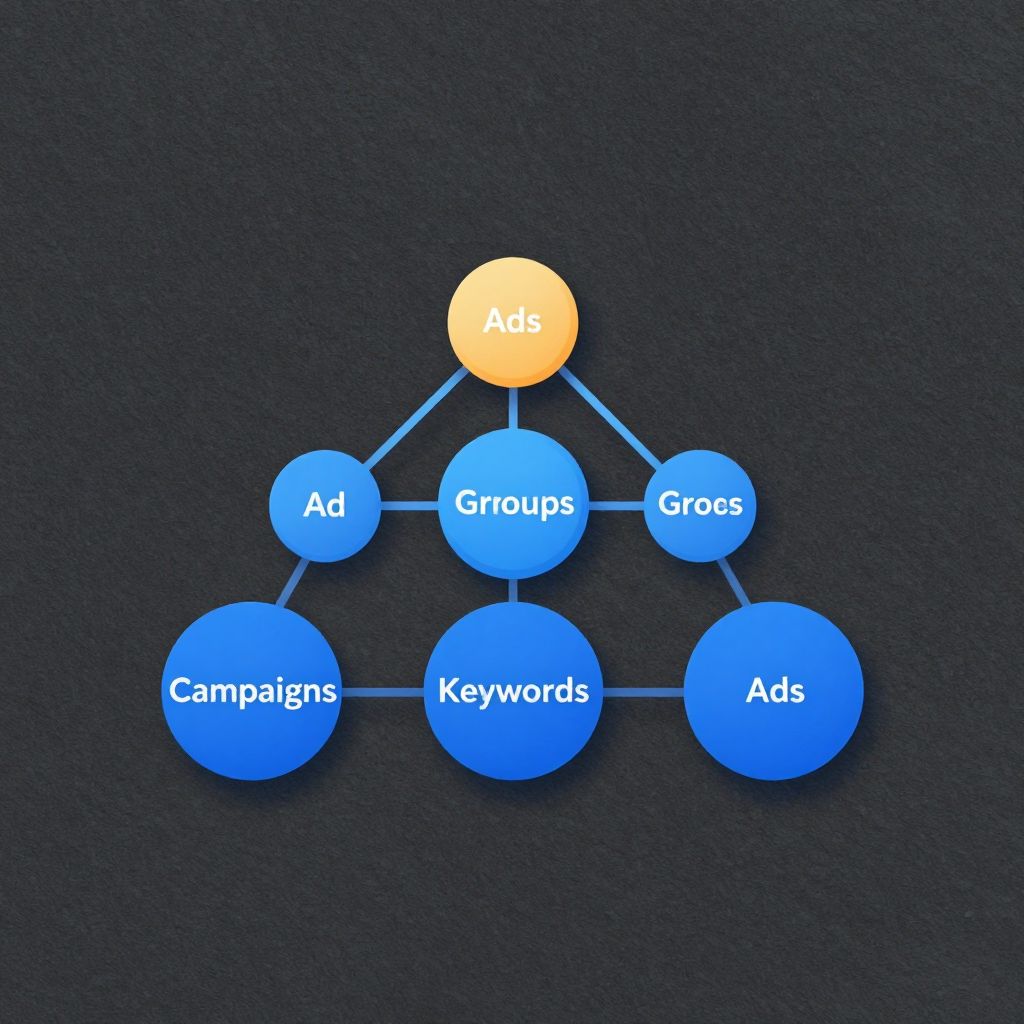
Every search campaign follows the same basic hierarchy, whether you're running Google Ads or Microsoft Advertising:
Campaigns sit at the top. They hold your budget, your schedule, and your high-level targeting settings like location and language.
Ad groups live inside campaigns. Each ad group contains a set of closely related keywords and the ads that will serve for those keywords.
Keywords are what trigger your ads. They're the bridge between what someone types into a search engine and what they see when they click your ad.
Ads are the actual creative — headlines, descriptions, extensions. They need to speak directly to the intent behind each keyword.
The critical insight here is that relevance compounds as you go down this hierarchy. A campaign can be broadly about "plumbing services." An ad group should narrow that to something specific like "emergency drain cleaning." And your ads need to echo exactly what the searcher is looking for.
When each level of this hierarchy stays tightly focused, your quality scores improve. Your costs drop. Your conversion rates climb. It's not magic — it's just good structure.
The Golden Rule: Group by Theme, Not by Keyword
This is where most people get it wrong. They think about keywords individually and try to create ad groups around each one or pairs of similar ones.
The better approach is to think in themes. What's the underlying intent? What problem is the searcher trying to solve?
Take a home services company as an example. You might have these ad groups:
- Emergency plumbing repairs (urgent intent, high value)
- Water heater installation (project-based, medium consideration)
- Drain cleaning services (routine maintenance, lower cost per acquisition)
- Bathroom remodeling plumbing (high ticket, long consideration cycle)
Each of these has a different searcher mindset. Someone searching "burst pipe repair near me" at 10pm on a Saturday needs something very different from someone researching "bathroom remodel plumbing costs" three months before their renovation starts.
When you group by theme, your ads can speak directly to that mindset. Your landing pages can match the intent. And Google's algorithms can more easily assess relevance, which feeds back into better ad rankings.
One ad group. One theme. One clear message. That's the formula.
How Many Keywords Per Ad Group? There's No Perfect Number
You'll find plenty of opinions on this. Some experts say five to ten keywords per ad group. Others argue for even tighter groupings with just three or four.
The truth is that the right number depends on your situation. But there are some practical guidelines:
Keep it tight enough that you can write a highly relevant ad. If your ad group contains "running shoes," "trail running shoes," and "kids' soccer cleats," you're not going to write an ad that resonates with all three audiences. Split them up.
Keep it loose enough to get meaningful data. If you have one keyword with ten impressions a month, you're not going to learn much from it. Group related terms together so you can accumulate data faster.
Watch your search term reports. This is where reality meets theory. You'll discover that some of the keywords you thought belonged together actually attract very different traffic. That's your signal to restructure.
A reasonable starting point is eight to twelve keywords per ad group, adjusted based on search volume and how closely related those terms actually are. But don't treat this as a hard rule — it's a guideline that should evolve as you learn from your data.
Aligning Structure With Business Goals
Your campaign structure shouldn't be designed in a vacuum. It should reflect how your business actually operates and what you're trying to achieve.
Consider these structural approaches based on common business objectives:
By product or service line. If you sell multiple distinct products — say, running shoes, hiking boots, and basketball sneakers — each gets its own campaign or ad group structure. This keeps your messaging focused and makes it easier to allocate budget where it matters most.
By customer journey stage. Awareness, consideration, and conversion. Someone searching "best running shoes" is in a different mindset than someone searching "Nike Pegasus 40 buy." Structuring around journey stage lets you tailor your ads and landing pages to where each person actually is.
By geography. If you operate in multiple regions with different offerings or pricing, geographic structure makes sense. It also lets you manage local budgets independently.
By match type. Some managers separate exact match, phrase match, and broad match keywords into different ad groups. This gives you more control over which ads show for which queries, though it does mean more ad groups to manage.
The key is picking a structure that matches your business reality and being willing to adjust it as things change. There's no single right answer — only the answer that works for your specific situation.
Common Structural Mistakes (And How to Avoid Them)
Let me walk you through the mistakes I see most often:
The keyword dump. This is when someone creates one ad group with twenty keywords and writes a single generic ad. The result? Poor relevance, low quality scores, high costs. Don't do this.
Overlapping ad groups. When two ad groups target the same keywords, they compete against each other in auctions. This drives up your costs and confuses Google's relevance assessment. If two ad groups need the same keywords, merge them.
Ignoring negative keywords. Your structure isn't just about what you're targeting — it's about what you're excluding. Without proper negative keyword lists, your ads will show for irrelevant queries and waste budget.
One-size-fits-all ad copy. Using the same ads across multiple ad groups means your messaging won't resonate with any specific audience. Write unique ads for each ad group, and make sure those ads reflect the theme of the keywords inside.
Static structure. Your campaign structure shouldn't be set in stone. Review it regularly. Search term reports will tell you when your groups are drifting apart or when new opportunities have emerged.
The common thread here is intentionality. Every structural decision should be deliberate, not accidental.
Auditing Your Current Campaign Structure
If you're reading this and wondering whether your campaigns are structured well, here's a quick audit framework:
Step one: Check your ad group size. Are any of your ad groups holding more than fifteen keywords? That's probably too many. Look for natural sub-themes and split them out.
Step two: Review your ad relevance. Open each ad group and read the ads. Do they directly address the keywords inside? If you have to squint to see the connection, rewrite them.
Step three: Examine your search term reports. Look for patterns. Are there clusters of queries that don't match any ad group theme? That's a signal to create new groups or adjust existing ones.
Step four: Check for overlap. Are multiple ad groups targeting the same keywords? If so, consolidate them. You want one clear home for each keyword.
Step five: Evaluate your landing pages. Does the page someone lands on after clicking your ad actually match what they searched for? If there's a disconnect, fix the structure or the landing page — preferably both.
This audit takes time. Maybe a few hours for a moderately sized account. But the ROI on that investment is usually significant, because you're fixing problems before they cost you more money.
Building for Scale: When to Add Complexity
As your account grows, you'll face a tension between simplicity and granularity. Too simple, and you lose relevance. Too complex, and you can't manage the account effectively.
Here's my rule of thumb: add complexity only when data tells you to. Don't create a new ad group because you think you might need it someday. Create one when your search term reports show a distinct pattern that isn't being served well by existing groups.
This means your structure will evolve over time. That's normal. In fact, it should be expected. A campaign structure that hasn't changed in six months is probably stale.
The goal isn't to build the perfect structure once. It's to build a structure that works today and can adapt as your business, your market, and your data all change.
That's the real foundation of effective PPC planning — not a rigid template, but a flexible system that responds to what the data is telling you.