
Rails of the Future: Solar Power’s Swiss Pivot
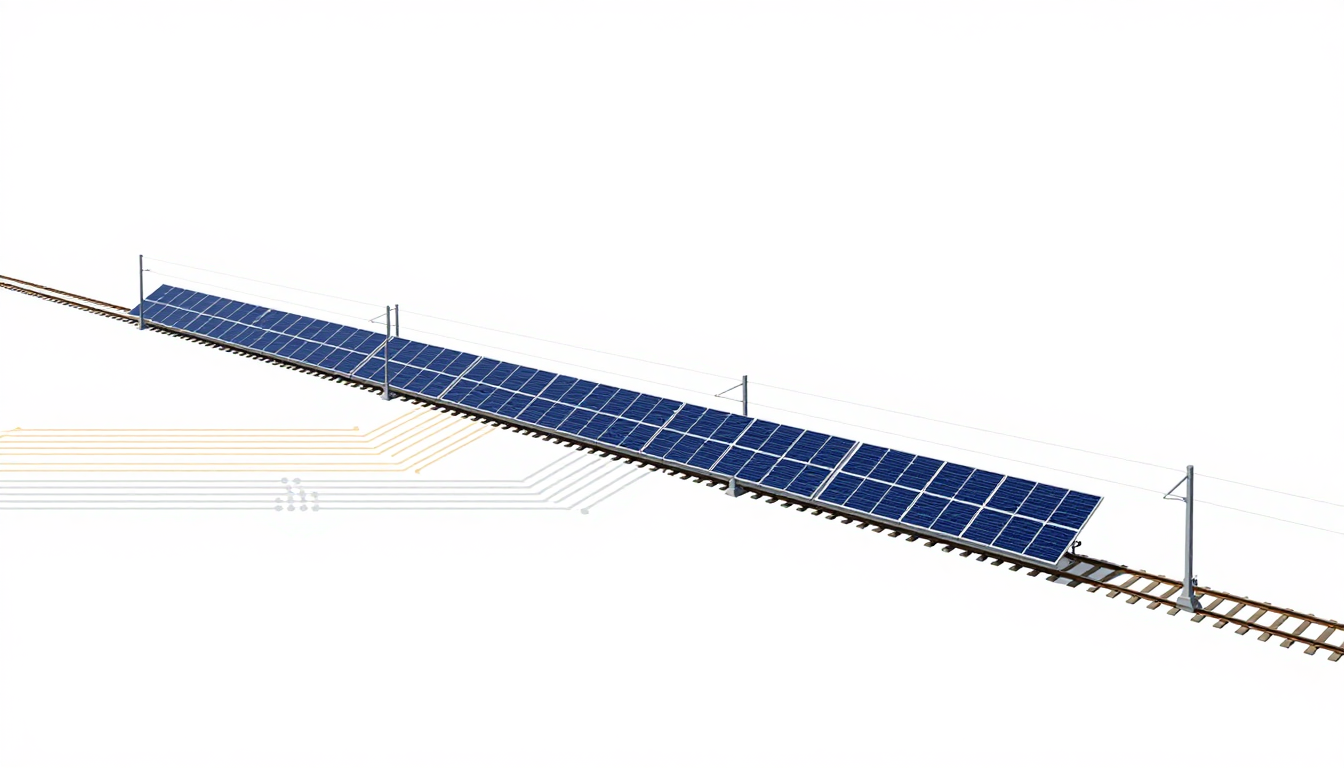
It has been just over a year since a pilot project to install photovoltaics (PV) on a railway line kicked off in Buttes, Switzerland. For many, the idea of placing fragile, highly sensitive solar panels directly into the path of heavy, vibrating, weather-exposed trains sounds like a recipe for immediate mechanical failure. Yet, the data from the first twelve months suggests otherwise—and it is arguably one of the most compelling infrastructure pivot points of our time.
According to Joseph Scuderi, CEO of Sun-Ways, the enterprise has proven to be a technical and operational success. The installation—a 100-meter test track featuring 48 solar panels integrated between the rails—has remained fully functional throughout more than 11,000 train passes. There have been no reported issues with the panels or the railway infrastructure, effectively dismantling the primary argument that rail-mounted photovoltaics would interfere with essential transit services. This isn't just a gimmick; it’s a tangible case study in infrastructure optimization.
Space.com: NASA, Space Exploration and Astronomy News Standards on Terrestrial Rails
While this may seem like a distant niche from the lofty goals of Space.com: NASA, Space Exploration and Astronomy News, the technical hurdles are remarkably similar in spirit. When aerospace engineers develop solar tech for solar/space exploration, they, too, are wrestling with environmental extremes, mechanical integrity, and the absolute necessity of high durability. This Swiss pilot demonstrates that we can transfer the rigor demanded by major projects, often documented in NASA's engineering reports, to terrestrial infrastructure like rail corridors. Such advancements in reusable, high-durability transit technology mirror efforts like China's reusable rocket recovery in reshaping engineering standards.
The core of this success lies in the engineering of the rail-mounted installation process itself. Sun-Ways devised novel machinery capable of deploying solar panels at an impressive rate—up to 300 panels per hour. This speed is critical. Transportation infrastructure cannot suffer prolonged disruptions for maintenance or new installations, a principle familiar to anyone following the rapid cadence of launch site turnarounds or strategic leadership and logistics in aviation.
Defying Expectations: Durability and Safety
The panels themselves required innovation to defy the expectations of failure. They feature a specialized anti-reflection coating to mitigate glare, which is critical for the safety of train operators. More importantly, they have demonstrated robust resistance to micro-crack damage, a common failure mode for panels subjected to constant, high-frequency vibration from passing locomotives. By borrowing techniques in material science—ensuring materials can sustain stress under heavy load without degrading—this project shows that rail corridors could indeed become a massive, untapped solar backbone.
The financial metrics are equally promising. The estimated Levelized Cost of Energy (LCOE) for this technology currently ranges between 0.05 and 0.09 €/kWh. This price point makes rail solar not just an innovation stunt, but a potentially transformative, commercially viable, and scalable energy source. Market launch is currently anticipated by 2028, setting the stage for a significant shift in how we power our transportation networks.
The Regulatory Road Ahead and Global Scaling
Despite the technological feasibility, Scuderi emphasizes that the primary obstacles discovered during this pilot phase were not mechanical, but regulatory and safety-related. The inertia of bureaucratic approval for critical infrastructure is immense. News coverage often focuses on the "what," but the "how" of scaling this is in the paperwork and cross-border agreements.
This is not to say the regulatory challenges are insurmountable. As the project gears up for a wider rollout, the focus is shifting to scaling these 100 meters into much more ambitious targets. The team is fostering international collaboration, engaging in dialogues with major railway operators in Italy, France (SNCF), South Korea, Spain, and Portugal. The goal is to reach 1,000 kilometers of installed capacity by 2035 and an staggering 10,000 kilometers by 2040.
Conclusion: A New Frontier in Global Infrastructure
The Swiss test is a vital indicator that we should not be afraid to challenge conventional thinking in infrastructure. Much like how the drive for exploration in space pushes us to innovate and create lighter, stronger, and more resilient systems, we must apply that same drive to solve our immediate, Earth-bound logistical and energy crises.
This project is not just about solar panels; it is about recognizing that every inch of our existing infrastructure—be it a roof, a road, or a railway—is a potential site for productive technology. The successful integration of photovoltaics between the tracks suggests a future where our transportation networks double as reliable, highly productive power plants, contributing significantly to a decentralized and far more resilient energy grid. As the world moves toward 2030 and beyond, this blend of high-precision engineering and imaginative application is precisely what will define the next frontier of sustainable development.