
The Book That Could Outlive You
I used to think longevity was about squats and kale. Turns out, the real secret might be in the margins.
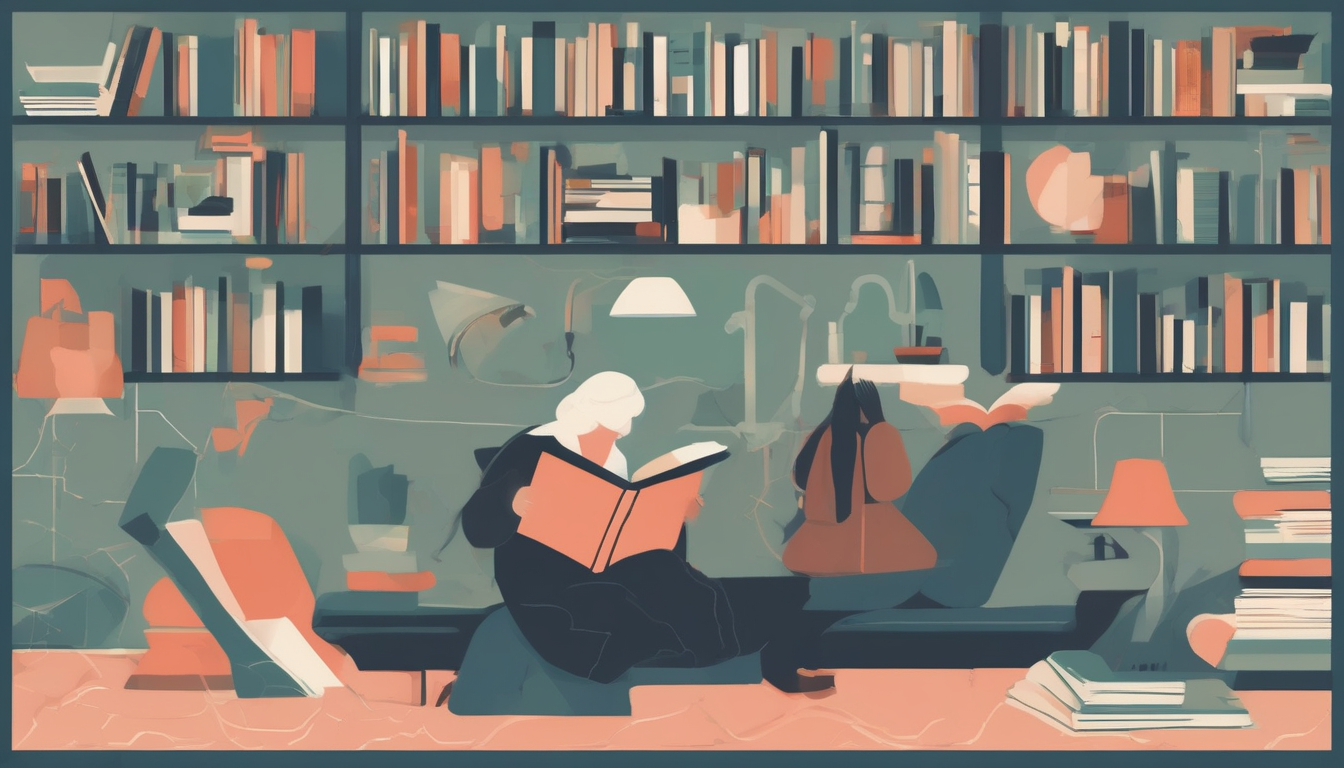
My grandmother read every night. Not the news. Not the latest thriller. She read novels—paperbacks with dog-eared corners and coffee stains on page 217. She'd underline passages, write "true!" in the margin, and sometimes, just sometimes, she'd read aloud to me. I didn't get it then. I thought she was just old-fashioned.
Turns out, she was onto something science is just catching up to.
A 12-year study of 3,000 older adults found that people who read books lived nearly 20% longer than those who didn't. Not newspapers. Not magazines. Books. And the difference wasn't small—it was the difference between dying at 78 and making it to 90.
Why? Because reading books isn't passive. It's a full-body workout for your brain.
I've read a lot of studies. This one's different. It's not just about "mental stimulation." It's about depth. About immersion. About becoming someone else for a few hours. That's not just entertainment. That's survival.
The research on book reading and longevity doesn't exist in a vacuum. It connects directly to the broader science of cognitive resilience—how the brain builds protective buffers against diseases like Alzheimer's. Building Resilience Against Alzheimer's Disease explores how mentally stimulating activities, including reading, form a core pillar of dementia prevention strategies.
Why Books Are Different (And Why Your Kindle Doesn't Count)
I used to think the medium didn't matter. Kindle. Paper. Audio. All reading, right?
Wrong.
The research is clear: physical books trigger something digital formats simply can't replicate. It's not nostalgia. It's neurobiology.
Maryanne Wolf, in Proust and the Squid, explains that deep reading—what happens when you're lost in a novel for an hour—engages your memory, imagination, and senses simultaneously. You're not just decoding words. You're reconstructing worlds. You're feeling the weight of a character's grief, tasting the salt of their tears, hearing the creak of a haunted house. That's not just comprehension. That's empathy in motion.
Stanovich's 1992 study showed that book authors write with far greater depth than journalists or magazine writers. They don't just tell you about loneliness—they make you live it. They give you 300 pages of interiority, not 800 words of bullet points.
And then there's the body.
A 2008 study by Mangen found that turning pages gives your brain tactile feedback you can't get from swiping. The weight of the book in your hands. The resistance of the paper. The way your thumb remembers where you left off. You don't just read a book—you touch it, hold it, own it. You write your name on the inside cover. You dog-ear pages. You fold down corners. You make it yours.
E-books? They're efficient. They're convenient. But they're also emotionally sterile. You don't form attachments to a screen. You don't feel the weight of a story in your lap. You don't carry it with you like a talisman.
If you want to live longer, you need to read something that feels like it has a heartbeat.
The Quiet Science of Survival
Let's be honest: no one's going to buy a book because it'll extend their life.
But if you're already reading? You're doing something far more powerful than you realize.
The 2025 multiomics study of the world's oldest person—117 years old—found her brain showed signs of exceptional resilience. Not because she took supplements. Not because she ran marathons. Because she read. Every day. Even at 110. Poetry. Letters. Memoirs.
The data from Bavishi, Slade, and Levy's 12-year study doesn't just say books help. It says they're a complete mediator of longevity. Meaning: if you remove book reading from the equation, the link between mental health and long life vanishes. No other leisure activity—not gardening, not knitting, not even walking—had that kind of total effect.
And here's the kicker: the benefit doesn't depend on education, income, or even baseline cognitive health. Even people with limited formal schooling gained the same survival advantage. All they needed was a book and the habit of reading it.
I've talked to people who say, "I don't have time." I get it. Life's loud. But you don't need an hour. You don't need a library. You need 15 minutes. One chapter. One page. One sentence that makes you pause.
That's all it takes to start rewiring your brain for resilience.
And if you're wondering whether it's too late? My grandmother started reading novels at 65. She died at 92. And she never missed a night.
Yet another reason this matters: most older adults don't realize that simple daily habits like reading can actively reduce their dementia risk. Older Adults Face Major Brain Health Knowledge Gap breaks down the disconnect between what people believe protects their brains and what they actually do every day.
The Real Cost of Not Reading
Here's what happens when you don't read books.
Your brain gets lazy.
It starts to crave quick hits—scrolling, headlines, soundbites. You lose the ability to sit with complexity. To tolerate ambiguity. To follow a character's arc over hundreds of pages.
The 2021 Taiwanese study of 2,000 older adults found that those who didn't read regularly showed accelerated cognitive decline—even if they were otherwise healthy. The decline wasn't just about memory. It was about meaning-making. About the ability to connect dots across time, emotion, and experience.
I've seen it in my own family. My uncle, brilliant man, retired engineer. He stopped reading after his wife died. Started watching YouTube clips instead. Within three years, he couldn't follow a conversation longer than five minutes. He'd forget names. Forget why he walked into a room. The doctors called it "mild cognitive impairment." I called it grief dressed as distraction.
Reading isn't a luxury. It's a shield.
It doesn't just delay dementia. It builds a kind of mental armor—one that lets you hold onto yourself when everything else starts to slip.
You don't need to read the classics. You don't need to be a scholar. You just need to choose something that pulls you in.
A mystery. A memoir. A poem. A book about a person who lived a life you'll never live.
And then—just for a little while—let yourself live it too.