The Open Promise Behind the $1 Billion Cloud Deal
Two years ago, if someone told you an AI startup founded just months before would command an $8 billion valuation—and then sign a $1 billion compute deal—you’d laugh. Not because the number was unrealistic, but because it implied a shift already underway: a world where open-weight models aren’t just philosophy; they’re infrastructure.
That’s exactly what happened with Reflection AI. The San Francisco–based startup, co-founded in 2024 by two former Google DeepMind researchers, has just locked down a billion-dollar agreement with Nebius—the Amsterdam-headquartered cloud company that grew out of Yandex’s international division. The headline figure? $1 billion. The payoff? Direct access to Nvidia’s latest chips and the computing muscle needed to scale open models.
This isn’t just another infrastructure deal. It’s a declaration of intent that reverberates across the AI landscape.
What makes this different is where it sits in the broader debate: for years, most frontier AI progress came through closed models—gated, proprietary, invisible. But increasingly, the world is asking whether that’s sustainable. When a government can decide overnight to restrict access to your model, do you have real control? When data retention rules tighten globally, can closed-source models adapt? That line of questioning is precisely why Reflection’s focus on open-weight systems has caught fire.
Nebius Is More Than a Provider—It’s a Strategic Partner
Nebius isn’t the first cloud company to land mega-deals. Last year alone, it signed a $27 billion infrastructure agreement with Meta and an additional $19.4 billion deal with Microsoft. So why do these numbers still stagger?
Because they’re not just about raw capacity—they signal a full industry pivot toward AI-first infrastructure. Nebius’s platform isn’t your typical blob storage and virtual machines setup. It spans the entire AI development lifecycle: from data ingestion and model training, through fine-tuning, inference, and deployment. In other words, it’s built for agentic AI workloads where models act, reason, and loop back for correction.
For Reflection, that end-to-end visibility matters. When you’re shipping open-weight models into production, traceability isn’t optional—it’s your license to operate. Nebius gives them that: consistent telemetry, reproducible runs, and governance hooks for audit trails.
The leadership team—especially CEO Arkady Volozh and CTO Danila Shtan—understands this intimately. Volozh, who built Yandex’s search infrastructure before spinning it out into Nebius, has repeatedly said his vision is “a cloud built by engineers who ship models in production.” That’s a subtle but crucial distinction: Nebius doesn’t just sell compute; it sells outcomes.
Open-Weight AI Isn’t a Trend—It’s a Survival Mechanism
The timing of Reflection’s Nebius pact bears remembering. Just weeks earlier, the startup secured a similar compute agreement with SpaceX—a deal that’s already feeding orbital data and Earth-observation imagery into its training pipeline. And this, too, isn’t an accident.
Over the past year, several high-profile government actions forced a reckoning. The Trump administration quietly pressured Anthropic and OpenAI to restrict their most powerful models—not due to technical flaws, but because of concerns around data sovereignty and national security. Overnight, some organizations found their AI roadmap grounded.
That’s the problem with closed models: they’re centrally controlled. One executive decision, one regulatory shift, and your whole system is in limbo. Open-weight models—by contrast—can be hosted on-premise, modified locally, and audited independently. You still rely on a third party’s initial architecture, sure, but the rest is yours.
Naturally, this makes regulators more comfortable. It also makes enterprise buyers take notice. Tech teams don’t just want the latest inference speed—they want stability, compliance, and control. Reflection’s open approach is an answer to that exact challenge.
Even more telling: the influx of powerful open models coming out of China is accelerating this shift. Some aren’t just competitive; they’re exceeding proprietary baselines on certain benchmarks—without the usual licensing roadblocks. That’s a serious destabilizer for walled gardens.
Why $1 Billion Feels Like a Bargain
Let’s be real: that price tag raises eyebrows. A startup valued at $8 billion raising nearly $2.6 billion total—including a $2 billion investment from Nvidia itself—may seem overcapitalized.
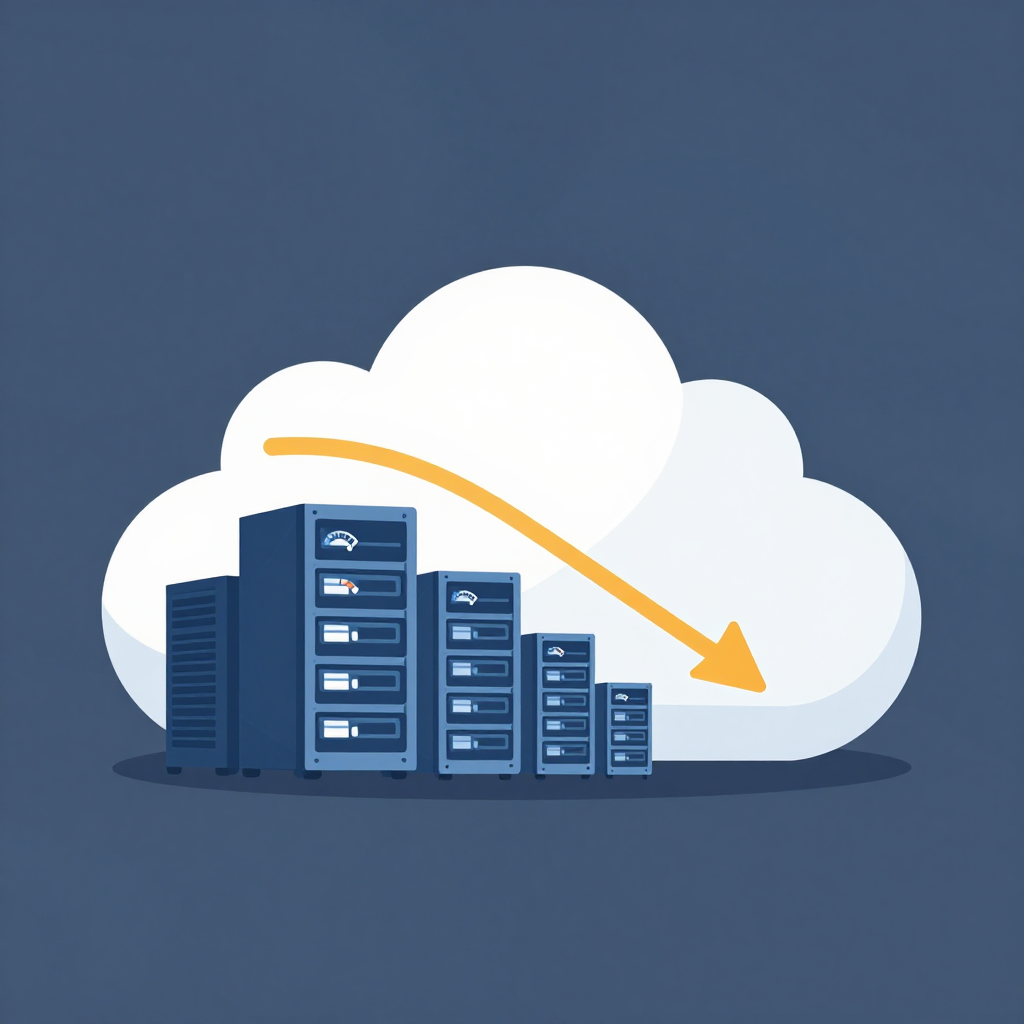
But here’s the real story: compute is the bottleneck. As models scale toward trillion-parameter sizes, cloud costs can dwarf everything else. That’s why major players are signing five- and ten-year infrastructure contracts: predictability matters more than headline savings.
Nebius’s platform is priced for scale. The company bundles inference, orchestration, and data ops into a unified billing model. So when Reflection says $1 billion gets them “access to the latest chips,” what they really mean is: no surprise bills, no fallback during peak demand cycles, and long-term capacity guarantees.
Nvidia, naturally, is keen to cement this loop. By backing both the silicon and the software, it ensures its GPUs stay central to AI development—even as other architectures emerge. And for a startup like Reflection, that backing is insurance: if other cloud providers raise prices or restrict access, Reflection still has a preferred channel.
What’s perhaps more telling is who isn’t involved. Not Amazon, Google Cloud, or Microsoft—none of whom signed on to this particular deal. That’s a quiet vote of confidence in Nebius as an independent force.
The Road Ahead: From Drafts to Production
So what’s next for Reflection AI? With the Nebius deal on its balance sheet, the path is clear: it’s no longer about whether they can scale open-weight models—it’s how quickly they can operationalize them.
The team has hinted at launching a hosted inference service this quarter, possibly alongside agent tooling optimized for agentic workflows. Given its focus on open standards, expect tight integrations with Llama-style architectures and compatibility layers for Hugging Face’s ecosystem.
Critically, all of this will run on Nebius infrastructure—making their joint stack one of the first truly production-ready agentic data platforms. That’s where our category label, Agentic Data Platforms, truly earns its keep: when models act and loop back for correction, they need reliable, observable infrastructure.
For anyone building AI products today, the message is plain: open-weight isn’t a compromise; it’s becoming the default for serious deployments. And if Reflection can ship on schedule, this $1 billion bet might just pay off in more than revenue.
It could redefine how the world builds intelligence—openly, transparently, and at scale.