
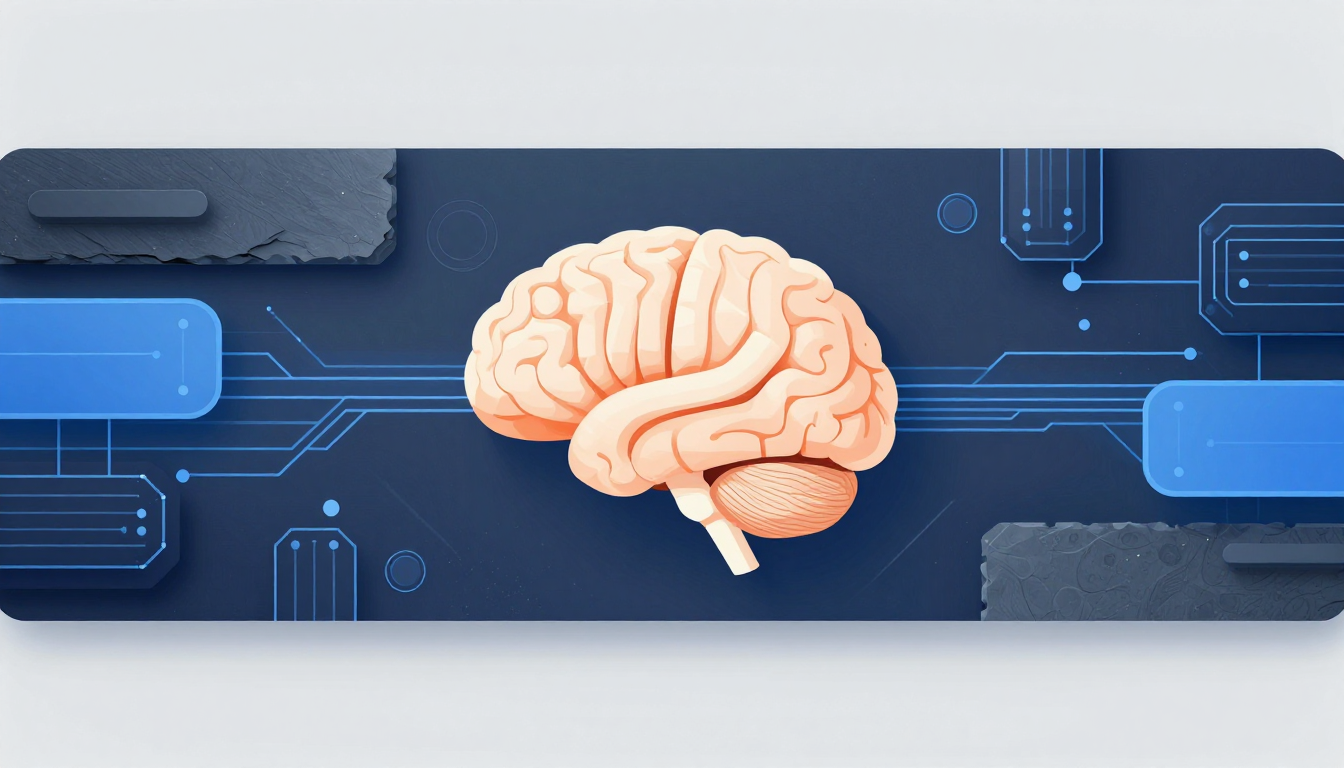
AI’s Insatiable Appetite for Power Is Running Up Against Reality
Generative AI’s rise has been swift, seductive—and astonishingly energy-hungry.
Projections for 2030 estimate that global datacenter electricity use could top 945 terawatt-hours, roughly matching the entire consumption of Japan today. That’s not a rounding error on an energy ledger; it’s a structural shift demanding new answers.
So it’s understandable that people lean into the promise of neuromorphic computing: a brain-inspired architecture that promises to slash power while boosting efficiency. But before we rewrite the infrastructure rulebook, here’s a reality check—UK politicians did, and so should we.
The short version? Brain-inspired chips are an exciting edge accelerator—not a datacenter replacement— anytime soon.
What Neuromorphic Computing Really Means (Spoiler: It’s Not Just a Fancy GPU)
Traditional silicon operates on the von Neumann architecture—memory and processors live in separate physical domains. That means data shuttles back and forth constantly, like a courier stuck in traffic.
Neuromorphic systems flip the script. They blur the line between compute and memory by mimicking how biological neurons talk. In these architectures, computation only fires when an electrical impulse—called a spike—crosses a threshold. Everything else sits idle.
The result? Event-driven processing that’s inherently more efficient for time-sensitive tasks. You see this in hardware like Intel’s Loihi, IBM’s TrueNorth and NorthPole, the EU’s SpiNNaker, and BrainScaleS. Yet scaling them to run today’s massive LLMs isn’t a small tweak; it’s scaling Everest in sneakers.
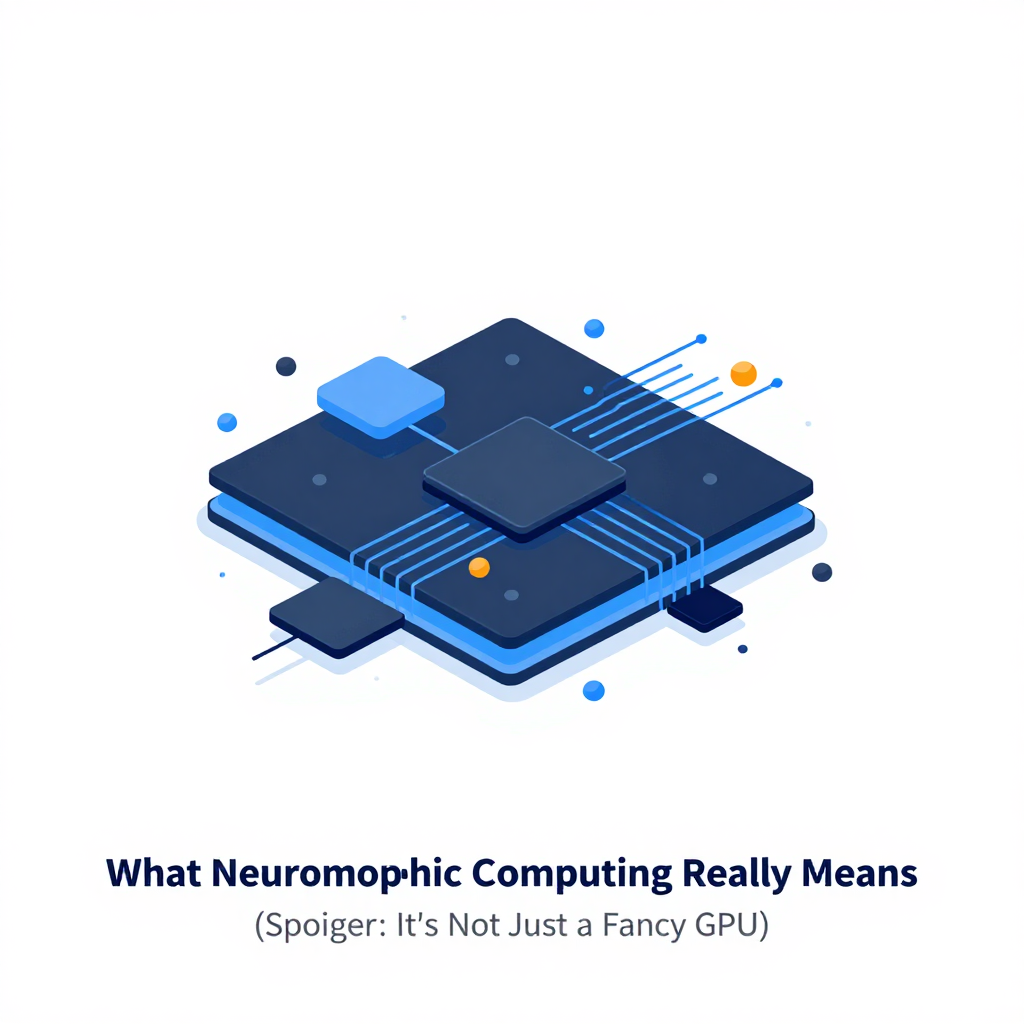
Why AI Cloud Infrastructure Providers in India are Monitoring Neuromorphic Tech
Here’s where this ties to your broader infrastructure strategy: as we move toward Agentic AI, hardware choices become mission-critical.
IBM defines Agentic AI as an artificial intelligence system that accomplishes a specific goal with minimal supervision—deploying AI agents capable of reasoning, tool use, and autonomous decision loops.
Google Cloud frames it similarly: agentic systems move past static responses and start perceiving, reasoning, and acting to reach outcomes without constant human prompting.
That autonomy changes the game. Instead of waiting on human clicks, these systems need low-latency, high-efficiency compute at the edge. If you’re evaluating ai cloud infrastructure companies in india, or assessing shifts in aws cloud infrastructure strategies, it’s clear the demand will shift toward responsive, localized processing—where neuromorphic chips can contribute.
But notice the qualifier: can. Not will. That’s where reality steps in.
The UK Parliament Hearing: A Grounding in Engineering Realism
In June 2026, MPs heard from experts who pulled no punches.
Professor Martin Trefzer of the University of York told the House of Commons Science, Innovation and Technology Committee that neuromorphic chips shine at edge tasks—think hearing aids, sensor nodes, or real-time diagnostics—but emphasized they’re not ready to dethrone the LLMs powering cloud inference at scale.
"Data movement is probably one of the fundamental things we can learn from the brain," he said. "We don’t have a memory bank on one computer and a processor on the other; it’s all one system, and that is underpinning the efficiency."
Crucially, he added: "The brain isn’t a rigid computer clocked in a digital system." Neuromorphic systems are adaptive, asynchronous, and context-aware—powerful for targeted workloads, not general-purpose LLM inference.
The upshot? Expect hybrid systems where conventional datacenters run large models and neuromorphic coprocessors handle latency-sensitive, power-conscious edge jobs.
The Hidden Carbon Cost—and Why It Matters More Than You Think
Professor Caterina Doglioni from the University of Manchester underscored a critical, often overlooked point: building new hardware has its own carbon invoice.
There’s a break-even threshold: unless the new chip lasts long enough and is efficient enough to offset its fabrication footprint, net environmental impact could actually worsen. That calculus changes the conversation from pure specs to lifecycle sustainability.
This is especially relevant when deploying thousands of edge nodes. Even with 10× per-device efficiency gains, if each unit’s build footprint is high and lifetime short, you’re trading one problem for another.
The Software Gap: The Real Bottleneck in Neuromorphic Adoption
Here’s a sobering truth: hardware is only half the story.
The software stack for neuromorphic chips remains fragmented. There are no industry-wide benchmarks, standardized APIs, or unified toolchains that have made GPU-based deep learning so explosive. Most advanced algorithms still run on von Neumann-optimized software.
In other words, even if you have a neuromorphic chip, building and deploying workloads on it remains non-trivial. The ecosystem lag is arguably the biggest barrier to adoption—far more than raw transistor counts or spike frequencies.
For now, most companies will find greater ROI in refining their existing infrastructure than betting on an immature substrate. That’s why hybrid integration, not replacement, remains the most likely near-term path.
Where Neuromorphic Computing Will Make a Difference—And When
So where do we go from here?
-
Edge AI: Low-power wearables, hearing aids, and IoT devices will likely adopt neuromorphic logic long before servers. The efficiency gains are immediately measurable.
-
Specialized Inference: Pattern recognition, speech processing, and real-time control loops benefit from asynchronous spiking—think autonomous vehicles, robotics, or medical diagnostics.
-
Hybrid Acceleration: Cloud infrastructure can offload certain tasks to neuromorphic coprocessors, reducing overall power without sacrificing performance.
Don’t expect your cloud provider to run Llama 3.1 or Claude 3.5 on a neuromorphic wafer-scale chip anytime this decade.
Instead, look for pilot integrations where efficiency trumps raw throughput—especially in sustainability-driven deployments across ai cloud infrastructure companies in india, mindful of the splitting AI token market, and other emerging regional markets.
Neuromorphic computing is a powerful tool for specific jobs. But it’s not replacing your cloud datacenter—and UK MPs were reminded that thinking otherwise is more wishful thinking than engineering reality.