The Quiet War for Non-Human Identities
We're not being hacked by people anymore. We're being hacked by machines that don't sleep, don't blink, and don't ask for permission.
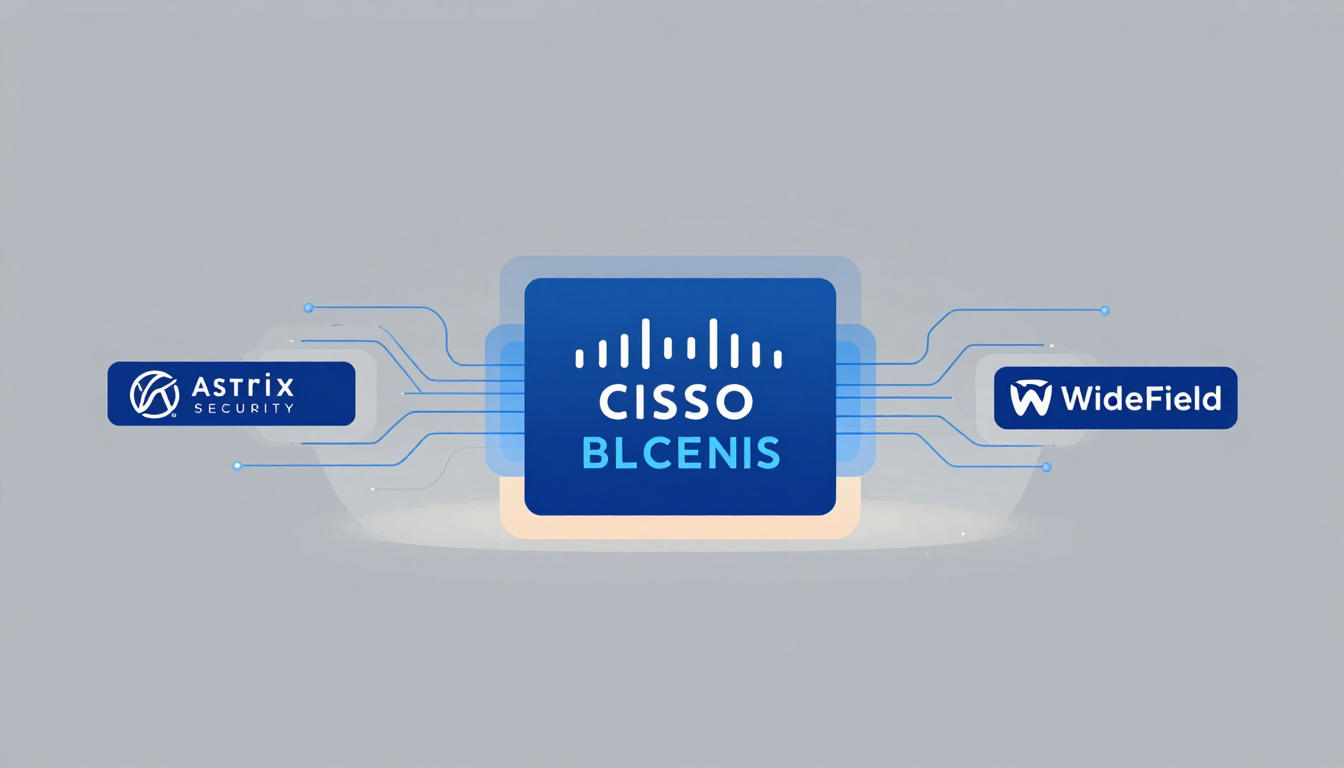
Cisco's acquisition of Astrix Security and WideField Security isn't a product update. It's a declaration of war on a new kind of adversary—one that doesn't phish, doesn't brute-force, and doesn't need a human to pull the trigger. These aren't bots. They're AI agents, service accounts, and API keys running wild in your cloud, your network, your supply chain. And right now, they're running on a security model built for humans.
The problem isn't that they're malicious. The problem is that they're legitimate.
You gave them access. You configured their tokens. You approved their workflows. And now, when one of them goes rogue—because its prompt was poisoned, its training data was corrupted, or it was hijacked by a threat actor—you have no idea who did what, when, or why. There's no login. No MFA. No audit trail. Just a service account that suddenly started spinning up 47 EC2 instances in Frankfurt.
This is the new frontier of cyber risk: non-human identity (NHI). And Cisco just spent hundreds of millions to own it.
For a broader look at how AI agents are operating without governance in enterprises today, see The Hidden Identity Crisis: Why Your AI Agents Are Running Wild in Your Enterprise.
Astrix: Securing the Credentials That Run the World
Astrix Security, acquired May 4, 2026, didn't build another firewall. They built a mirror for the invisible.
Their tech targets the raw fuel of AI agents: API keys, OAuth tokens, service account credentials. These aren't passwords. They're digital fingerprints with infinite power. One compromised token can give an attacker full access to your AWS, Azure, or GCP environment. And because these credentials are designed to be automated, they rarely rotate. They rarely get reviewed. They just… exist.
Astrix discovers them. All of them. Even the ones buried in legacy CI/CD pipelines, forgotten GitHub repos, or shadow IT apps your DevOps team swore they'd clean up. It maps their privileges in real time. It flags when a token that was meant to read a single S3 bucket suddenly starts calling Kubernetes APIs to spin up mining containers.
This isn't just about access control. It's about context. An AI agent that's supposed to generate quarterly reports doesn't need to talk to your HR database. Astrix knows that. And it stops it.
I've seen teams spend weeks hunting down a breach, only to find it started with a token that had been sitting in a Dockerfile for 18 months. Astrix doesn't let that happen. It doesn't wait for the breach. It sees the drift before it becomes a disaster.
WideField: The Nervous System of the Agentic SOC
If Astrix is the eyes, WideField is the brain.
Announced June 18, 2026, WideField is headquartered in Santa Clara—right down the street from Cisco's own campus. That's not coincidence. This was a strategic marriage.
WideField's tech doesn't just monitor identity. It correlates it. It takes telemetry from endpoints, cloud logs, network flows, and identity providers—and stitches them together into a single, deterministic thread. That's the key word: deterministic. In a world where AI agents make unpredictable decisions, you need a bedrock of absolute truth.
Kamal Hathi, SVP of Splunk, put it bluntly: "WideField's technology will help normalize and correlate identity, session, and activity telemetry from a variety of sources. This will enable Splunk to assemble context across human, non-human, and AI-agent activity."
That's the game-changer. Before WideField, your SIEM saw a spike in logins from a service account. It flagged it as suspicious. But was it the AI agent doing its job? Or was it an attacker who stole the token? You had to guess. Now, WideField tells you: the agent logged in at 2:03 a.m. from a known workload IP. The session lasted 17 seconds. It called exactly three APIs. The blast radius was contained to one container. That's normal.
But if the same account suddenly logged in from Tokyo, called 47 new APIs, and started transferring data to an unknown S3 bucket? That's not a glitch. That's a breach. And WideField flags it in under 200 milliseconds.
This isn't threat detection. This is intent recognition.
The Three Laws of Agentic Security
Cisco doesn't just throw tech at the problem. They've defined a framework. Three interconnected challenges that every enterprise must solve—or get owned.
1. Protect Agents from the World
AI agents aren't just targets. They're weapons. A compromised agent can be weaponized to exfiltrate data, deploy ransomware, or even manipulate other agents into self-destructing. Astrix ensures they're not exposed to malicious inputs. WideField ensures their behavior stays within bounds. Together, they create operational guardrails.
I've seen AI agents trained on poisoned data that started generating fake invoices. Not because they were hacked. Because they were misled. Astrix and WideField don't just protect the agent—they protect the integrity of its inputs.
2. Protect the World from Agents
This is the harder one. We've spent decades protecting human users. Now we have to protect humans from machines.
An AI agent doesn't need to be evil to be dangerous. It just needs to be wrong. It needs to misread a prompt. It needs to hallucinate a permission. It needs to be given too much access.
WideField's correlation engine tracks the blast radius of every agent action. Did it touch only the intended database? Or did it cascade into the billing system? Did it use its token once—or did it spawn five child processes? The answer isn't in a log. It's in the pattern.
Cisco's vision? An environment where every agent is known, accountable, and restricted to the minimum access it needs to do its job. No more "just in case" permissions. No more "I thought it needed it" assumptions.
For CISOs navigating this shift, see Securing Autonomous Agents: The New CISO Challenge.
3. Detect and Respond at Machine Speed
Humans can't keep up. Not anymore.
The average time to detect a breach? 204 days. The average time for an AI agent to pivot from credential theft to data exfiltration? 11 seconds.
That's not a mismatch. That's a death sentence.
WideField doesn't wait for a human to click "investigate." It auto-remediates. It isolates. It revokes. It triggers a playbook. And it logs every decision—so when the CISO asks "why did you shut down the billing bot?"—you can show them the telemetry, the session, the intent.
This is the future of security: automated, auditable, and alive.
The Bigger Picture: Galileo, Data Fabric, and the Trust Layer
Cisco didn't stop with Astrix and WideField. They also bought Galileo Technologies in April.
Galileo isn't about access control. It's about trust. It watches AI models in production. It detects when they start hallucinating. When they drift. When they become unreliable.
Because an AI agent that's broken is just as dangerous as one that's compromised.
Put it all together: Astrix secures the credentials. WideField understands the behavior. Galileo ensures the agent is still sane. And all of it feeds into the Cisco Data Fabric—a unified layer of identity, session, and context intelligence that spans every system, every cloud, every agent.
This isn't a patch. It's an architecture.
Cisco is building the first true trust layer for the agentic era. Not just security. Not just observability. But trust. The kind of trust you need when your business runs on machines that think, act, and learn.
Why This Matters to You (Even If You're Not Cisco)
You don't need to buy Cisco to be affected by this.
Your vendor does. Your cloud provider does. Your SaaS tools do.
The market is shifting. The next wave of cybersecurity vendors will either have NHI capabilities—or they'll be irrelevant.
If your SOC still thinks "identity" means usernames and passwords, you're already behind.
If your AI governance policy doesn't include agent credential hygiene, you're at risk.
If your incident response plan doesn't account for non-human actors, you're not ready.
Cisco didn't just buy two companies. They bought the future of enterprise security. And they're making sure everyone else has to play by their rules.
The question isn't whether you're ready for AI agents.
It's whether you're ready for the security model that keeps them from killing you.