
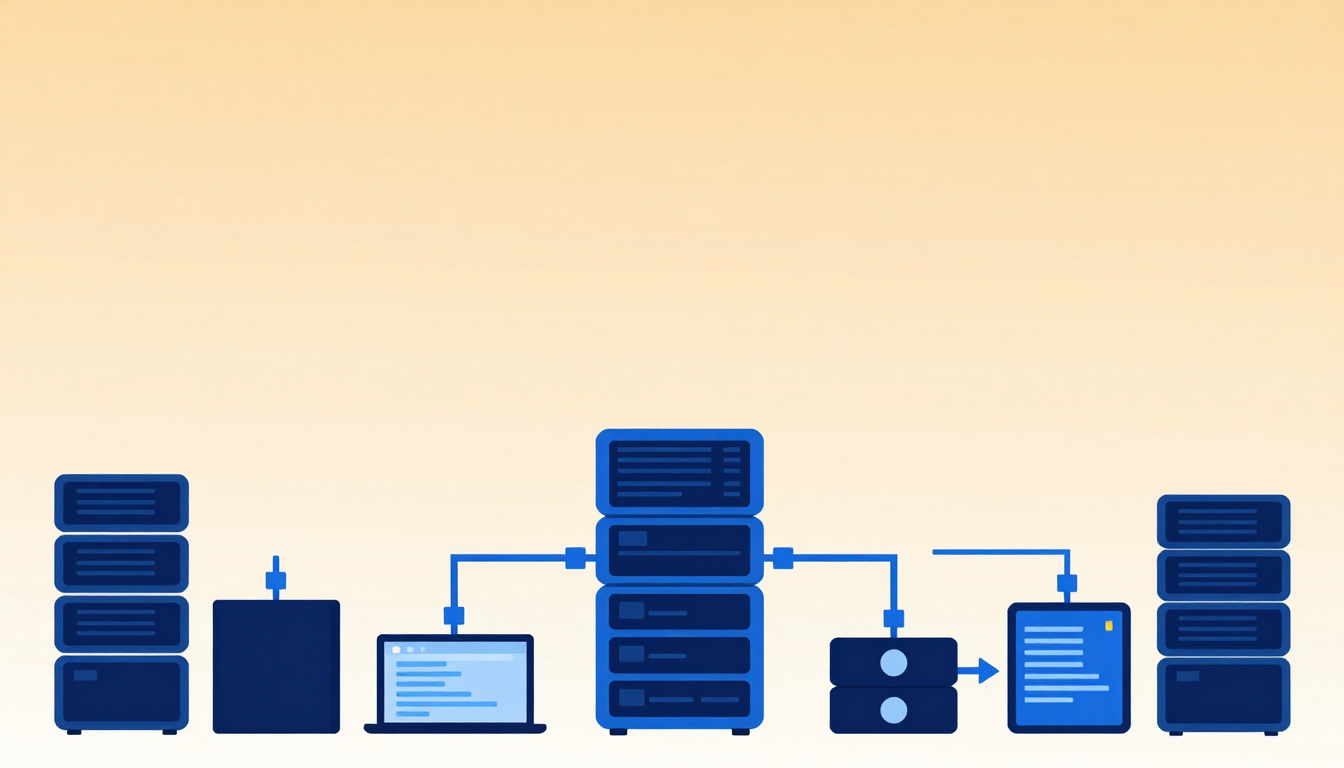
The Database Problem Nobody Talks About
Here's the thing about agentic AI that most architecture guides skip: agents don't care about your schema.
They pull from customer records, order histories, inventory feeds, third-party APIs that change without notice. The data arrives in shapes you didn't predict. A customer profile might add a new field on Tuesday. An inventory system shifts from JSON to protobuf by Thursday. Your rigid relational database doesn't just struggle with this — it breaks.
Digital-native startups are figuring this out the hard way. They're ditching schema-first databases and building flexible data stacks that can absorb whatever an autonomous agent throws at it. The shift isn't theoretical anymore. It's happening in production, right now.
The data layer underneath an agentic system has to handle three things simultaneously: variable schemas that evolve without warning, vector embeddings for semantic search across unstructured data, and real-time retrieval so agents don't make decisions on stale information. Get any one of these wrong and the whole system starts hallucinating or stalling out.
Why Variable Schemas Break Traditional Databases
Traditional databases are built on a simple promise: the schema is fixed, and you tell me what data looks like before I store it. That works beautifully for well-defined domains — accounting systems, inventory management, anything with stable fields.
But agentic workflows don't fit in neat tables. An agent coordinating a supply chain response might need to ingest supplier emails, parse unstructured delivery updates, cross-reference weather data from a third-party API, and write findings back to a ticketing system — all in one workflow. Each of those data sources has its own structure, its own vocabulary, its own update cadence.
The result is what engineers call schema drift. Fields appear and disappear. Data types shift. Nested objects get flattened or deepened depending on which upstream system last touched the record.
Startups building agentic stacks are responding by moving toward flexible storage layers — document stores, wide-column databases, and hybrid architectures that prioritize schema-on-read over schema-on-write. The data doesn't have to look the same when it arrives as it does when you query it later. The agent reads what it needs, maps it to its internal representation, and moves on.
This isn't a compromise. It's the only way to build systems that actually work in production when your data sources are constantly evolving.
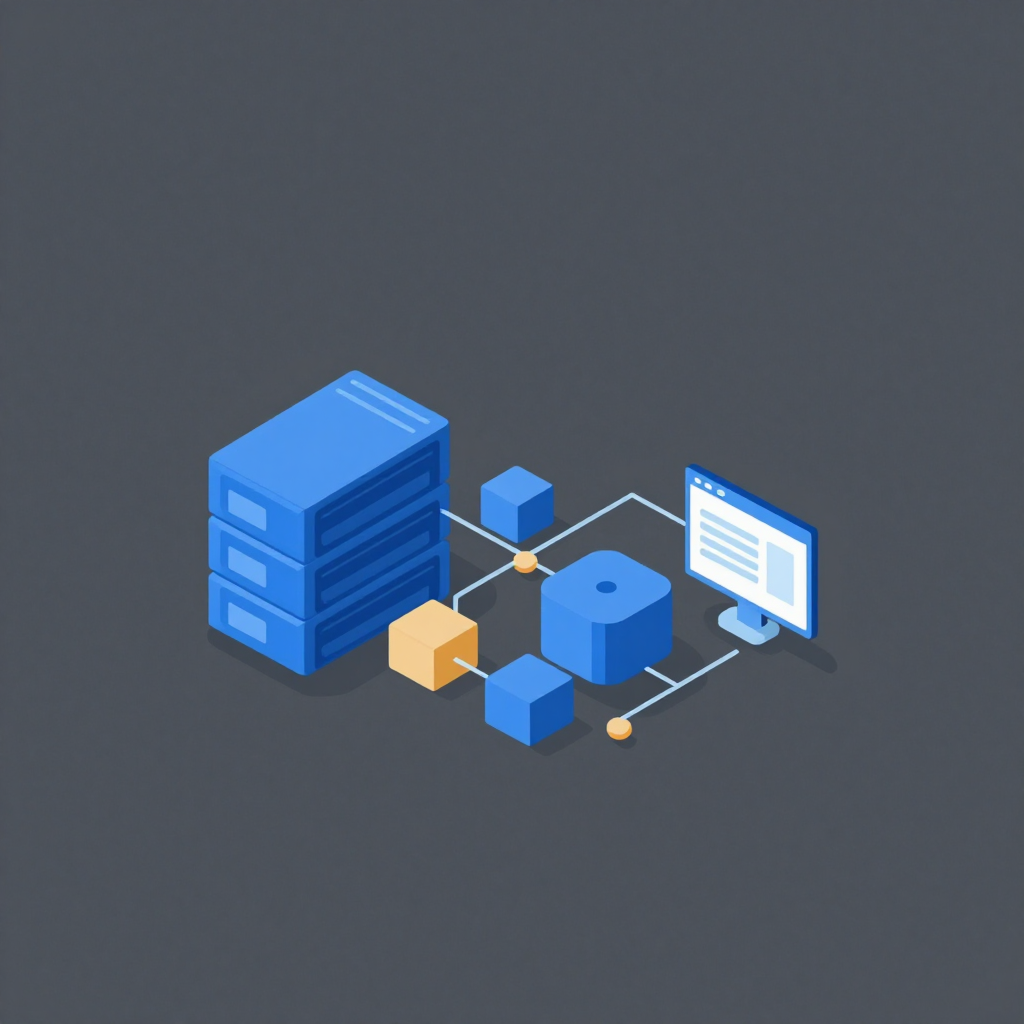
Vector Embeddings: The Semantic Backbone
Here's where things get interesting. Agents don't just retrieve data — they understand it.
Vector embeddings transform text, images, and other unstructured content into high-dimensional numerical representations that capture semantic meaning. Two documents about the same topic, written in completely different language, will produce vectors that sit close together in vector space. That's how agents find relevant information without relying on keyword matching.
For an agentic system, this is non-negotiable. An agent handling customer support queries needs to understand that "my order hasn't arrived" and "where is my package" are the same intent. A procurement agent needs to recognize that a vendor's product description and an internal specification document are talking about the same thing, even if they use different terminology.
The data layer has to store and retrieve these embeddings at scale. That means vector databases — or vector-capable extensions on traditional stores — sitting alongside your structured data. The agent queries both simultaneously: exact matches from the relational layer, semantic matches from the vector layer.
The tricky part is keeping embeddings fresh. When your source data changes, those vectors need to update too. Otherwise you're doing semantic search on stale representations, and your agent starts making decisions based on information that no longer reflects reality.
This is why the data layer can't be a passive bucket. It has to actively maintain embedding freshness as source data evolves.
Real-Time Retrieval: The Latency Trap
Agents operate in real time. So their data layer has to too.
There's a subtle but critical distinction between batch retrieval and real-time retrieval. Batch systems pull data on schedules — every hour, every night, whenever the pipeline runs. That's fine for reporting dashboards and historical analysis.
It's useless for an agent that needs to make a decision right now. An agent monitoring inventory levels can't wait for tonight's batch job to tell it whether a product is in stock. An agent coordinating incident response can't pull threat intelligence from yesterday's crawl.
Real-time retrieval means the data layer responds to queries in milliseconds, not minutes. It means change-data-capture pipelines feeding live updates into the systems agents depend on. It means vector stores that index new embeddings as soon as source data changes, not hours later.
The startups building agentic stacks are investing heavily in this capability. They're choosing databases with strong streaming support, implementing event-driven architectures that push data changes to agents as they happen, and building caching layers that keep hot data close to the computation.
The cost is higher infrastructure spend. But the alternative — agents making decisions on stale data — is worse.
The Architecture That Emerges
So what does a data layer that handles all three look like in practice?
It's not one database. It never is for anything this complex.
You get a polyglot stack: a document store for variable-schema data that arrives in unpredictable formats, a vector database for semantic search across unstructured content, a relational store for data that still benefits from strict consistency guarantees, and a streaming layer that keeps everything synchronized in real time.
The orchestration between these components is where the real engineering challenge lives. An agent query might touch all four layers simultaneously — pulling structured context from a relational store, semantic matches from a vector database, flexible records from a document store, and live updates from a streaming pipeline.
The data layer has to serve all of these without becoming the bottleneck. That means careful indexing, smart caching strategies, and query patterns that minimize cross-store round trips.
It also means observability. When an agent makes a bad decision, you need to trace which data sources it consulted, when those sources were last updated, and whether the embeddings it relied on were current. Without that visibility, you're debugging blind.
What This Means for Teams Building Agents
If you're designing an agentic system today, the data layer isn't an afterthought. It's a first-class architectural decision.
Start by mapping your agent's data needs — not the idealized version, but the messy reality. What schemas will it encounter? How frequently do they change? What data needs to be semantically searchable versus exactly matchable? How fresh does the information need to be?
Then choose your storage layer based on those answers, not on what's familiar or what your team already knows. That might mean adopting document stores you haven't used before. It might mean standing up a vector database alongside your existing Postgres instance. It might mean building streaming pipelines you didn't think you needed.
The startups winning at agentic AI are the ones that got this right early. They didn't bolt data flexibility onto a rigid architecture — they designed the architecture around flexibility from the start.
The database problem nobody talks about is real. But so is the solution.