
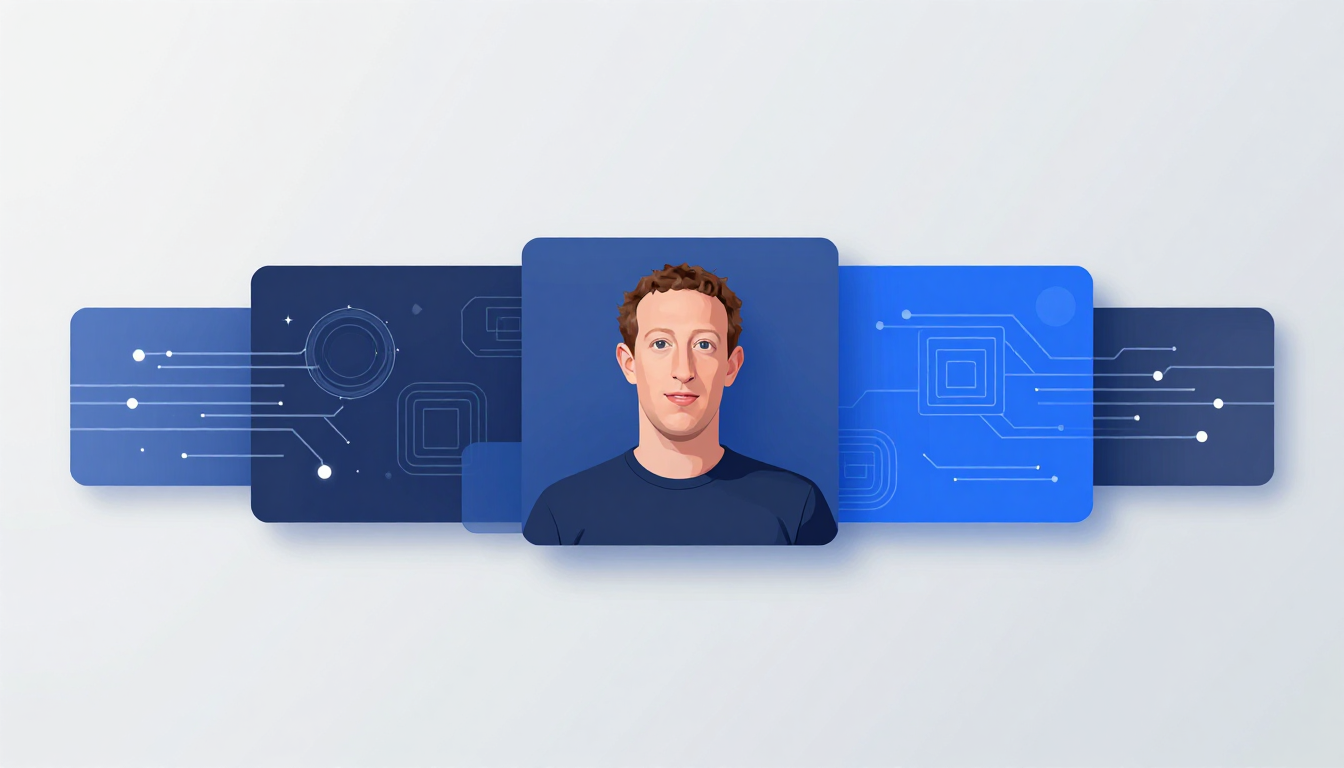
The Persistent Architect: Mark Zuckerberg and the Evolution of Meta
Mark Zuckerberg, the co-founder and current Chief Executive Officer of Meta Platforms, stands as one of the most influential and debated figures in the digital age. From launching a humble collegiate networking platform in a Harvard dormitory to steering a global conglomerate that now defines modern social interaction and pushes the boundaries of virtual and augmented reality, Zuckerberg’s trajectory offers a singular lens through which to view the rapid transformation of the 21st-century internet. His leadership—from the early, chaotic days of Facebook to the bold, infrastructure-heavy pursuit of the metaverse—has consistently polarized opinion while fundamentally altering how humanity communicates, consumes content, and conducts business. As he continues to shape Meta’s strategy, his role remains central to understanding the intersection of social networking, advertising dominance, and the future of virtual environments. This article explores that evolution, drawing on the Mark Zuckerberg: Leadership and Evolution of Meta Platforms internal analysis to provide a comprehensive look at his journey. Also see our profile on Mark Zuckerberg: The Architect Behind Meta's Vision for a deeper look at his visionary approach.
Early Years: A Curiosity That Never Quite Settled
Born on May 14, 1984, in White Plains, New York, Mark Elliot Zuckerberg grew up in the suburbs of Westchester County, nurtured by parents who encouraged his nascent intellectual curiosity—his mother, Karen, a psychiatrist, and his father, Edward, a dentist. By middle school, Zuckerberg was already tinkering with software development, famously creating a messaging program he dubbed "ZuckNet" for his father’s dental office, a project that showcased an early, intuitive grasp of how networked computing could solve practical communication problems. This wasn't merely a hobby; it was a manifestation of a fundamental drive to connect disparate elements within a system, a theme that would define his entire career.
He attended Phillips Exeter Academy, where he excelled not only in the sciences but also in the classics, developing a rigor and a broad intellectual curiosity that would later underpin his strategic thinking. Arriving at Harvard University in 2002, he found himself in an elite, competitive social ecosystem—the perfect laboratory for his evolving interests in social incentives. The early Zuckerberg was rarely about the grand, monolithic platform, but about understanding the granular human interactions that drive participation in a digital network. He wasn't just coding; he was observing, analyzing, and re-engineering the social fabric of his immediate environment. This aptitude for understanding social dynamics would prove to be his most enduring competitive advantage.

The Dorm Room Genesis: Decoding Human Connection
In February 2004, acting on ideas that had been brewing within the campus ecosystem, Zuckerberg launched "TheFacebook" from his dorm room at Kirkland House. The premise was simple yet profoundly effective: creating a digital directory that mirrored the social hierarchies and connections of the university population. What began as a collegiate project quickly demanded massive resources and an agile approach. Leaving Harvard behind to move to Palo Alto, California, Zuckerberg embraced the challenges of the burgeoning social media landscape. His early leadership was characterized by a focus on rapid expansion—"move fast and break things" became the company’s unofficial mantra, reflecting an era where the speed of innovation often outpaced the consideration of its long-term societal effects. This period established the bedrock of the company’s business model: leveraging user engagement to create a peerless advertising platform. While initially controversial, this approach allowed for an unprecedented scale, making the platform the primary method for social interaction online. Zuckerberg’s ability to pivot rapidly and prioritize speed over perfection in the early years allowed Facebook to outpace competitors and solidify its position in the rapidly changing digital landscape. The underlying ethos was simple but powerful: make the social graph tangible, actionable, and indispensable. This was less about technological innovation and more about social engineering at scale.
Expansion: The Scale of Ambition
As Facebook scaled into a global entity, Zuckerberg navigated the transition from a niche platform to a dominant player in the technology landscape. A critical component of his strategy was identifying potentially disruptive competitors or complementary technologies and absorbing them into the Facebook ecosystem. The 2012 acquisition of Instagram signaled a fundamental shift; by bringing the visual-forward platform under the Facebook umbrella, Zuckerberg effectively consolidated the social media market. This was followed by the acquisition of WhatsApp in 2014, securing a cornerstone of global communication. These strategic moves were not merely about acquiring user bases; they were about integrating varied, essential forms of digital communication—visual, ephemeral, and instantaneous—into a unified platform structure. This era of immense growth solidified Facebook’s position as both a bridge of connectivity and a focal point for debates regarding data privacy, platform governance, and market dominance. Under his tenure, the company evolved from being just a social network into a pervasive infrastructure underpinning the daily digital lives of billions. The operational genius often masked the underlying tensions that this centralization created, painting a complex portrait of technological triumph and social friction. Zuckerberg’s willingness to disrupt his own ecosystem by absorbing competitors demonstrates his commitment to long-term dominance.
The Metaverse Gambit: A Radical Reimagining
In October 2021, a pivotal moment in the company’s history occurred when Zuckerberg announced that Facebook Inc. would be rebranded as Meta Platforms. This move went beyond a name change; it was a conceptual declaration. Zuckerberg articulated a vision where the future of the internet would shift toward immersive, interconnected virtual spaces—the "metaverse." This redefinition was designed to diversify the company's identity away from being synonymous merely with the social media networking site that brought it to prominence. It was an ambitious, costly bet on virtual and augmented reality being the next significant technological paradigm shift. Despite skepticism and significant financial commitments to its Reality Labs division, Zuckerberg has remained resolute in this direction. This strategic pivot highlights his approach to leadership: a willingness to undergo radical restructuring to align the company with his perception of long-term technological trends, even if it requires reconfiguring the organization’s foundational identity. It illustrates a leader who is comfortable working against consensus, often betting on decades-long horizons rather than quarterly gains. This is a characteristic that has both empowered Meta and invited continuous external and internal scrutiny.
Managing the Complexity: AI and Beyond
Today, as Chairman and CEO, Zuckerberg maintains singular control over Meta’s direction, a structure facilitated by the company’s share classes. This governance model affords him a rare degree of autonomy to pursue long-term initiatives, such as the company’s heavy investments in artificial intelligence and next-generation computing hardware. His influence on the tech industry remains unparalleled, as his decisions regarding product features, moderation policies, and market direction continue to set industry-wide precedents. Zuckerberg’s career—from the dorm of Harvard to the halls of a monolithic tech corporation—is a definitive arc of the digital era, illustrative of the profound impact, both positive and critical, that a single leader can exert on global discourse. As Meta navigates the complex challenges of the contemporary tech environment—from antitrust scrutiny to the integration of generative AI into mainstream applications—Zuerkerberg’s role as the primary architect of this ecosystem remains as consequential as it was in 2004. His impact on how humanity interacts with technology is already established; his challenge now lies in stewarding that legacy through an increasingly uncertain future. By investing heavily in AI, Meta is attempting to bridge the gap between social connectivity and intelligent assistance, shifting from a passive networking provider to an proactive AI enabler. For more context on his strategic journey, see The Evolution of Meta: Mark Zuckerberg's Leadership from Harvard to the Metaverse.
Legacy: The Architecture of Our Reality
Mark Zuckerberg’s ultimate legacy will not be defined by the success of any single product—not the News Feed, not Instagram, nor even the elusive metaverse—but by the profound shift he facilitated in how humanity relates to the digital landscape. He is, in many ways, still the student in the dorm, constantly experimenting with the social fabric of his world, albeit on a far grander scale. Whether viewed as an epochal pioneer or a cautionary tale of platform power, his influence is inescapable. Through unprecedented centralization, strategic consolidation, and a persistent belief in connectivity, he has essentially architected the tools through which modern reality is mediated. As he faces the next phase of his career, navigating the dual pressures of market dominance and the transformative potential of artificial intelligence, his focus remains consistent: to keep pushing the boundaries of what is possible in a connected, if increasingly fragmented, world. The ongoing challenge for Zuckerberg, and for Meta at large, is whether they can transition from being the primary architects of digital connection to being the sustainable orchestrators of a truly intelligent, decentralized future. The persistence of the architect continues through the evolving technological landscape.