
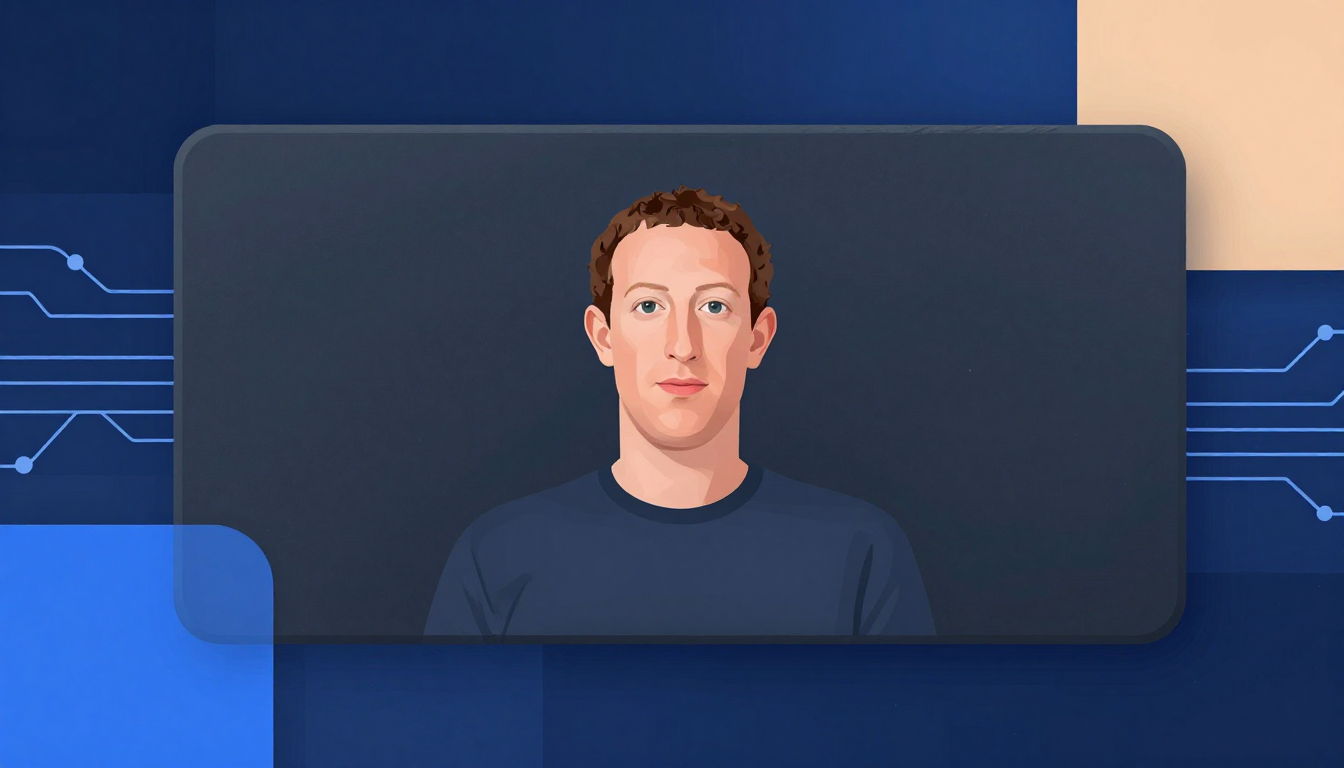
Introduction: A Visionary Redefining Tech
Mark Zuckerberg, the co-founder, Chairman, and CEO of Meta Platforms, stands as one of the most transformative figures in the history of the modern technology industry. Since the early 2000s, his leadership has redefined how the world connects, transforming a niche social networking application created in a Harvard dormitory into a multi-faceted global behemoth. Renaming the company from Facebook, Inc. to Meta Platforms in 2021 was more than a corporate move; it was a profound strategic pivot aimed at spearheading the development of the metaverse—a revolutionary, immersive digital ecosystem that promises to blur the lines between virtual and physical interaction. Zuckerberg’s influence extends beyond social media, into the critical domains of artificial intelligence (AI), infrastructure, and infrastructure development, marking him as a pivotal actor in the future of the internet.
His leadership is characterized by a long-term, high-risk strategic approach—often willing to sacrifice short-term financial performance for foundational technological shifts. As both CEO and Chairman, Zuckerberg maintains a concentrated voting power, which allows him to pursue this audacious, decadal-scale vision, shielding the company from the immediate pressures of public market scrutiny. His career serves as a masterclass in platform scaling, technological acquisition, and corporate reinvention, cementing his reputation as one of the most polarizing yet profoundly influential corporate leaders of the 21st century.

The Harvard Genesis and Initial Growth
The narrative of Zuckerberg’s ascent began in 2004 at Harvard University. Driven by a desire to improve student connectivity, he launched a platform that allowed students to match names with photos of classmates. What began as a tool for peer interaction soon exploded in popularity, escaping the bonds of the campus environment and capturing the attention of the wider digital community. His early vision was rooted in the premise that social connectivity could be formalized and enhanced through technology.
This simple tool laid the bedrock for a digital infrastructure that would later connect billions of people around the globe, fundamentally altering the fabric of social relations and digital discourse. As he matured, his focus evolved from a campus networking site to a comprehensive platform for social exchange, marketing, and the distribution of digital content. The rapid adoption of Facebook provided the necessary scale to innovate constantly, proving the viability of a hyper-connected, network-effect-driven model where the value of the platform grew exponentially with each new user interaction. This foundational phase taught Zuckerberg the value of rapid deployment, data-informed product development, and the importance of owning the communication layers of the internet.

Strategic Pivot: From Social Media to Meta
The strategic rebrand to Meta in 2021 signaled a major inflection point in Zuckerberg's leadership. It underscored his conviction that mobile social media was not the ultimate destination for the internet, but rather a preliminary phase. The 'metaverse' became the overarching objective, envisioned as a three-dimensional Internet where users can work, play, and interact in virtual and augmented spaces.
By transitioning focus towards creating virtual reality (VR) hardware, augmented reality (AR) technologies, and immersive digital platforms, Meta is positioning itself to be the architect of the next phase of human digital interaction. Zuckerberg envisions this not as merely another application, but as the successor to the mobile internet itself—a comprehensive environment that provides presence and interaction modalities previously impossible in two-dimensional digital interfaces. This move required massive capital allocation into Reality Labs, a division dedicated exclusively to hardware and software for this immersive reality, showcasing his insistence on owning the next computing platform entirely.
Infrastructure of Immersive Digital Experience
The technical feasibility of the metaverse relies on significant advancements in hardware and infrastructure. Zuckerberg has spearheaded efforts to develop lightweight, high-performance VR headsets and wearable AR devices that simulate the natural visual cortex experience. Achieving this goal involves solving some of the hardest problems in consumer electronics: miniaturization, battery life, thermal management, and high-fidelity rendering, all while maintaining accessibility for a broad user base.
Beyond the hardware, Meta must build a robust, low-latency infrastructure capable of supporting millions of concurrent users in shared virtual spaces. This involves deep innovation in network protocols, cloud rendering, and spatial computing, ensuring that interactions across virtual and physical worlds are synchronized and intuitive. This investment demonstrates Zuckerberg’s belief that for the metaverse to succeed, Meta must act vertically—designing the hardware, the software operating system, and the application layers themselves—to control the user experience entirely.
AI as the Engine of Meta's Future
Underpinning the metaverse strategy is a massive, industry-leading investment in artificial intelligence. AI, for Zuckerberg, serves as both the foundational layer for creating immersive virtual experiences and a vital tool for improving user safety, content moderation, and recommendation algorithms on existing platforms like Facebook, Instagram, and WhatsApp.
As Meta navigates the complex challenges inherent in scaling these platforms, AI has become a cornerstone of his leadership strategy. The company has aggressively developed open-source AI models, such as the Llama series, which aim to democratize advanced language and reasoning capabilities, positioning Meta as a key player in the AI ecosystem. The capacity to autonomously process vast datasets, enhance digital safety through proactive moderation, and personalize user interactions at a massive scale is critical to maintaining the company’s competitive advantage. Zuckerberg views AI as the "enabling" technology that allows the complex virtual worlds of the metaverse to function, providing intelligent NPCs (non-player characters), dynamic environment generation, and near-instant translation and communication tools.
The Chan Zuckerberg Initiative: Long-term Philanthropy
Furthermore, Zuckerberg's leadership philosophy is underscored by a profound commitment to long-term impact through philanthropy. Along with his wife, Priscilla Chan, he founded the Chan Zuckerberg Initiative (CZI). A defining aspect of their work is the ambitious pledge to give away 99% of their Meta stake over their lifetimes.
Their efforts, specifically the commitment to spending $3 billion in an attempt to help end, manage, or cure all diseases by the year 2100, demonstrate a vision that transcends corporate quarterly goals. This philanthropic framework mirrors his business approach: large-scale, audacious, and focused on multi-decadal timelines, aiming to leave a monumental imprint on global health, education reform, and human development. It is an extension of the same philosophy applied at Meta: identifying scalable problems where technology and deep research can systematically accelerate solutions over decades rather than quarters.
Governance and Challenges: Privacy and Regulation
Zuckerberg’s tenure has not been without significant controversy. The growth of his platforms has coincided with intense scrutiny regarding data privacy, market competition, and the role of social media in public discourse. Critics argue that the company has struggled to manage the externalities of its own platform, leading to debates over content moderation practices, the impact on democratic elections, and the effects on user mental health.
As the leader of a company with billions of daily active users, Zuckerberg is constantly balancing the imperative to innovate with the necessity of ensuring safety and compliance. His leadership has shifted from a "move fast and break things" ethos to a more managed approach, dealing with frequent interactions with global regulatory bodies and the demanding requirements of operating a truly global digital communications infrastructure. These governance challenges represent one of the most substantial tests of his leadership: evolving Meta’s business model and culture to satisfy societal expectations without stifling technological innovation.
Conclusion: Shaping the Digital Future
Mark Zuckerberg remains a dominant force, not just as a developer of platforms, but as an architect of the next paradigms in digital existence. His dual approach—focusing on aggressively pioneering AI-driven technology for the metaverse while concurrently building a massive, long-term philanthropic foundation—places him in a rare class of technological innovators.
As he steers Meta Platforms in an era defined by rapid competition, ethical challenges, and technological disruption, his ability to define and drive the technological future remains the enduring theme of his storied and impactful career. Through Meta, he continues to seek to formalize and bridge human interaction, testing the boundaries of what is possible in a truly connected world. While the journey toward a fully realized immersive digital future is fraught with risk, Zuckerberg’s commitment to his vision suggests a continued and profound influence on how humanity interacts, works, and lives in the digital age.