The RTX Spark Ecosystem Takes Shape
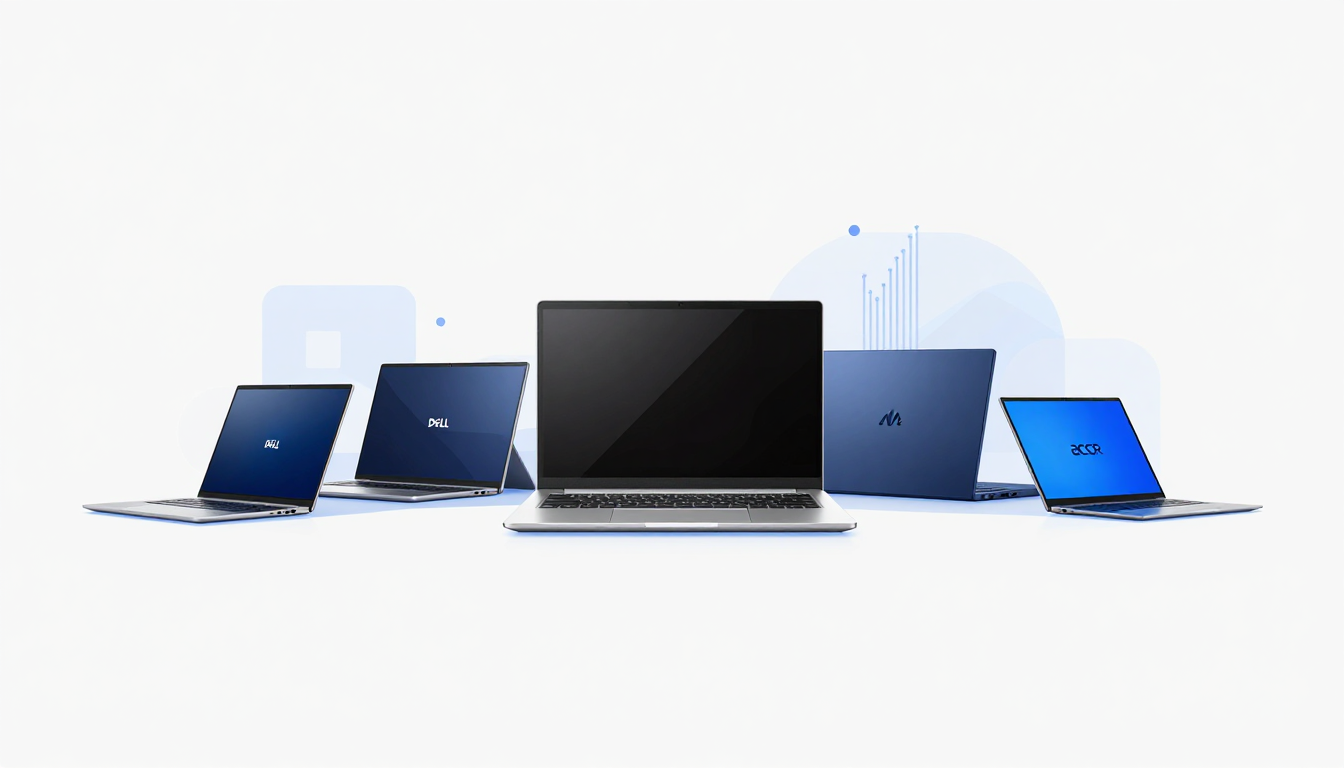
Here's something worth paying attention to: Dell, Asus, Lenovo, HP, MSI, Acer, and Gigabyte are all designing systems around Nvidia's new RTX Spark chip. That's not a handful of niche players testing the waters — that's basically every major PC manufacturer on Earth, all betting simultaneously that Arm-based Windows PCs are about to become a real thing.
And Microsoft is leading the charge with its Surface Laptop Ultra, which Nvidia says will be among the first systems to ship with RTX Spark. The positioning is clear: this isn't a toy. Microsoft is calling it out as a high-end system targeting "creators, developers, and AI builders," with configurations offering up to 128GB of unified memory. That's a number that makes you sit up and take notice if you've ever tried to run anything meaningful with AI models on a laptop.
The timing feels deliberate. Nvidia has been pushing Arm into data centers for years with its Grace series, and the consumer PC market has been stuck in a Qualcomm Snapdragon rut for Surface devices. RTX Spark changes the equation by bringing actual Blackwell GPU compute to the table — not the integrated graphics you'd find on a Snapdragon laptop, but something that competes with desktop-class hardware.
Microsoft says the Laptop Ultra will be available "later this year," though they haven't dropped any specific pricing or configuration details yet. That's frustrating, sure, but it also means we're still in the early innings of understanding what this ecosystem actually looks like.
Inside the RTX Spark Chip
Let's talk silicon, because this is where things get genuinely interesting. Nvidia's RTX Spark packs up to 20 Arm CPU cores into a single system-on-chip. The breakdown is thoughtful: ten large high-performance cores for the heavy lifting, paired with ten mid-sized efficiency cores that handle background tasks and keep power consumption in check. It's the kind of big.LITTLE-style architecture that Arm has been perfecting for years, but scaled up to desktop-class performance expectations.
The GPU side is where RTX Spark really separates itself from the Qualcomm Snapdragon laptops that currently populate Microsoft's Surface lineup. We're looking at up to 6,144 Blackwell-based GPU cores. For context, that puts the high-end RTX Spark roughly on par with a desktop GeForce RTX 5070 in terms of raw computing resources.
Now, before you start imagining you're getting a full desktop experience in a laptop chassis, let's ground this. The RTX Spark operates within an 80-watt power envelope — notably lower than its desktop counterpart. And it's paired with LPDDR5x RAM rather than the GDDR7 memory you'd find on a desktop RTX 5070. Those are real differences, and they matter for sustained workloads.
But here's the thing that actually excites me: unified memory architecture. This is where RTX Spark could fundamentally change what's possible on a Windows laptop, and it's not even close to being a minor improvement.
Why Unified Memory Changes Everything
A typical desktop RTX 5070 can access only 8GB or 12GB of its dedicated VRAM for GPU workloads. That's fine for gaming at most resolutions, but it becomes a hard ceiling the moment you start trying to run local AI models or do anything that requires loading large datasets into GPU memory.
RTX Spark's integrated GPU can access nearly all of the system's unified memory pool. This isn't a theoretical advantage — it's transformative for specific workloads.
Consider this: even a base 32GB configuration of the Surface Laptop Ultra could devote more memory to GPU work than a GeForce RTX 4090 or 5090 could ever access. The 4090 has 24GB of VRAM, and the 5090 tops out at 32GB. But on RTX Spark, a 32GB laptop means the GPU has access to almost all of that 32GB, not just a fraction.
For AI developers, this is the kind of architecture that makes local model inference actually viable on a portable device. You're not limited by some arbitrary VRAM ceiling — you're limited by the total system memory you can fit in a laptop chassis, which is a much more generous constraint.
Gamers might not care as much about unified memory in the short term, but it opens up possibilities for future titles and APIs that treat GPU memory as a shared resource rather than a siloed pool. It's still early days, but the architectural advantage is real.
Surface Laptop Ultra Hardware Breakdown
Microsoft has been experimenting with convertible designs for years — the Surface Book's detachable screen, the Laptop Studio's sliding mechanism. Both were ambitious, both had quirks that limited their appeal. The Surface Laptop Ultra is refreshingly simple: it's just a more powerful laptop, nothing weird going on.
That simplicity is actually its selling point. Microsoft is following the MacBook Pro formula here — a traditional clamshell design with serious internals, no gimmicks.
The port selection is solid: USB-A, USB-C, HDMI, an SD card slot, and a headphone jack. Nothing radical, but it covers the bases that creators actually need without requiring a dongle life.
The display is a 15-inch PixelSense panel with up to 2,000 nits of peak brightness. That's genuinely impressive for a laptop in 2026, and it puts Microsoft firmly in the high-end display race alongside Apple's ProMotion panels.
Microsoft is also calling the trackpad "the largest we've ever put on a Surface," and it's haptic rather than mechanical. If they've learned anything from the MacBook Pro's trackpad evolution, it's that good haptic feedback can feel better than physical buttons — but only if the implementation is tight. We'll see.
Where This Fits in Microsoft's Lineup
The Surface Laptop Ultra slots above the regular Qualcomm Snapdragon-based Surface Laptops in Microsoft's product hierarchy. This is significant because it signals that Microsoft sees RTX Spark as a premium tier, not a replacement for the more affordable Arm-based options.
For context, Microsoft has used Nvidia chips in Surface devices before — the original Surface RT models ran on Nvidia Tegra processors back in the Windows RT era. That was a disaster, of course. Windows RT couldn't run x86 applications, the app ecosystem was nonexistent, and Nvidia Tegra-based PCs vanished along with the platform.
But that failure also laid the groundwork. The Arm versions of Windows 10 and Windows 11 that followed were built on the lessons learned from Windows RT, including the development of x86-to-Arm code translation technology.
Today's RTX Spark systems are nothing like Windows RT. Microsoft's Prism translation layer has improved dramatically, and the native Arm app ecosystem has grown substantially. The difference between then and now is night and day, even if the historical parallel makes some people nervous.
The Gaming Question
Let's address gaming directly, because it's the elephant in the room for any Arm-based Windows system. Gaming is still a relatively weak point for Arm Windows, and nobody's pretending otherwise.
The specific challenge involves kernel-level anti-cheat software. Several popular online games rely on anti-cheat systems that operate at the kernel level, and those don't always play nice with Arm architecture. Nvidia and Microsoft have both acknowledged this and said they're actively working with developers of popular online games to get those titles running on Arm systems.
This is a real problem, but it's also a solvable one — it just takes time and cooperation between chip makers, OS vendors, and game developers. The fact that both Nvidia and Microsoft are investing in this relationship is encouraging.
Microsoft's Prism x86-to-Arm translation technology continues to improve, and an increasing number of third-party applications now ship with native Arm support. The gap between "runs everything" and "runs most things well" is narrowing, even if it hasn't closed completely.
For now, RTX Spark laptops are best positioned as creative and development machines first, gaming machines second. But the gap is closing faster than most people expected.
What This Means for the Market
The fact that seven major PC manufacturers are all designing RTX Spark systems simultaneously tells you something about where the industry thinks this is heading. This isn't a niche experiment — it's a coordinated bet on Arm-based Windows PCs as a serious category.
Microsoft's Surface Laptop Ultra is the flagship announcement, but it's really just the tip of the iceberg. When Dell, Lenovo, HP, and the others start shipping their own RTX Spark systems, we're going to see real competition in this space — and that's good for consumers.
The unified memory architecture is the technical differentiator that could make RTX Spark systems genuinely compelling for specific workflows, particularly AI development and creative work. The gaming situation is improving but still imperfect.
We're early in this story, and there are plenty of unknowns — pricing, availability timelines, actual performance numbers. But the architecture is sound, the ecosystem players are committed, and the potential use cases are real.
This is the kind of shift that doesn't happen overnight, but the foundations are being laid right now. Keep an eye on this space.

Key RTX Spark Competitors and Related Devices
While the Surface Laptop Ultra leads the pack, other major brands are preparing their own RTX Spark-powered devices:
- Dell: Expected to launch the XPS 15 Spark Edition, targeting creatives with a 16-inch 4K display and 128GB RAM option.
- Lenovo: The ThinkPad Z16 and Yoga 9i are rumored to feature lower-power Spark variants with 64GB RAM and 45W TDP.
- HP: The Spectre x360 16 is anticipated to offer a convertible design with RTX Spark, positioning it as a premium AI notebook.
- ASUS: The Zenbook Pro 16 may feature a 16:10 OLED panel and up to 96GB unified memory.
- MSI: The Summit E16 is expected to appeal to developers with a full-size keyboard and robust cooling.
- Acer: The Swift X 16 could be the most affordable RTX Spark laptop, targeting students and remote workers.
- Gigabyte: The AERO 16 is rumored to include a dedicated GPU cooling system and 128GB RAM for AI workloads.
For more technical details on the RTX Spark chip itself, see our deep-dive: Nvidia RTX Spark: ARM-Based AI Chip Enters Consumer PC Market.
For a broader look at Nvidia’s strategic shift into consumer hardware, read: Nvidia's Strategic Pivot: From Consumer GPU Giant to ARM-Powered PC Competitor.