Overview
Scaleout Systems, a spin-off from Uppsala University, supplied the onboard artificial-intelligence stack for the Affordable Loitering Modular Ammunition (ALMA) program, a low-cost loitering-munition effort headed by BAE Systems Bofors. ALMA’s distinguishing engineering bet is that the intelligence lives on the aircraft: detection, identification, geolocation and target ranking all run on dedicated onboard computing, with no data pushed to an external server during the engagement. That design choice — keep the brain on the airframe, not in the cloud — is the thread that ties the ALMA demonstration to Scaleout’s broader research posture and to a related but separate NATO-backed project.
It is worth keeping two things apart from the outset. ALMA is the BAE Bofors loitering-munition program in which Scaleout demonstrated a target-selection chain at a Swedish test range in January 2026. FEDAIR (Federated Aerial Intelligence for Recon) is a different, research-oriented effort inside NATO’s Defence Innovation Accelerator for the North Atlantic, in which Scaleout was selected in February 2025. They share a company, an edge-AI philosophy and a federated-learning technique, but they are not the same program and should not be conflated.
The ALMA demonstration
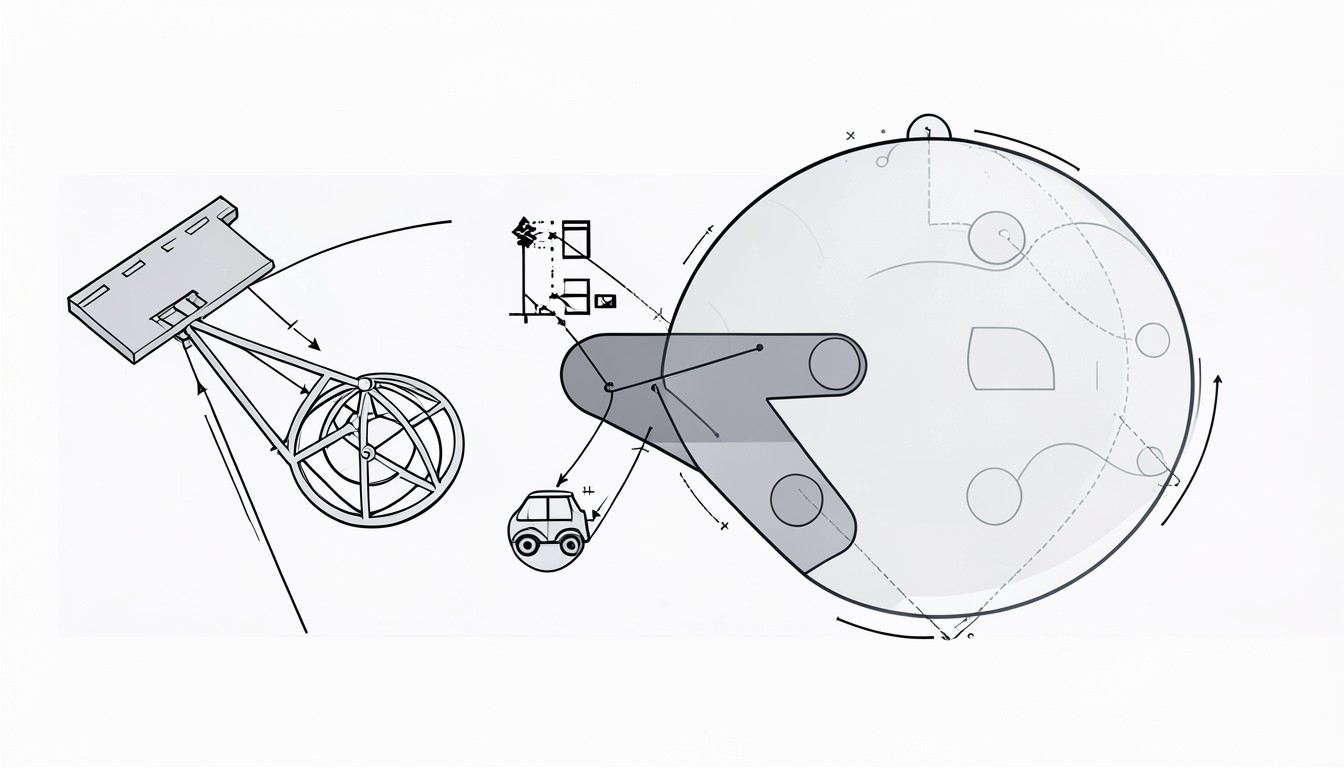
ALMA — the Affordable Loitering Modular Ammunition project run by BAE Systems Bofors — aims to field a low-cost, autonomous loitering munition. According to DroneXL, a January 2026 demonstration at a Swedish test range saw the drone spot four objects, rank an armored engineering vehicle as the most valuable target, fly to it and release an explosive payload on it. A human set the mission parameters; no human selected that specific vehicle. Every step of the target work ran on the aircraft’s own computing.
This framing matters for the autonomy debate. The pattern that has dominated this category for years is a human designating the target and the machine flying the last stretch. The January sequence moved the designation itself onto the drone: the system detected, identified and geolocated threats and then ranked among them using AI, all handled by onboard hardware with none of it processed externally. An operator could still have taken control, but on DroneXL’s account nobody needed to.
BAE Systems Bofors had announced the demonstration as part of Winter Demo 2026, held in January in Karlskoga, where ALMA was shown alongside roughly twenty startups and technology companies over three days, with Swedish defence minister Pål Jonson participating in a panel. Scaleout’s own presentation, as relayed by DroneXL, describes the aircraft using AI to detect, identify and geolocate threats entirely on dedicated onboard computing.
Edge AI: why the model is small and local
Scaleout does not run frontier large language models on the drone. The practical constraint is payload and power: a loitering munition or a forward workstation can only carry and cool so much compute. So the company trains smaller computer-vision models sized for the hardware that actually flies. This is the core of the "edge AI" approach — pushing inference onto the airframe so the platform can operate when its communications link is degraded or gone.
The rationale is operational, not theoretical. Electronic warfare and jamming routinely break communication links on a modern battlefield, which is precisely why a growing number of fielded drones, including Ukrainian FPV platforms, now carry onboard AI to finish a strike when the link drops. Scaleout is pursuing the same problem, but with a formal architecture rather than a battlefield improvisation.
Federated learning and the model-drift problem
The connecting technique across Scaleout’s work is federated learning. Instead of devices shipping raw sensor footage back to a central server, an expensive and, in a contested environment, often impossible move, devices share model updates while keeping reconnaissance data on local hardware. This both preserves data locality and reduces the bandwidth needed to keep the fleet’s models current.
The specific failure mode federated learning targets is model drift: a detector trained on desert imagery degrades badly over an urban scene, and a conflict does not pause while someone retrains a model in a data center. Under a federated scheme, headquarters nodes can retrain on aggregated battlefield data drawn from several units and push revised models back out to the edge whenever a link opens.
The Uppsala test and the FEDAIR research line
The line between ALMA and the separate FEDAIR research program is clearest in a second demonstration. In June, Scaleout ran a test at a Swedish Air Force base in Uppsala, where the military already licenses its main software platform. A forward computing node kept running inference and active learning after losing contact with the company’s lab, then synced its updates on reconnect. The capability on display was a system that keeps learning while cut off and hands its improvements back when contact is restored.
This learning-while-disconnected work sits under FEDAIR, short for Federated Aerial Intelligence for Recon, inside NATO’s Defence Innovation Accelerator for the North Atlantic (DIANA). Uppsala University states that Scaleout was selected for the accelerator in February 2025, among a group of Swedish companies. The company’s CEO, Andreas Hellander, has framed the payoff in alliance terms, telling Ars Technica that "in principle, you can unlock collaboration between NATO member states." The significance of the June test is that it turns the onboard models from a fixed capability into a compounding one, improving autonomously during the blackout and consolidating those gains afterward.
A caveat on attribution: Ars Technica’s reporting on this topic was supplied as a verified source but the page could not be retrieved for extraction (HTTP 405), so the claims above are drawn from DroneXL’s account, which itself attributes the demonstration write-up to Jeremy Hsu at Ars Technica, and from the Uppsala University announcement about DIANA/FEDAIR selection. Keep that provenance in mind when weighing specifics.
Policy context: autonomy rules and accountability
The technical debate lands on top of an active policy one. States party to the Convention on Certain Conventional Weapons agreed a non-binding autonomy text in Geneva on September 5, after late changes pushed by the United States and Russia and Washington’s stated preference for flexibility on human-judgment language. The Seventh Review Conference scheduled for November decides whether formal treaty negotiations begin. The agreed text had not been published, and advocates such as Stop Killer Robots argued that years of work had been "substantially diluted" during the final hours of talks.
The United States has its own domestic rule. DoD Directive 3000.09, reissued in January 2023, requires that autonomous weapon systems be designed so commanders can exercise "appropriate levels of human judgment over the use of force," routing systems outside its exemptions through senior review before development and again before fielding. That directive governs American programs; it does not govern a Swedish demonstration.
Analysis and open questions
The strike sequence is the headline, but the learning loop is arguably the more consequential development. A drone selecting its own target is no longer novel; what the June test pointed toward is a platform that continues to improve while unreachable and folds those improvements back on reconnect, turning a static capability into a compounding one. Designing for a contested link is sound engineering, and the operational case (a platform that "goes stupid" the moment its link drops is a platform already lost) is strong.
What engineering does not resolve is accountability. If the onboard model ranks the wrong object highest and the human did not designate it, the question of who is responsible remains open, and it is exactly the question the Geneva process spent time narrowing without settling. For an article tracking defense-AI startups, the durable distinction to carry forward is this: ALMA is the fielded loitering-munition demonstration under BAE Bofors, FEDAIR is the NATO DIANA research program, and Scaleout’s federated edge-AI method is the connective tissue between them, not a single merged program.
Sources
- DroneXL, "NATO-Backed Drone Picked Its Own Target And Dropped A Bomb", https://dronexl.co/2026/09/18/nato-scaleout-alma-autonomous-drone-target/
- Nordic Defence Sector / BAE Systems Bofors, "BAE Systems Bofors demonstrates ALMA at Winter Demo 2026", https://nordicdefencesector.com/en/press/bae-systems-bofors/bae-systems-bofors-demonstrates-alma-at-winter-demo-2026
- Uppsala University, "Uppsala innovation in cyber security to help NATO", https://www.uu.se/en/news/2025/2025-09-29-uppsala-innovation-in-cyber-security-to-help-nato
- Ars Technica, NATO-backed startup and autonomous drone missions (supplied as verified source; not retrievable for extraction, HTTP 405), https://arstechnica.com/ai/2026/09/nato-backed-startup-adapts-ai-for-autonomous-drone-recon-and-attack-missions/