The Deadline Is Real
Samsung Heavy Industries just gave us a date: second quarter 2028.
Not “around 2028.” Not “targeting mid-to-late 2020s.” The company’s floating datacenter (FDC) team has tied the knot on a timeline, and they’re pushing out at Posidonia 2026 with partners—Capital Clean Energy Carriers and Lloyd’s Register—signed on the dotted line. This isn’t a whiteboard exercise; it’s a shipyard with steel being cut.
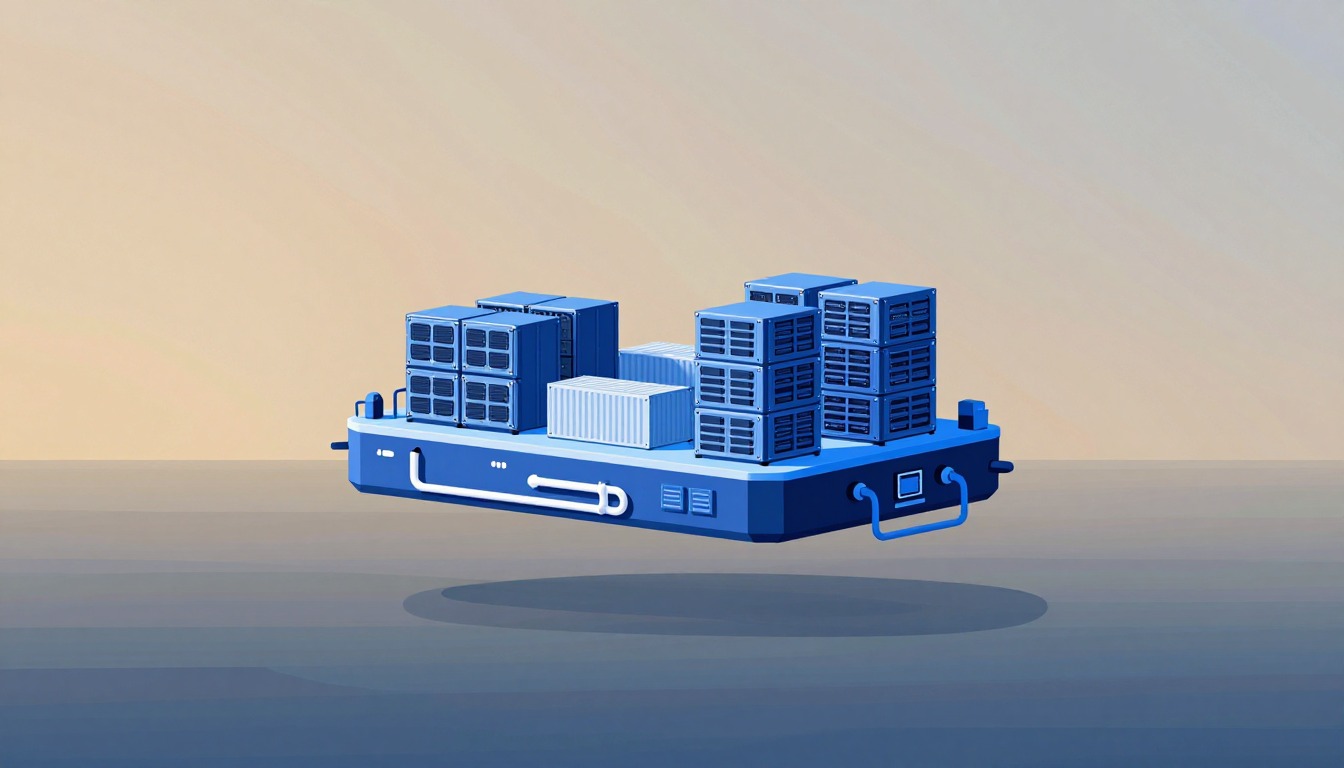
The Korean conglomerate isn’t the only one sniffing salt air, but it’s the first to pin down a calendar. Japan’s Mitsui OSK Lines and Hitachi are mulling something similar, but they’re retrofitting existing vessels to cut time-to-cash—Samsung’s doing something entirely new: a purpose-built vessel, bottom-up. Think container ship chassis but with server racks bolted into hull mounts and seawater chillers integrated at the keel.
Why Float at All?
Let’s be honest: most people don’t wake up thinking about where their LLM training happens. They assume it’s just clouds—literally, in the AWS or Azure datacenter sense. But cloud providers are hitting real physical limits: local grid capacity, noise ordinances near cities, and yes, the heat problem.
The Register’s Dan Robinson laid it out in June: a single floating FDC unit is designed to push around 50 megawatts of AI compute. That’s enough power for hundreds of thousands of inference requests per second—or a decent slice of an LLM training cluster. And unlike land-based DCs, an offshore unit can pull cooling water directly from the sea, letting heat dissipate like steam off a kettle.
Samsung’s own calculations put the high-performance infrastructure market at $3 trillion by 2030, per Moody’s. The logic is simple: as AI workloads swell, land-based facilities are staring down local power caps and environmental resistance. Offshore floats sidestep both.
The Nuisance Factor: Salt, Sway, and Servers
You might think, “Computers in water? That’ll never last.” And you’re half-right: Samsung doesn’t either. Their engineering team is already upfront about the environmental stresses—vibration from engines or sea motion, high-salinity air that’ll corrose a standard server in months, and rapid humidity swings during storm seasons.
To mitigate this, Samsung Heavy Industries struck a joint development agreement with Supermicro, the server specialist who’s made a career out of niche enterprise builds. Their task: stress-test AI servers in simulated river and offshore conditions before the first hull ever leaves dry dock.
Think of it like testing race cars on a dirt track before the first lap at Le Mans.
Certifications ≠ Deployment Ready
The article mentions approval-in-principle from both the American Bureau of Shipping and Lloyd’s Register. That’s a big deal—class societies don’t hand out AIPs lightly—but it only covers hull design, stability, and basic safety. It says nothing about server uptime in a salty, swaying environment.
Samsung’s first unit will double as both deployment and validation. In other words, the FDC won’t go live until it’s proven itself at sea. That means early users may see temporary dips in availability—not ideal for production workloads, but fine for research teams pushing the edge of model capability.
Who’s in Front? Not You (Yet)
Here’s the tricky bit: unless you’re part of Samsung’s partner network or have a direct MoU, you won’t get first dibs on FDC capacity. Samsung’s press release at Posidonia didn’t name cloud hyperscalers as early adopters—only commercial enterprises and select government clients in APAC. That’s intentional: they’re prioritizing long-term, high-margin contracts over quick hyperscaler deployments.
Japan’s approach—turning existing freighters into floating compute boxes—is more scalable in the short term, but it sacrifices efficiency. Samsung’s path is slower to launch but offers higher density and better thermal management. It’s like comparing a luxury ferry with a converted oil tanker.
What Happens After 2028?
If this first FDC hits its benchmarks—50 MW uptime, fewer than five scheduled maintenance events per year, and sub-10% server failure rates—the next wave of projects could green-light by late 2029. So far, the candidate list includes deployments off Busan, Okinawa, and possibly Singapore, where water access meets high-demand markets.
Remember: this isn’t about replacing land-based DCs. It’s about augmentation. As one insider put it, “You wouldn’t build a datacenter on Mount Everest either.” Some problems are better solved in environments designed for them—and if the ocean is the answer, it better be ready to handle servers faster than ever before.
Bottom Line: 2028 Is the Real Milestone
Samsung’s floating datacenter isn’t science fiction anymore. It’s a project with engineering teams,MoUs, and now a deadline.
The timing lines up: AI compute demand won’t slow in the next few years, and land-based capacity is tightening fast. If Samsung nails the first unit’s thermal and stability metrics, expect other shipbuilders to scramble for their own class society approvals.
For now, though, this remains a high-stakes experiment. Success means Samsung enters the AI infrastructure race as a legitimate player, not just a vendor of semiconductors or smartphones. Failure means more time onshore—and another white elephant to file away in the “what were they thinking?” maritime history archive.
One thing’s certain: we won’t be waiting another two years to hear about the next floating datacenter prototype. The clock starts ticking now.