Our Brains Are Outdated. Our Country Is Too. Can We Fix Both?
We’re celebrating the 250th anniversary of a country built on reason, liberty, and self-governance. And yet, 69% of Americans say the country’s on the wrong track.
It’s not just politics.
It’s not just the economy.
It’s our brains.
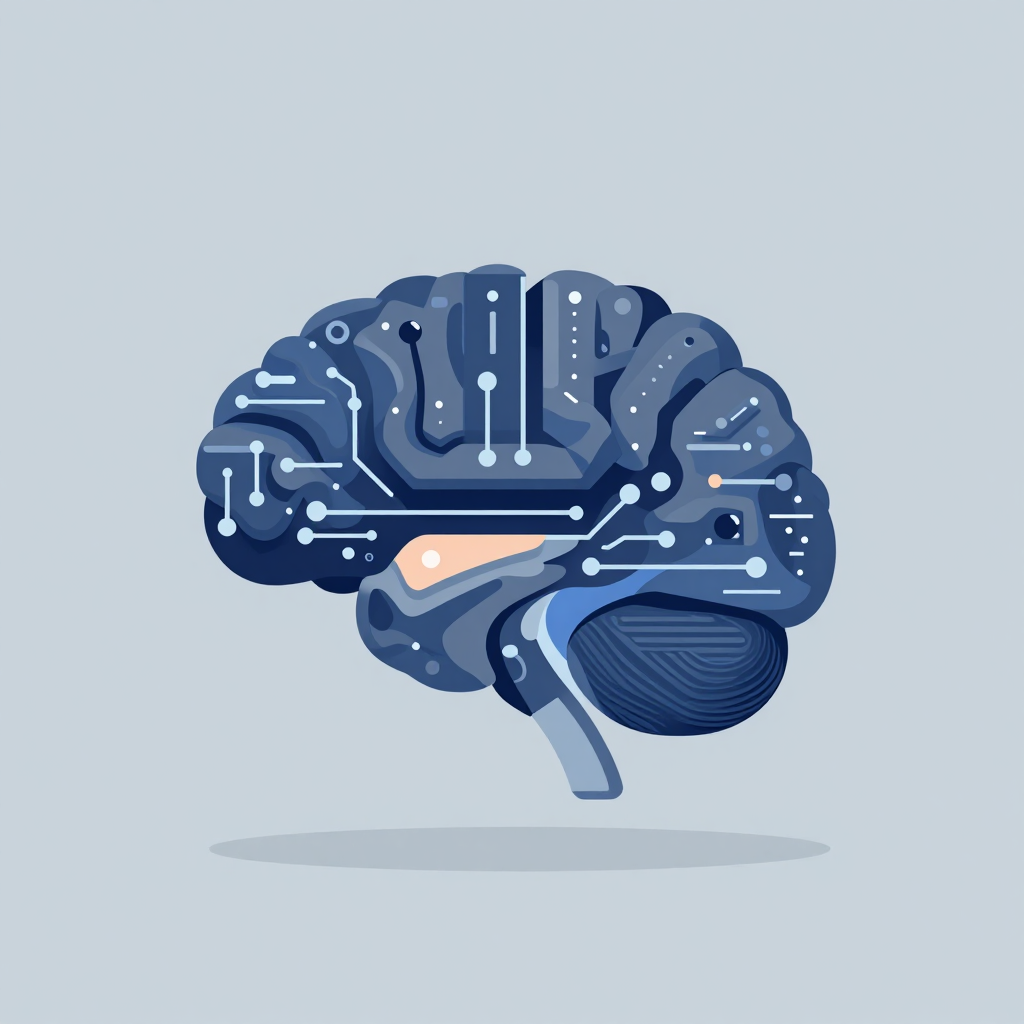
We’re running a Stone Age operating system on a 21st-century information storm. Our amygdala—the ancient alarm system wired for saber-toothed tigers—now triggers at a tweet. A headline. A deepfake video. The result? Chronic, unrelenting stress. We have more medicine, more food, more safety than any generation in history—and yet, 75% of us report higher stress levels in the last five years. Why? Because our brains can’t tell the difference between a real threat and a viral outrage loop.
And we’re not just stressed.
We’re being hacked.
The Brain That Was Never Meant for This
For 99% of human history, survival meant spotting a predator, sharing food, or avoiding a rival tribe. Our brains evolved to prioritize speed over accuracy. Fear was a feature, not a bug. The amygdala didn’t care if the threat was real—it cared if it was perceived. And it didn’t care about nuance. It screamed: Danger. React now.
Today, that same system is hijacked by a 24/7 news cycle, algorithmically optimized outrage, and AI-generated content designed to trigger dopamine hits and panic.
Mary McNaughton-Cassill, a clinical psychologist at UTSA, puts it plainly: “We’re using a brain built for survival in a world built for exploitation.”
We don’t just consume information anymore.
We’re being fed a curated diet of fear, designed to keep us scrolling, sharing, and angry.
And it’s working.
The Myth of "Worse Than Ever"
We tell ourselves this is the worst it’s ever been.
It’s not.
During the Civil War, 698,000 Americans died. In 1864, only 58% supported the Civil Rights Act. In 1776, only 30-40% of colonists backed independence. The rest? Neutral. Loyalists. Silent.
We’re not uniquely divided.
We’re uniquely exposed.
In 1776, news traveled by horse. Today, it travels at the speed of light—and it’s engineered to make us feel helpless.
The media ecosystem doesn’t reward truth.
It rewards attention.
And attention thrives on polarization, outrage, and confirmation bias, fueling the socially isolating effects of modern digital platforms.
We’re not victims of bad actors.
We’re victims of bad architecture.
The Cognitive Offloading Crisis
We used to remember things.
Now we Google them.
We used to think through problems.
Now we ask ChatGPT.
This isn’t laziness.
It’s adaptation.
But when we outsource memory, judgment, and reasoning to algorithmic systems we don’t understand, we stop thinking for ourselves.
We stop asking “Why?”
We stop questioning sources.
We stop building our own mental models.
Democracy doesn’t survive on passive consumers.
It survives on critical thinkers.
And right now, we’re becoming a nation of cognitive freeloaders.
The Way Forward: Rewiring Ourselves, Rebuilding Our Institutions
We can’t go back to 1776.
But we can learn from it.
The Founding Fathers didn’t have social media.
But they had something we’ve lost: a shared commitment to reason, dialogue, and civic responsibility.
Here’s how we rebuild:
1. Practice Media Literacy Like a Muscle
Don’t just fact-check.
Context-check.
Ask: Who benefits from this message? What emotion is it trying to trigger? What’s missing?
Read one article from a source you disagree with every week.
Turn off notifications. Silence the noise. Let your brain rest.
2. Reclaim Cognitive Endurance
Our attention spans are being systematically eroded.
Just like physical endurance, mental focus can be trained—as demonstrated by those who undergo a strict experiment without scrolling.
Read a 10-page article without scrolling.
Write your thoughts by hand.
Spend 20 minutes a day in silence.
This isn’t meditation.
It’s mental hygiene.
3. Build Local Trust, Not National Rage
We don’t need to agree on national politics.
We need to trust our neighbors.
Volunteer. Join a community group. Talk to someone who votes differently.
Democracy doesn’t live in Congress.
It lives in the PTA, the library, the church, the town hall.
4. Demand Ethical AI Design
We must push for regulations that require transparency in AI-generated content.
Demand that platforms label synthetic media.
Support companies building tools that enhance human judgment—not replace it.
5. Make Cognitive Health a Public Good
Just as we teach physical fitness in schools, we must teach cognitive resilience.
Curriculum should include:
- Neurobiology of stress
- Critical thinking under uncertainty
- Media manipulation tactics
- The science of attention
This isn’t optional.
It’s survival.
Conclusion: The 250th Is a Mirror
The 250th anniversary of the United States isn’t a celebration.
It’s a mirror.
It reflects not how far we’ve come—but how far we’ve strayed from our founding principles.
We are not failing because we are divided.
We are divided because we are failing to think.
Our brains didn’t evolve for this.
But we can evolve beyond them.
We can choose to be more than reactive.
We can choose to be thoughtful.
We can choose to be human.
The country we live in may be broken.
But our brains? They’re still capable of greatness.
The question isn’t whether we can fix the country.
It’s whether we’re willing to fix ourselves first.