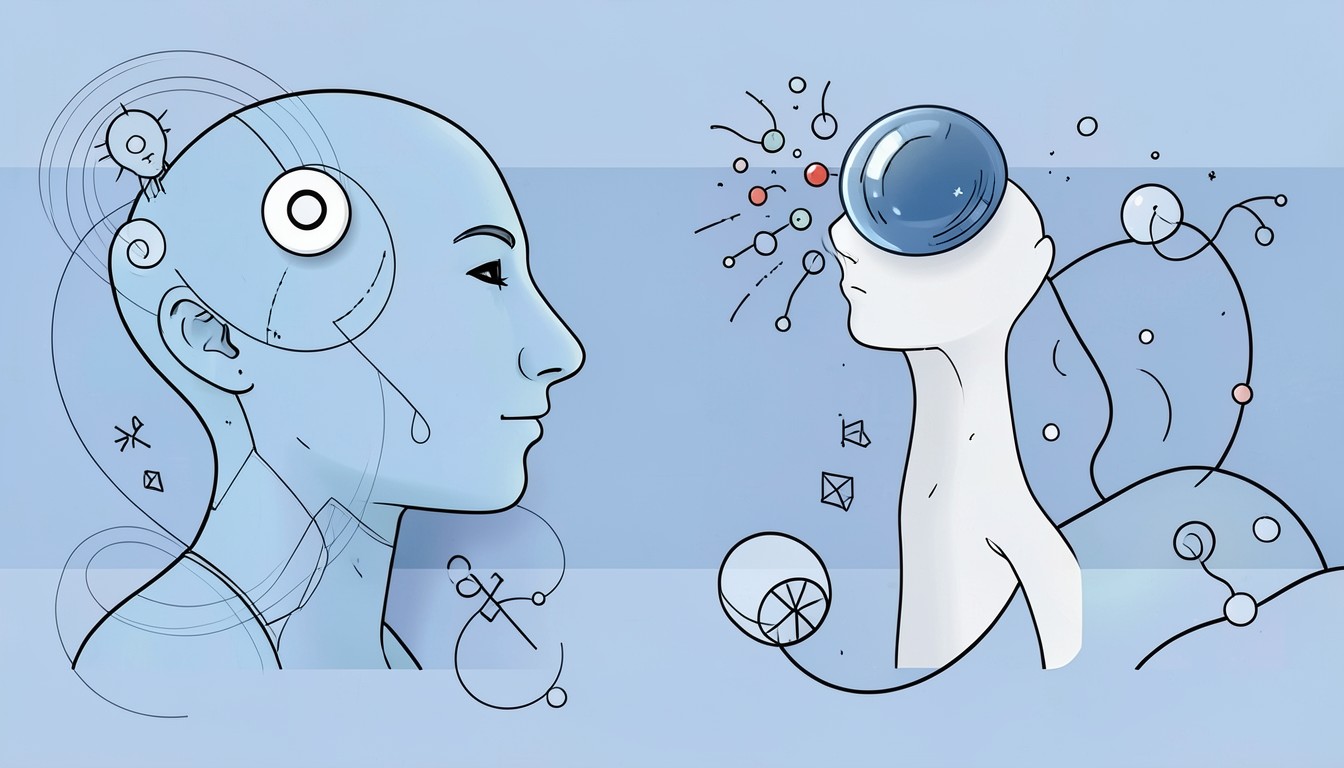
We talk a lot about self-worth as if it were a feeling you download once and keep forever. You repeat affirmations in the mirror. You tell yourself you matter. But real self-respect isn't just about believing you're worthy. It's about treating yourself as though you actually are.
Psychological research shows that self-respect is demonstrated through concrete behaviors—how you set your boundaries, how you communicate, and the daily choices you make under pressure. In our modern digital ecosystem, where algorithms constantly mediate human interaction and shape self-perception, maintaining genuine self-respect requires even greater intention.
What Is AI in Psychology?
To understand how modern technology intersects with our emotional lives, we must first examine what is ai in psychology. Artificial intelligence in psychology refers to the application of computational models, machine learning algorithms, and natural language processing to analyze, simulate, and support human behavioral patterns, emotional states, and cognitive processes.
From digital therapeutic chatbots and algorithmic sentiment analysis to predictive modeling of mental health trends, AI acts as a sophisticated tool for processing psychological data at scale. It assists researchers in identifying behavioral markers of distress, tracks emotional volatility across digital platforms, and provides personalized behavioral interventions. However, while AI can process vast datasets of human expression, it operates entirely on pattern recognition rather than lived emotional experience.
Can AI Understand Human Psychology?
A critical question facing researchers and clinicians alike is: can ai understand human psychology?
The short answer is nuanced. AI can recognize linguistic markers, facial expressions, and behavioral correlations with remarkable accuracy. It can predict when a user might be experiencing anxiety based on typing cadence or social media posting frequency. Yet, AI cannot truly understand human psychology in the phenomenological sense. It lacks consciousness, subjective emotional depth, empathy, and existential awareness.
AI simulates understanding by mapping probabilities across millions of data points. When individuals rely too heavily on AI companions or digital validation loops for emotional regulation, they risk substituting genuine human connection and self-reflection with algorithmic feedback. True psychological resilience—such as cultivating self-respect—requires navigating complex, embodied emotional truths that computations alone cannot replicate.
The AI Impact on Human Psychology and Digital Validation
The rapid integration of AI and social algorithms into daily life has profound implications for human psychology. AI impact on human psychology is visible in how self-worth is increasingly tied to algorithmic metrics—likes, engagement scores, and automated validation. When people outsource their self-worth to digital feedback loops, self-respect erodes, replaced by hyper-vigilance and external dependency.
To counteract this digital drift, we must ground ourselves in tangible, self-honoring behaviors. Here are ten practical ways to build genuine self-respect in a hyper-connected world.
1. Stop Chasing Validation Externally
Look inward for your primary gauge of worth. When you constantly scan the room—or your digital feeds—for approval, you hand your emotional autonomy to others. Real self-respect requires recognizing that your value is inherent, not something earned through compliance or performance.
2. Honor Your Personal Boundaries
Boundaries are not walls designed to keep people out; they are operational guidelines for how you expect to be treated. When you allow others to cross your limits without consequence, you signal to your own subconscious that your well-being is secondary. Asserting your boundaries consistently is a cornerstone of self-respect.
3. Keep Promises to Yourself
Integrity with others starts with integrity with yourself. When you commit to a routine, a rest period, or a personal goal and follow through, you build self-trust. Every broken promise to yourself diminishes your internal sense of respect.
4. Stop Tolerating Repeated Disrespect, Even from Loved Ones
You can care deeply about someone and still decide that certain behaviors are unacceptable. You do not need to prove your compassion or worth by endlessly tolerating disregard, manipulation, criticism, or dishonesty. Self-respect asks: What happens to me in this relationship?
5. Be Willing to Disappoint Others
This is often one of the hardest practices of all. Asserting self-respect sometimes means someone won't appreciate your boundary or will disagree with your decision. If you have spent years organizing your behavior around others' comfort, choosing yourself may initially feel selfish. It is not selfish if you are mindfully choosing to be self-honoring.
6. Communicate Issues Directly
Communicate directly and effectively. Be cautious about acting out your subconscious or unconscious perceptions through passive-aggressive behaviors or expecting others to read your mind. Cultivating self-respect includes elevating how you approach interpersonal communication with clarity and honesty.
7. Prioritize Your Emotional Needs
Self-respect does not mean believing you are more important than everyone else. It means finally recognizing that you are not less important either. Acknowledging that your emotional and psychological needs matter is essential for sustainable well-being.
8. Recognize the Cost of People-Pleasing
Chronic people-pleasing teaches your mind that your desires are secondary to everyone else's comfort. By examining where you habitually sacrifice your own needs to keep the peace, you can begin to reclaim your agency and time.
9. Align Your Actions with Your Core Values
When your daily actions contradict your deepest values, internal dissonance creates anxiety and self-doubt. True self-respect involves auditing your choices and ensuring that how you spend your time and energy reflects what truly matters to you.
10. Embrace Continuous Self-Reflection
Self-respect is strengthened through a cumulative series of small decisions. It is based on the boundary you finally set, the difficult conversation you stop avoiding, the promises you keep to yourself, and the values you refuse to compromise. Continually contemplate what you would do differently today if you acted like your self-respect truly mattered.
Conclusion
Whether navigating the complex digital landscape shaped by artificial intelligence or dealing with everyday interpersonal challenges, authentic self-respect remains our most vital psychological anchor. By understanding the limits of external validation and committing to daily practices of integrity, boundaries, and self-honoring behavior, we cultivate a resilient sense of self that no algorithm or external circumstance can diminish.