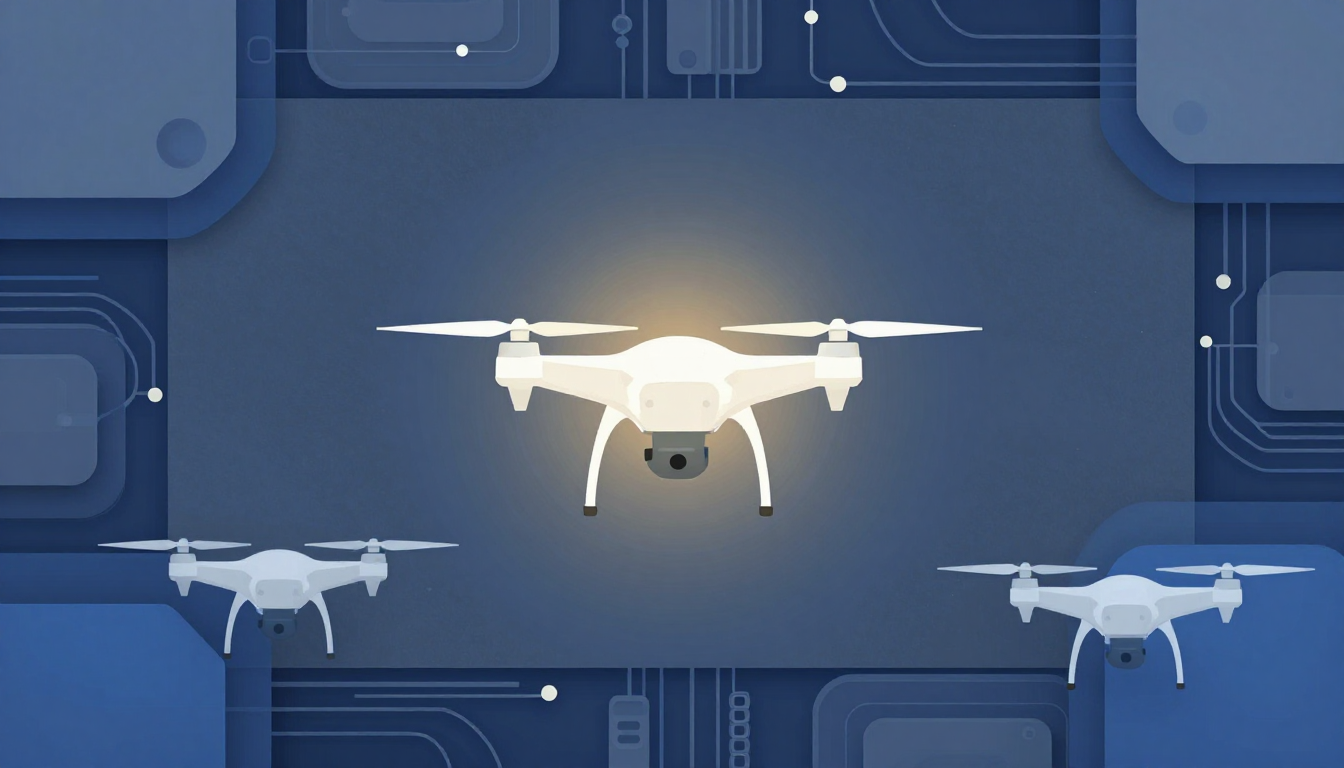
The Drone Warrior Mandate
They didn’t ask for this. Not the conscripts in their 20s, not the grizzled sergeants who still remember the last time a drone slipped past their defenses. But now, every single one of South Korea’s 500,000 active-duty soldiers — army, navy, air force, marines — is being told to treat drones like a second rifle. Not as some exotic gadget. Not as a specialty tool for the tech brigade. As basic equipment. As essential as their boots.
Defence Minister Ahn Gyu-back didn’t mince words. ‘All soldiers should be able to use drones like a second personal firearm,’ he said last Friday. And that’s not rhetoric. It’s doctrine. The kind of doctrine that doesn’t come from a PowerPoint. It comes from watching five North Korean drones float over Seoul in 2022 while your entire air defense system fired a hundred rounds and missed every single one.
This isn’t about upgrading gear. It’s about rewiring a military’s DNA. The Korean People’s Army didn’t need stealth bombers or nuclear subs to shake the South. They just needed a few cheap, off-the-shelf drones. And now Seoul is responding not with more jets, but with more hands — half a million of them — learning how to fly, launch, and shoot back.
The Numbers Don’t Lie
By the end of this year, South Korea will have bought 11,000 commercial drones. Not prototypes. Not prototypes. Not experimental. Just… drones. The kind you can buy online. The kind that cost less than a soldier’s monthly salary. And by 2029? That number jumps to 60,000. For training. For drills. For every unit, every outpost, every platoon.
Then comes the real shift: 20,000+ disposable combat drones by 2030. Not drones that come home. Not drones you recover. Drones you send out like grenades. Drones that explode on impact, then vanish. The K-Lucas system — named after the American Lucas drone, which itself was copied from Iran’s Shahed-136, which Russia is now using to flatten Ukrainian towns — is being fast-tracked. This isn’t science fiction. It’s battlefield arithmetic.
And yes, they’re building lasers. High-power microwave weapons to fry drone circuits mid-flight. But here’s the brutal truth: you can’t shoot down 20,000 drones with a laser. You need 20,000 people who know how to launch their own.
Why Ukraine Changed Everything
Ukraine didn’t just show that drones work. It showed how they change war. Not by replacing tanks. By overwhelming them. By turning every hillside, every forest, every alley into a potential launch point. A single soldier with a $1,500 drone can now spot, target, and kill a vehicle that would’ve taken a platoon of artillery to destroy a decade ago.
Ahn didn’t just cite Ukraine. He lived it. He watched Russian drones swarm Ukrainian positions. He saw how cheap, coordinated, and terrifyingly effective they were. And he realized: if North Korea can do this with a handful of drones, what happens when they’ve got 20,000? And what happens when every North Korean conscript can fly one?
The Middle East added the final layer. Drones don’t need air superiority. They don’t need radar. They don’t need fancy intel. Just a battery, a camera, and a kid with a phone. That’s the new battlefield. And South Korea is the first major military to say: if we’re going to survive it, everyone has to learn it.
The 2022 Embarrassment That Changed Everything
Let’s not pretend this was theoretical. In 2022, five North Korean drones slipped through South Korea’s air defenses. One of them didn’t just fly over the DMZ. It floated into the no-fly zone above the presidential palace in Seoul. The military scrambled jets. Helicopters. Fired 100 rounds. And not one drone fell.
Imagine that. Five plastic-and-metal boxes, flying lower than a bird, and your entire defense apparatus — satellites, radar, fighter jets — couldn’t stop them. That wasn’t a failure of technology. It was a failure of imagination. And it haunts the Korean military still.
Now, every recruit will be issued a drone. Not as a bonus. Not as a ‘maybe someday.’ As part of their basic issue. Just like their helmet, their rifle, their flak vest. Because if you can’t shoot down a drone, you have to be able to launch one. And fast.
North Korea’s Escalation Isn’t Hypothetical
Pyongyang isn’t waiting. Kim Jong-un didn’t just test a new missile last week — he tested a 90-kilometer rocket artillery system aimed squarely at Seoul’s suburbs. And he didn’t stop there. He pledged to expand North Korea’s nuclear arsenal at an ‘exponential rate,’ calling it the ‘most correct and unique way’ to confront an unstable world.
Why? Because he knows what Seoul is doing. He knows they’re training half a million soldiers to fly drones. And he knows that if he waits, he’ll be outgunned — not by missiles, but by numbers. So he’s accelerating. And he’s not doing it alone.
North Korea has sent thousands of troops to fight alongside Russia in Ukraine. They’re not just watching. They’re learning. They’re getting real-time data on how to use drones in combat, how to evade radar, how to coordinate swarms. This isn’t theory. It’s battlefield apprenticeship. And Seoul knows it.
The Unspoken Question: Can This Work?
Let’s be honest. Training half a million people to operate drones isn’t like teaching them to shoot a rifle. It’s more like teaching them to code — except the code is flying, and the bugs can kill you. Some will get it. Some won’t. Some will see it as another burden. Others will see it as power.
And that’s the real gamble. Because if you give a conscript a drone, you’re not just giving him a weapon. You’re giving him autonomy. Decision-making. The ability to strike without orders. That’s terrifying to a hierarchical military. But it’s also the only way to win the next war.
Japan and Taiwan are watching. So is China. This isn’t just about North Korea anymore. It’s about the future of warfare. And South Korea is betting that the future belongs to the many — not the few with the most expensive toys. Whether it works? We’ll find out soon enough. But one thing’s clear: the age of the specialist drone operator is over. The age of the drone warrior has begun.
The Cost of Being Ready
You can’t train half a million soldiers without spending money. And you can’t buy 60,000 drones without asking: who’s paying? The answer? The taxpayer. And the military budget. And the defense contractors who are already lining up to build the next generation of K-Lucas clones.
But here’s the twist: the cost of not doing this is higher. The 2022 drone breach cost South Korea more than just face. It cost them credibility. It cost them trust. And now, every soldier who walks into basic training knows: if you can’t fly a drone, you’re not just unprepared — you’re a liability.
The real expense isn’t the drones. It’s the training infrastructure. The simulators. The range days. The instructors. The time taken away from other skills. But if you’re going to win the next war — and Seoul believes you are — then this isn’t an expense. It’s insurance.
And if you think this is just about drones? Think again. It’s about resilience. About adaptability. About a military that no longer believes in waiting for the perfect weapon. Because the perfect weapon is already here. And it’s cheap. And it’s everywhere.
What Comes Next
This isn’t the end. It’s the beginning. Once every soldier can fly a drone, what happens when they start hacking them? When they start sharing targeting data? When they start using AI to predict enemy drone movements? Seoul’s next step won’t be more drones. It’ll be smarter ones. Networked ones. Autonomous ones.
But for now? For now, it’s about making sure every soldier knows how to turn on the power, point the camera, and press the trigger. Because in the next war, the drone that kills you won’t be the most advanced one. It’ll be the one flown by the kid who just learned how to fly it yesterday.
And that kid? He’s already in training.