
The Truck That Refuses to Be Smart
Here's the thing about modern vehicles: they're all spying on you. Not in a dramatic, Mission: Impossible way — just quietly, relentlessly, the same way your phone tracks where you eat breakfast. Every new car rolling off a line comes with an embedded modem, an infotainment console that wants your location data, and a terms-of-service agreement you definitely didn't read. The Slate Truck exists because someone finally asked the question nobody else wanted to: what if we just didn't?
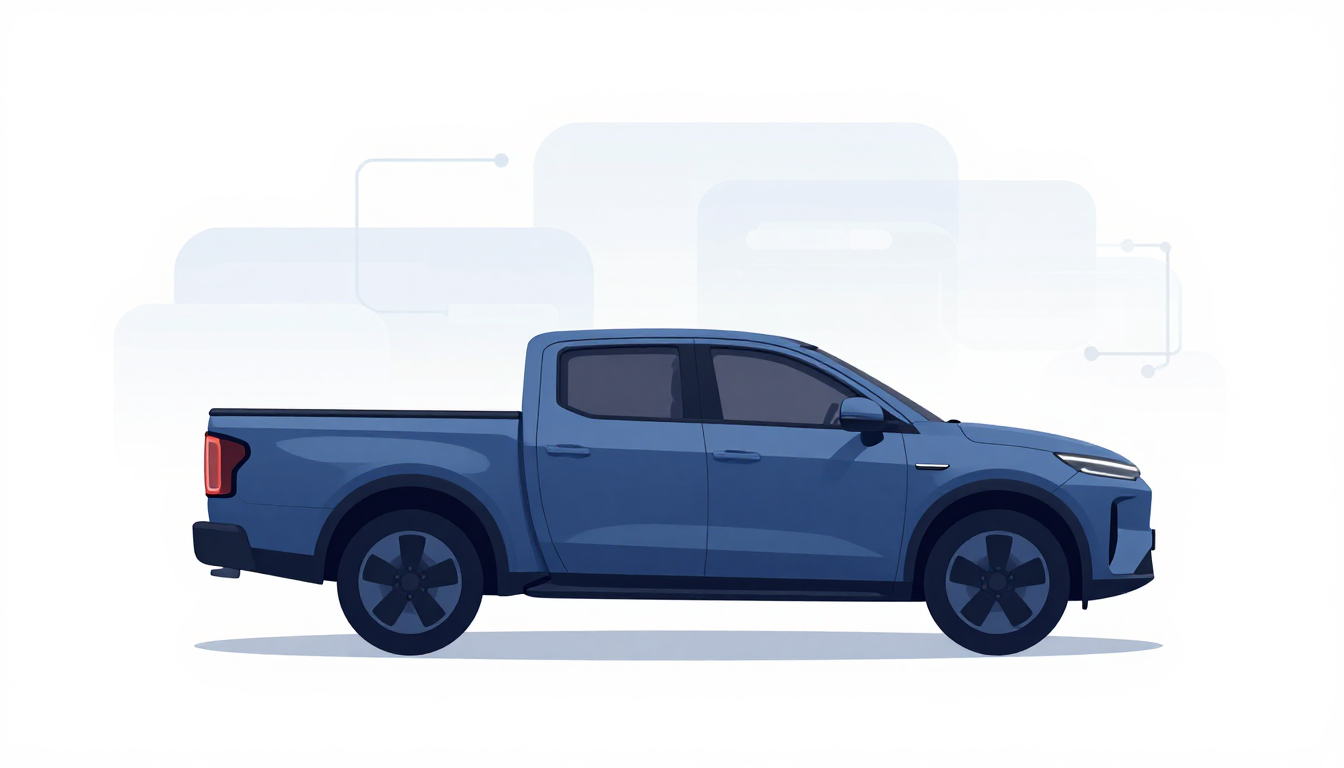
With no embedded modem, the Slate Truck is the antithesis of today's connected cars. It has no infotainment system. Its windows roll down by hand — actual hand crank, like a 1967 Pontiac. It's an electric pickup that will literally never track you, as their website puts it, and that sentence alone should terrify every telematics vendor in Detroit.
This isn't a concept car. This is a real vehicle people are already lining up for. And honestly? About time.
Privacy by Design, Not by Accident
Let's get technical for a minute — and I do mean that loosely. The Slate Truck omits the cellular modem that's become standard equipment in virtually every vehicle manufactured since roughly 2015. That modem is what enables over-the-air updates, remote diagnostics, location tracking, and the whole panopticon of connected-car data collection. Remove it, and you remove the highway your data travels on back to whoever owns the automaker.
This matters more than most buyers realize. A modern connected car can report your GPS coordinates, driving habits, even the temperature inside your cabin — all without your meaningful consent. The infotainment system isn't just a radio anymore; it's a data harvester with a touchscreen. Slate removes both the modem and the console entirely. No hardware means no data pipeline. Simple as that.
Now, people in the Ars Technica thread immediately asked whether this is even legal. Dr. Gitlin, an Ars staff member, confirmed the answer: yes. Unlike the EU — where regulations effectively mandate embedded connectivity — there is no federal requirement in the United States for an embedded modem. The Slate Truck operates entirely within current US law. (As one commenter dryly noted, the government isn't exactly handing out privacy awards anyway, given automated license plate readers and other surveillance infrastructure already in place. But still — the legal ground is solid.)
The EU situation is worth understanding. European connectivity mandates were designed with safety in mind — emergency call systems, remote diagnostics for recalls, that sort of thing. But the mandate doesn't distinguish between safety-critical telemetry and marketing-data collection. Slate's approach would require a redesign to sell in Europe, which is why the company is focused on North America for now. Fair enough.
What You Actually Get in the Driver's Seat
The Slate Truck is an electric pickup, full stop. But calling it "stripped down" undersells the intentionality here. This is minimalism as philosophy, not cost-cutting.
Manual windows. Yes, hand-crank windows. Standard equipment. According to a Reddit poll cited by Ars staff member Aurich, roughly two-thirds of prospective buyers find the hand crank appealing. Some people in the thread had no idea power windows were even an option — it's buried deep in Slate's customizer tool. For what it's worth, I grew up with hand cranks on '60s Pontiacs and never thought I'd miss them until I realized how often I leave a window cracked in summer. Having a kid roll one up when a storm moves in, without handing them the keys? There's actually something nice about that. It's not regressive. It's deliberate.
No infotainment system. None. No screen, no voice assistant, no Bluetooth streaming that requires your phone's location permissions. You drive. You listen to the road if you want, or silence. Your choice.
Seating flexibility. The base configuration is a two-seater — pure work truck, nothing fancy. But there's an optional four-seat conversion for people who actually need to cart around other humans. One commenter in the thread initially wrote the truck off as a non-starter because they have two kids, then spotted the conversion option and apologized. Fair.
Battery options. An extended range battery is available for those who need it, though community members note the pricing hasn't been fully clarified yet. The base model is positioned as an affordable EV entry point, and simplicity is supposed to be the mechanism that keeps costs down.
Ownership Without the Dealer Headache
One of the most practical aspects of the Slate Truck's design is its service network. The company has partnered with RepairPal, giving owners access to 4,000+ certified shops nationwide for maintenance and repairs. No dealer dependency. No being held hostage by a dealership that treats EV service as a premium upsell.
Charging is handled through NACS (North American Charging Standard) compatibility, which means Tesla Supercharger access — 25,000+ stalls nationwide. For an EV buyer in 2026, that's not just convenient; it removes the single biggest anxiety most people have about going electric. Range anxiety dies when you can plug in anywhere.
But here's where the community thread gets honest. Several buyers, particularly those in rural areas, raised legitimate concerns about service center proximity. One commenter — Old_Fogie_Late_Bloomer — noted that even checking the RepairPal website, the closest shop supporting the Slate appeared to be over an hour away. No map of service locations is currently published on Slate's website, and it's unclear whether warranties cover towing to distant service centers. These aren't trivial concerns for someone living outside an urban corridor.
Slate's model — simpler vehicle, broader service network, no dealers — is smart in theory. Whether it works for someone 90 minutes from the nearest certified shop remains an open question. The company will need to address this before mass production begins, or risk alienating the exact rural buyers who might benefit most from an affordable EV.
The Community That's Already Forming
The Ars Technica thread has 414 replies and counting, and the enthusiasm is genuine. People aren't just intrigued — they're on waitlists. One commenter, idontevenexercise, said they've been on the list for over a year. Another, famousringo, called it "the coolest EV on the horizon and pretty much the only car I can see myself buying." Control Group compared it to buying a Scion xA twenty years ago — the appeal of specifying exactly what you want, nothing more.
The Fairphone comparison keeps coming up. Zentac opened the thread noting it feels "a bit like the Fairphone of cars" — a niche product with a dedicated following that may or may not survive in the mainstream market. It's an apt analogy. Fairphone proved there's a consumer base for ethically sourced, repairable electronics. Slate is attempting the same thing for vehicles: privacy-respecting, simple, affordable.
The demand signals are strong. But strength of feeling doesn't equal market viability. Truck buyers — the traditional demographic — tend to want size, capability, and yes, features. Slate is chasing an "uber-practical" segment with fewer parts and simpler design. That's a real market, but it's not the one pickup advertisers picture when they imagine their audience.
ChefJeff789 put it best in the thread: car companies' "connected services" mostly suck, try to upsell you on more money, and are actively annoying. Most buyers would rather not pay for features they never use — especially when those features come with a privacy cost.
What Slate Proves About the Industry
The connected-car trend has been building for roughly eight years at this point. Every major automaker has followed the same playbook: stuff new models with privacy-questionable infotainment consoles, poorly designed UIs, and data-collection hardware disguised as convenience features. MilanKraft noted in the thread that you can't even promise "my next one will be used without a console" because they'll all have them — unless you take your chances with high-mileage used cars from before the trend took hold.
Slate proves there's a different path. Not a niche curiosity, but a viable product with real demand. The question isn't whether Slate will survive — though survival is never guaranteed for any startup in automotive — but whether the major automakers will take notice.
Will they? Probably not soon. The data-revenue models are too entrenched, and the regulatory environment in the US hasn't pushed back hard enough to make privacy a competitive advantage. But Slate's existence changes the conversation. It proves consumers want alternatives. And in automotive, where change moves glacially, that matters more than most people realize.
The Slate Truck won't win over everyone. It's too minimalist for most mainstream buyers, and the service-access question looms large. But for the growing number of people who look at their connected car and feel uneasy about what it's reporting home? This is the vehicle they've been waiting for. Finally, something that respects them enough to not ask for their data in exchange for turning on the radio.