
Your Stomach Is Smarter Than You Think — Here's How It Picks Your Food
I've spent years studying how the brain changes with age, and one thing I keep running into is this: we dramatically underestimate what our bodies already know. We walk around thinking appetite is just a vague signal — "I'm hungry, give me something" — but the truth is far more precise. Your gut isn't just digesting food. It's running a chemical inventory, and when something critical is missing, it sends a very specific message to your brain.
A new study published in Science by Kim, Suh, and colleagues at Seoul National University has mapped this system with remarkable clarity. The finding? When essential amino acids drop below a threshold, the intestines release a signaling molecule called CNMamide. That signal travels through two routes — direct nerve pathways and bloodstream hormones — to activate brain neurons that specifically drive you toward protein. And here's the part that really got me: while it turns up the volume on protein craving, it simultaneously dials down sugar appetite. The brain gets triage instructions from the gut, and it listens.
This isn't a vague nudge. It's a targeted nutritional command system, and it appears to be shared across species — from fruit flies to mice, and almost certainly in humans too.
Protein Hunger Isn't Just Regular Hunger
Let's be clear about something most people miss: protein hunger is a different animal from the kind of appetite you get when you skip lunch. Regular hunger says "energy needed." Protein hunger says "we're missing specific building blocks, and nothing else will do."
Essential amino acids are the protein subunits that animals literally cannot synthesize on their own. You have to get them from food. They're the raw materials for enzymes, muscle tissue, hormones, structural proteins — basically everything that keeps you alive at a cellular level. Without them, long-term survival becomes impossible. The body knows this, and it has evolved a dedicated detection system to flag the shortage.
In the study, fruit flies placed on protein-poor diets didn't just eat more of anything available. They showed a specific preference for essential amino acids over non-nourishing forms that looked similar but provided no biological value. That specificity tells you something important: the body can read its own internal chemical state and shape behavior accordingly. This isn't random foraging. It's targeted nutrient-seeking.
I find this quietly remarkable, honestly. We tend to think of cravings as psychological — stress eating, comfort food, the whole narrative. But some cravings are older than psychology. They're biological imperatives wearing the mask of desire.
The CNMamide Signal: Two Routes to the Brain
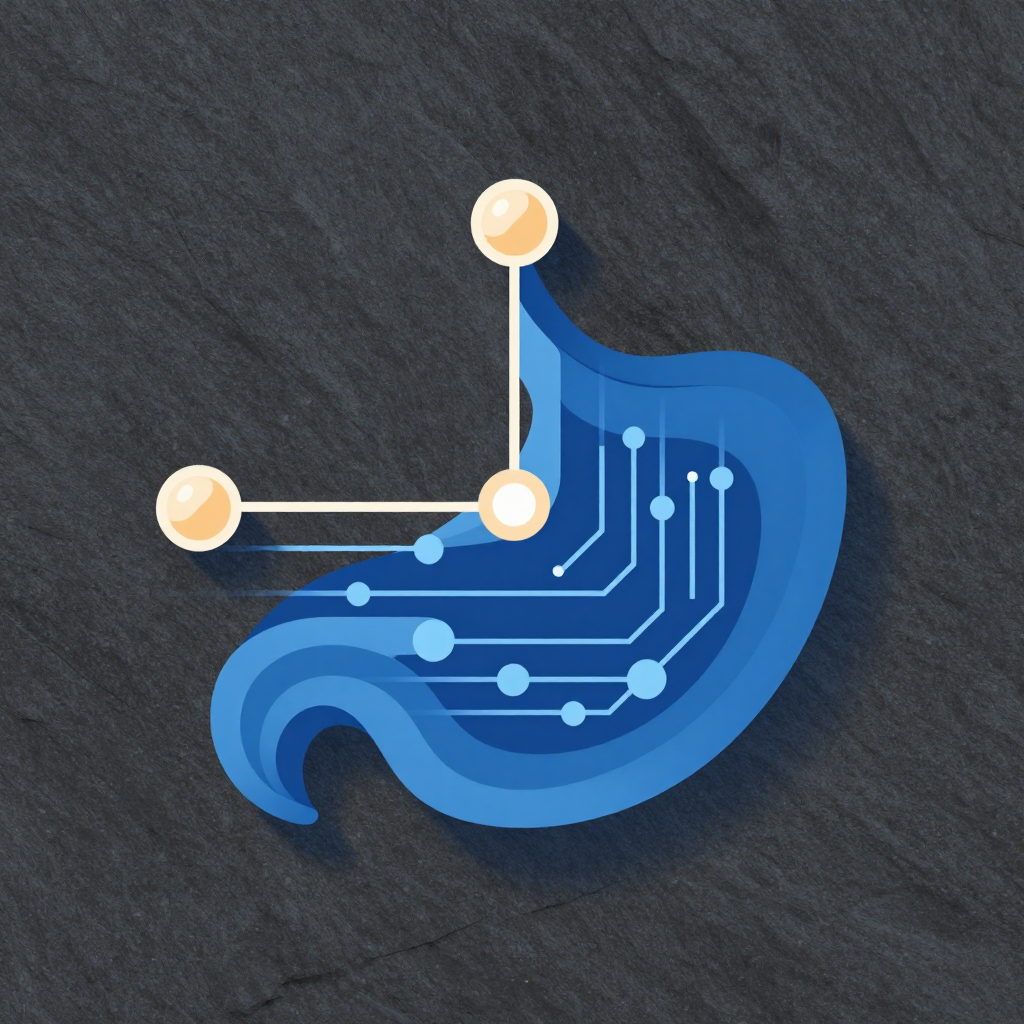
Here's where the mechanism gets elegant. When essential amino acid levels fall, intestinal cells ramp up production of CNMamide — a small signaling molecule. From there, the message reaches the brain through two parallel pathways.
The first is neural. Nearby gut nerve cells detect CNMamide and relay the signal directly to a specific group of brain neurons responsible for selecting essential amino acids. This is fast, direct communication — the kind of wiring you'd expect when the body needs to act quickly. For a deeper look at how modern neurotechnology is beginning to decode similar brain signaling pathways, see our coverage of portable brain-computer interfaces that detect hidden neural activity.
The second is hormonal. CNMamide enters the bloodstream and reaches the brain as a circulating hormone. This slower pathway sustains the signal over time, turning what might have been a brief alarm into a persistent drive. Together, these two routes create a system that's both responsive and durable — fast enough to trigger immediate behavioral change, slow enough to maintain it until the deficiency is corrected.
This dual-pathway design is something I see repeated in neurobiology. The body often pairs rapid neural signals with sustained hormonal ones because each solves a different problem. Nerves handle urgency; hormones handle endurance. CNMamide gets the best of both.
The Dual Move: Craving Protein While Blocking Sugar
What really sets this study apart is the dual action. The gut doesn't just turn up protein appetite — it actively suppresses sugar intake at the same time.
Here's why that matters. During a protein shortage, your body faces a tricky problem: it needs to focus on finding missing nutrients, but sugar offers calories that could distract from that mission. Sugar gives you energy, sure, but it cannot replace essential amino acids. Eating more sugar while protein-deprived is like filling the gas tank when your engine needs oil.
The study found that in protein-deprived flies, CNMamide signaling suppressed sugar-sensing neurons in the brain. So the same signal that promotes essential amino acid intake simultaneously reduces interest in sugar. Appetite becomes a form of triage — prioritizing what the body truly cannot do without.
I think this is one of those findings that quietly reframes how we should think about diet and metabolism. Sugar isn't just "empty calories" in the abstract sense — during protein deficiency, it's actively counterproductive. The body has a mechanism to resist that distraction, and it deploys it when it matters most.
The Amplification Loop in the Gut
There's another layer to this system that I find particularly clever. The gut doesn't just send one signal and hope for the best — it has a built-in amplification mechanism.
When gut nerve cells are activated by CNMamide, they actually trigger nearby intestinal cells to produce even more of the signal. It's a positive feedback loop: more nerve activation leads to more CNMamide production, which activates more nerves, which produces still more signal. The system keeps amplifying itself until the amino acid deficiency is corrected.
This makes evolutionary sense, of course. A weak signal might get ignored. An amplifying one doesn't. The body essentially cranks the volume up until the problem is solved, then presumably turns it back down once amino acid levels normalize. It's a self-regulating alarm system — persistent enough to drive behavior change, but not so loud that it never stops.
I've seen similar amplification loops in other neurobiological systems, and they always strike me as evidence of how seriously the body takes nutrient homeostasis. This isn't background noise. It's a priority signal.
From Flies to Mice — And Probably Humans Too
The study started with fruit flies, which might make some readers skeptical. Insects are useful models, sure, but they're not exactly our closest relatives. Here's where it gets compelling: the same mechanism was observed in mice.
Protein-deprived mice also showed a strong preference for essential amino acids over non-nourishing alternatives. The parallel between fly and mouse behavior is striking, and it suggests this isn't a quirky insect adaptation — it's a conserved biological rule. When the body lacks the ingredients needed to build and repair itself, the stomach helps guide the brain toward the right food.
Now, I'll be honest: the study didn't directly test humans. But given that this mechanism sits at the intersection of gut neurobiology, hormonal signaling, and basic nutrient homeostasis — processes that are deeply conserved across vertebrates — it would be surprising if humans didn't have something very similar operating beneath the surface of our appetites.
What this tells me is that hunger has a kind of intelligence we're only beginning to appreciate. When protein runs low, the stomach sends instructions — not vague suggestions, but specific directives asking the brain to choose wisely. We just didn't know the instructions existed until now.
Why This Changes How We Think About Appetite
I want to close with why I think this study matters beyond the lab. For decades, nutrition science has struggled to explain why people crave what they crave. We've had theories about blood sugar swings, about leptin and ghrelin, about psychological conditioning. All of those play a role. But this work adds something fundamentally new: the idea that appetite can be nutrient-specific in a way we can now trace to identifiable molecular signals.
A calorie from sugar and a calorie from protein don't answer the same biological question. Energy matters, yes — but so do building blocks. The body needs to know the difference, and apparently it does, through mechanisms like CNMamide signaling that predate our conscious understanding of nutrition by hundreds of millions of years.
This also has implications for how we think about dieting and metabolic health. If protein deficiency triggers a specific neural program that suppresses sugar appetite, then ensuring adequate essential amino acid intake might do more than just satisfy hunger — it could actively rewire appetite preferences in a way that supports metabolic health.
Hunger is ancient. It began long before language, agriculture, or the supermarket aisle. But this study shows that even in our modern world, those ancient signals are still running the show — quietly, precisely, and with a sophistication we're only now beginning to map.