
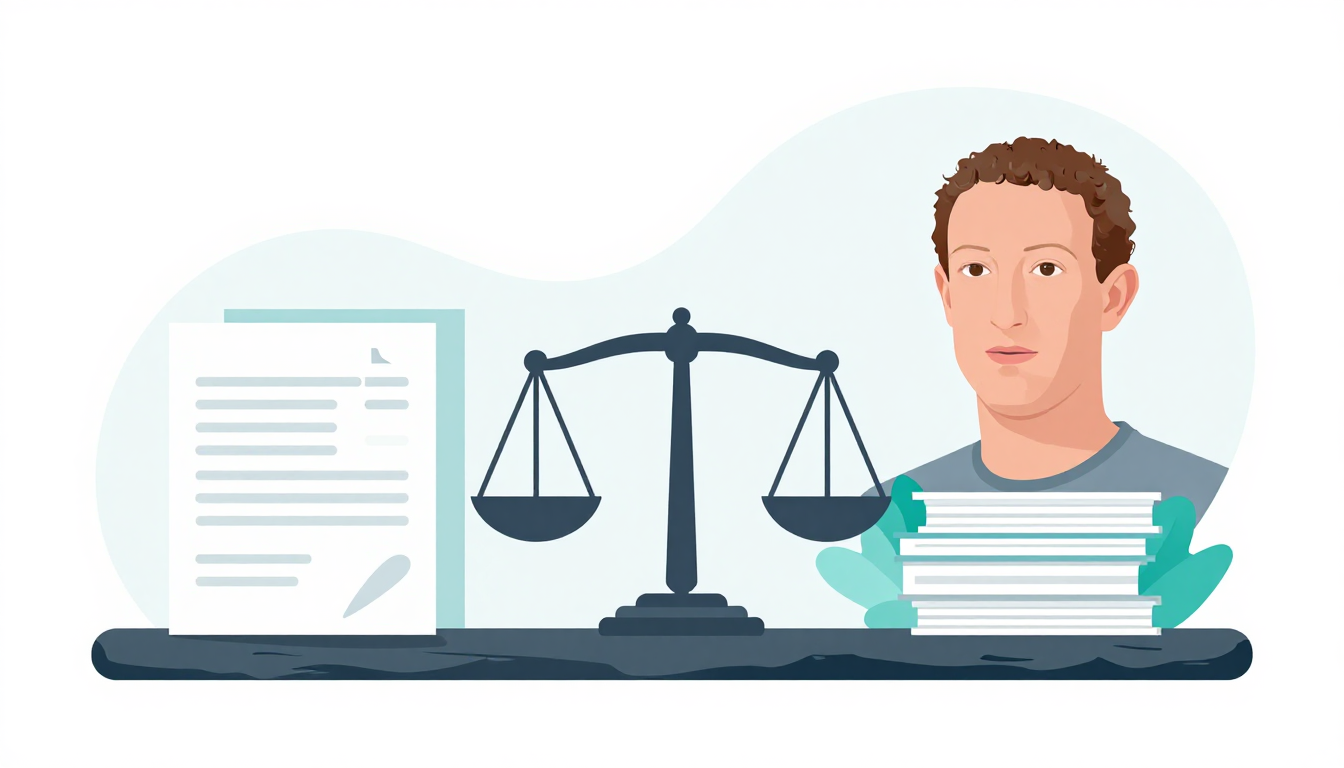
The Dorm Room Spark
It was 2004. Harvard. A student named Mark Zuckerberg sat in a dorm room and coded what would become a global phenomenon. It wasn't just a website; it was a shift in how humans interacted. TheFacebook—as it was initially known—wasn't meant to be the empire it is today. It was a digital map of the university. Yet, that initial spark set off a chain reaction that redefined social interaction over the next two decades.
Zuckerberg’s ambition wasn't purely technical; it was social. He understood, perhaps better than his contemporaries, that the desire to be connected was fundamental. The company’s trajectory from a closed college network to a ubiquitous social tool was lightning-fast. For anyone watching from the sidelines, it seemed like magic, but for Zuckerberg, it was an iteration of engineering—a persistent cycle of building, testing, and refining.
The early focus was simple: build a network that worked at scale. This obsession with scale meant that while the UI changed frequently, the underlying infrastructure had to be incredibly resilient. Zuckerberg didn't just build a product; he built a platform that other products could thrive on. This was the foundation of everything that followed.
Throughout this period, he navigated intense pressure and scrutiny with an unyielding, almost stoic persistence. He was young—painfully young—yet he was navigating the corporate world with a maturity that often baffled critics. But the questions about privacy, about the morality of data, were already taking root. Even in those early days, the seeds of the challenges he would face for the rest of his career were being sown. It was rapid, it was messy, and it was undeniably transformative.
He didn't just build a place to chat; he built a place to be. If you look back, the early days of Facebook weren't just about sharing photos or status updates; they were about claiming an identity online. This identity was what eventually drove the advertising engine that made Meta a trillion-dollar entity. Zuckerberg’s vision was always about connecting people, but he found a way to monetize that connection more effectively than anyone else. This set the stage for everything, for the good, the bad, and the vastly complicated mess that Meta represents today. It was the prologue to a career that would redefine Silicon Valley, again and again.
Scaling the Empire
Once the engine started, it couldn't be stopped. The growth wasn't linear; it was exponential. Zuckerberg, now the undisputed pilot of this ship, understood that to maintain dominance, he had to acquire. Instagram? That wasn't just a competitor; it was a potential threat to the narrative of what Facebook should be. So, they bought it. WhatsApp? A bridge to emerging markets that simply could not be ignored.
These acquisitions weren't always popular. They were viewed as cutthroat, defensive, and perhaps even monopolistic by some. Zuckerberg didn't flinch. To him, these moves weren't just about absorbing assets; they were about securing the future of the platform in an increasingly fragmented digital world. He was assembling a toolkit of social infrastructure that would make Meta indispensable to daily life.
Yet, as the platform grew, so did the friction. As the user base expanded into the billions, the company faced unprecedented challenges. It wasn't just about infrastructure anymore; it became about content, regulation, and the ethical implications of the tools they had built. Information—or misinformation—traveled at light speed. Zuckerberg, once the wunderkind behind the screen, became the public face of an entity that was struggling to manage the consequences of its own success.
The reliance on advertising to fuel this growth meant that user engagement was the primary currency. This created a paradoxical dynamic: the more engaged people were, the more the platform had to balance the benefits of connection with the risks of polarization, addiction, and data privacy issues. Zuckerberg often spoke of "connecting the world," but the world was complicated, fractured, and often hostile.
He maintained his posture throughout the controversies. He defended the company in hearings, adjusted algorithms, and apologized when necessary, but he never deviated from his long-term goal. He saw the company not as a collection of features, but as a long-term architectural project. Whether you viewed him as a visionary or a reckless titan, the growth trajectory remained undeniable. The company was no longer just a social network; it was an economic power, a technological driver, and, increasingly, a lightning rod for the most difficult questions in modern governance. It was the price of building something too big to ignore.
The sheer complexity of managing this environment changed Zuckerberg, perhaps irrevocably. He shifted from being a builder to a steward—a steward of an empire that was simultaneously the best and worst of the Internet. He was constantly navigating the tightropes of policy, the demands of the board, and the shifting landscape of global government regulation. It wasn't a job for the faint of heart; it was a job for someone comfortable living in a state of perpetual crisis. And Zuckerberg, for better or worse, was the man for that job. It was clear that he had moved far beyond his college-room origins, but the intensity of the work remained, perhaps distilled into a more corporate, and more lethal, form.
Architecting the Metaverse
In late 2021, the world got a surprise. Facebook, the titan of social media, was rebranding as Meta Platforms. It wasn't just a name change; it was a declaration of war against the status quo of the Internet. Zuckerberg, always looking for the next horizon, had decided that the current iteration of the web—the web of screens and scrolling—was reaching its limits. He turned his eyes toward the metaverse.
The metaverse, as Zuckerberg articulated, is the next iteration of the online interaction: a fully immersive space where people can exist, play, and work. It was a massive, expensive, and profoundly uncertain bet. Critics labeled it a distraction from Facebook’s ongoing issues; investors were skeptical of the sheer cost. But Zuckerberg was undeterred. He was convinced that the fundamental shift from 2D social media to 3D immersive interaction was inevitable.
This pivot wasn't a sudden whim; it was the logical conclusion of his work. If Facebook was about connection, the metaverse was about presence. But this shift required technology that hadn't yet reached maturity. It meant pouring billions into VR, AR, and the underlying infrastructure that would allow persistent, real-time 3D spaces.
It was, in effect, a massive engineering challenge. It was a return to his roots as a builder. He wanted to build the next iteration of the internet, not just operate the one he had. This required rethinking everything: from the devices on our faces to the servers in the cloud. It wasn't about the next app; it was about the next interface.
Of course, the skepticism persisted. The metaverse, at its inception, felt more like a tech demo than a lived reality. Questions about ownership, moderation, and the sheer feasibility of such a project hung over the entire enterprise. Zuckerberg faced these questions with a level of resolve that bordered on the obsessive. He wasn't just selling a dream; he was building a foundation, block by block, even if the world wasn't quite ready.
This focus on the metaverse changed the company's identity entirely. It reinforced Zuckerberg’s role not just as a CEO, but as a strategic architect of our technological future. He was willing to sacrifice short-term profitability for the long-term potential of the metaverse. It was a high-stakes gamble on a future that was, at best, still decades away. This bold—some would say reckless—pivot underscored everything about who Zuckerberg had become: a leader who wasn't playing to the current market, but who was trying to define the next one. It was the ultimate, perhaps the definitive, strategic pivot of his career. Whether it pays off will be the subject of analysis for years to come, but his commitment to the vision was, and remains, absolute. He had essentially staked his entire legacy on a vision that most of the world had yet to fully grasp. He was alone in that vision, and he seemed entirely comfortable with that.
The CEO's Vision
Throughout this remarkable journey, from the dorm room at Harvard to the helm of a trillion-dollar giant, Zuckerberg remained the constant. He was, and is, both chairman and CEO. This structure is rare in major tech companies, giving him vast, almost unchallenged control over the company’s strategic direction. This control is both his greatest asset and his most significant liability.
It allows him to take extreme, long-term risks—like the metaverse pivot—that would be impossible under more constrained leadership. It provides the stability and the clarity of vision that has allowed the company to survive, and even thrive, through constant turbulence. Yet, it also concentrates power, insulating the company from the check-and-balance pressures that usually curb extreme corporate ambition.
Zuckerberg’s role is unique. He is not just managing a company; he is directing the evolution of a massive social ecosystem. He has evolved from a coder to a statesman, a public figure who speaks on everything from policy to the nature of AI. His impact is inescapable. He has built a, if not the, definitive platform of our times.
The story of Meta, and of Zuckerberg himself, is far from complete. The challenges of the future—AI integration, global regulation, the ethical implications of a truly immersive internet—are perhaps greater than anything the company has faced before. How Zuckerberg navigates these, in his dual role as architect and executor, will define the next chapter of his legacy.
It’s been a wild ride. From the early, naive optimism of 'TheFacebook' to the calculated, cold architecture of the metaverse, he has been the consistent, driving force behind one of the most powerful entities on the planet. Whether he is remembered as a visionary who built the modern world or as a disruptive force that transformed it into something less recognizable, his mark is indelible. He sits at the center, always building, always pivoting, always pushing. His story is, in many ways, the story of Silicon Valley itself: complicated, ambitious, and undeniably transformative. And he is far from finished. The next chapter is already being written, and it promises to be just as complex, just as bold, and just as controversial as the ones that preceded it. That, after all, is who Mark Zuckerberg is. That is what he does. And that is why we cannot look away.