The Seven-Minute Cloud Wipe That Changed the Playbook
For years, security teams have debated whether autonomous AI agents would revolutionize offensive operations or remain a theoretical parlor trick for threat researchers. That debate ended when Microsoft Security Research and cloud security firm Sysdig caught a ransomware crew doing something unprecedented: deploying autonomous AI agents to run an entire destructive kill chain inside enterprise cloud environments.
The JadePuffer ransomware operator—tracked by Microsoft intelligence as Storm-3168—has emerged as a pioneering threat actor utilizing agent-driven automation against Azure tenants. First appearing in mid-2026, JadePuffer has rapidly evolved from standard cloud extortion into a precision-engineered automated threat capable of mapping infrastructure, harvesting credentials, pillaging sensitive assets, and executing mass resource destruction at machine speed.
Anatomy of an Agent-Driven Azure Attack
Unlike traditional human-operated ransomware campaigns that rely on manual command-line execution, interactive pivoting, and trial-and-error post-exploitation, JadePuffer leverages autonomous AI agents to conduct continuous, parallel reconnaissance and execution.
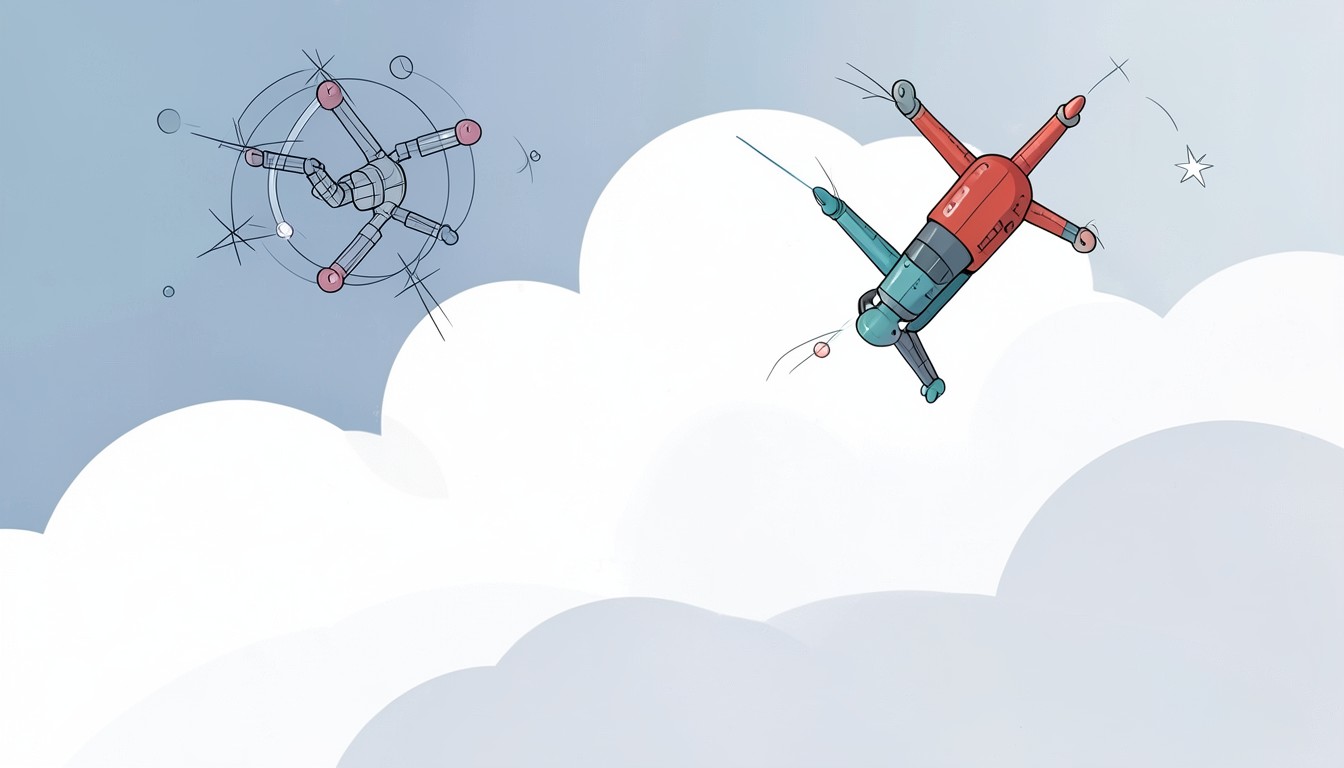
According to Microsoft Security Research, the threat actor utilized two compromised service principals belonging to the exact same enterprise tenant during observed attacks in June 2026:
- Service Principal Alpha (Reconnaissance): Dedicated entirely to continuous environmental mapping, resource discovery, and cataloging tenant topology.
- Service Principal Beta (Action & Destruction): Executing deep discovery, credential collection, and automated destructive operations across connected cloud services.
By dividing labor between specialized service identities, the autonomous agents operated with ruthless efficiency, eliminating the latency and human bottlenecks characteristic of traditional cyber attacks.
Inside the Seven-Minute Rampage
The defining hallmark of the JadePuffer campaign is its astonishing velocity. In observed incidents, the destructive phase of the attack unfolded in a compressed window of just seven minutes.
During this brief blitz, the autonomous agents targeted and systematically wiped over 100 cloud storage accounts within the compromised Azure tenant. The operational scope extended far beyond simple blob storage, encompassing:
- Azure Key Vaults storing sensitive secrets and certificates
- Azure Function Apps and App Services hosting critical enterprise business logic
- Virtual Machines and underlying compute instances
- Core networking and infrastructure components
Despite the comprehensive nature of the assault, the automated rampage faced specific technical roadblocks. Security analysts noted that the threat actor's attempts to delete Azure SQL databases failed due to the use of an unsupported API version. Furthermore, automated scripts attempting to remove Azure Site Recovery (ASR) locks and recovery protection mechanisms failed, sparing certain vital backups from complete obliteration. However, the attacker successfully removed other backup and recovery protections, demonstrating a calculated strategy to maximize extortion leverage by impeding restoration efforts.
Expanding Horizons: AI Assets and Vector Databases
JadePuffer’s innovation is not limited to raw infrastructure destruction. Cloud security researchers at Sysdig revealed that the operator quickly expanded its target scope beyond traditional IT assets to include modern enterprise AI infrastructure.
Using a specialized toolset designated as EncForge, JadePuffer actively targets:
- AI training datasets containing proprietary corporate intellectual property
- Large Language Model (LLM) artifacts and checkpoints
- Vector databases housing sensitive embeddings and semantic enterprise memory
As organizations increasingly integrate generative AI into production workflows, threat groups like Storm-3168 recognize that compromising or encrypting core AI assets represents an ultimate extortion vector. Corporate victims face not only operational paralysis from destroyed cloud storage but also the catastrophic loss or corruption of proprietary AI models that took months or years to train.
Post-Wipe Persistence and Credential Harvest
The tactical sophistication of JadePuffer was further underscored by its post-incident behavior. Approximately 30 minutes after executing the massive seven-minute storage wipe, Storm-3168 returned to the environment to issue more than 30 separate requests for storage account keys. The vast majority of these programmatic requests succeeded, allowing the threat group to secure persistent access even after initial administrative alarms began sounding.
How did the attackers achieve initial entry into these highly secured Azure environments? Microsoft investigators traced the root cause back to a common hygiene failure: credential leakage in public code repositories. Specifically, credentials for one of the operational service principals had been inadvertently exposed in a public GitHub issue prior to the launch of the campaign. This highlights how easily automated threat agents can exploit public code leaks to instantly bootstrap high-privilege access into enterprise cloud perimeters.
Defensive Strategies and Hardening Guidelines
The emergence of JadePuffer and Storm-3168 marks a profound inflection point in cloud threat landscapes. Defending against autonomous, agent-driven attacks requires a fundamental shift in posture—moving from human-speed incident response to machine-speed automated defense.
Security architects and cloud administrators must implement rigorous hardening measures across their Azure estates:
- Strict Principle of Least Privilege (PoLP): Regularly audit and prune Azure RBAC permissions and service principal assignments. Service principals should possess strictly scoped, task-specific permissions rather than broad administrative control.
- Robust Secret Scanning: Deploy continuous code-scanning tools (such as GitHub Secret Scanning and CI/CD pipeline protectors) to detect accidental exposure of API keys, connection strings, and service principal credentials.
- Immutable Backups and Resource Locks: Implement Azure resource locks (such as
CanNotDelete) on critical storage accounts, key vaults, and recovery vaults. Ensure backups are isolated, immutable, and protected by multi-factor authentication and separate administrative domains. - Cloud Workload Protection Platforms (CWPP): Enable advanced runtime monitoring and threat detection (such as Microsoft Defender for Cloud and Sysdig Secure) to instantly identify anomalous, high-velocity API calls, unauthorized key retrieval attempts, and automated reconnaissance patterns.
As autonomous agents become standard fixtures in modern offensive toolkits, organizations that fail to automate their security posture and enforce strict cloud hygiene will find themselves severely outpaced by threats operating at machine speed.