Microsoft's Three-Way Quantum Bet
Here's something most quantum coverage misses: Microsoft isn't picking a winner. They're running three different qubit modalities at once, and as of early June 2026, all three just got meaningfully better.
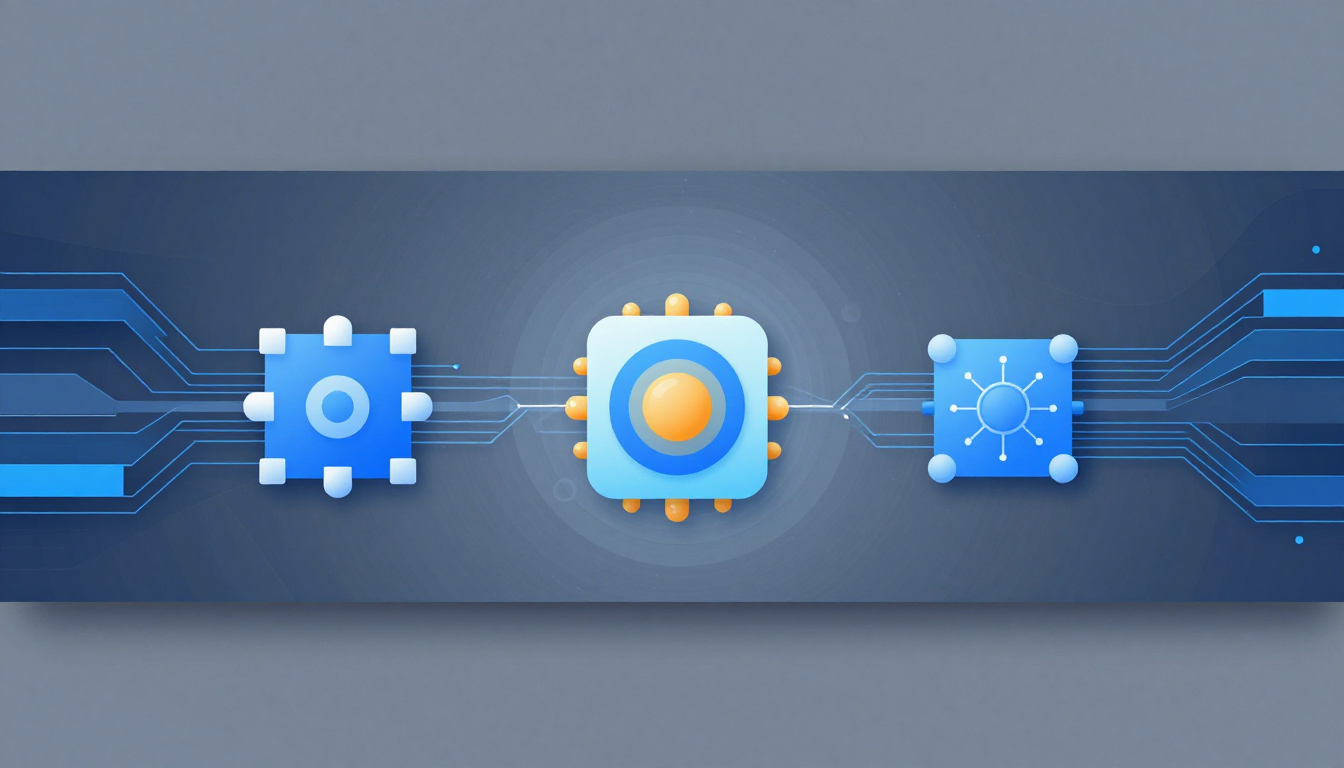
The announcement came on June 3rd — a topological qubit holding stable parity for over twenty seconds, Atom Computing demonstrating sustained error correction across ninety measurement rounds on a thousand-plus qubit array, and EeroQ revealing fresh details about their electron-on-helium chip design. Each one is a different approach to the same problem: how do you build a quantum computer that doesn't fall apart before finishing a useful calculation?
I've been tracking this space long enough to know that individual milestones like these get hyped into obituaries for classical computing within a week. But the pattern here is what actually matters. Three separate teams, three fundamentally different physics problems, all moving in the same direction at the same time. That's not hype. That's a strategy.
The Topological Qubit: Twenty Seconds in the Lab
Let's start with what sounds most counterintuitive. Microsoft's topological qubit — the one they've been developing in-house for years — now holds a stable parity state for over twenty seconds. The previous benchmark was less than ten milliseconds.
That's roughly a thousand-fold improvement. Three orders of magnitude. In quantum computing terms, that's not just incremental progress — it's the difference between a lab curiosity and something you might actually build a machine around.
Here's what's interesting from a materials science angle, which is where I tend to get most excited. Microsoft didn't invent a new architecture. They didn't roll out a novel algorithm. What they did was swap lead for superconductors and add tin to semiconductors — pure materials optimization. It's the quantum computing equivalent of figuring out that a slightly different alloy makes your airplane wings last ten times longer. Boring to most people, absolutely critical for anyone trying to build something that works.
Topological qubits have always had an advantage on paper: inherent error protection through topology. Think of it like a knot — you can tug and pull at the string all you want, but the knot stays knotted unless you actually undo it. The problem has always been making those knots stable long enough to do anything useful with them. Twenty seconds changes the calculus.
Atom Computing's Thousand-Qubit Array
Now let's talk about scale. Atom Computing's gate-based quantum computer uses optically trapped neutral atoms — specifically strontium and ytterbium — as qubits. Their latest setup features a 1,225-site optical atom array with 1,180 physical qubits. They were the first universal quantum platform to break past one thousand qubits, which sounds like a vanity metric until you realize that's the scale where error correction actually starts becoming viable.
The coherence time on these neutral atoms is around forty seconds — established back in 2021 with their Phoenix system. That's remarkably long for a qubit that's essentially a single atom floating in a laser trap. But coherence time is only half the story. The other half is what happens when something goes wrong.
And in quantum computing, something always goes wrong. Atoms get lost. States decohere. Measurements fail. The June 2026 breakthrough from Atom Computing is how they handle that reality: spare pre-cooled atoms get swapped in to maintain logical qubit stability across up to ninety measurement rounds.
Picture it like this — you're running a relay race, and whenever one runner drops the baton, there's already someone waiting in the wings with a fresh baton ready to go. Except the runners are individual atoms, and the baton is quantum information that's incredibly fragile.
The error correction performance here is concrete: logical qubits' error rates improved by a factor of four compared to baseline physical qubits after detecting and correcting losses. Not perfect, but directionally correct — which is what you need to see before scaling further.
The November 2024 Milestone That Preceded This
To appreciate where we are now, it helps to remember what Atom Computing and Microsoft achieved back in November 2024. They demonstrated entanglement of twenty-four logical qubits — a record at the time. That was the moment the field started taking neutral-atom approaches seriously as a path to practical quantum computing.
Building on that foundation, they then ran the Bernstein-Vazirani problem on twenty-eight logical qubits. The error-corrected results came out more accurate than uncorrected physical qubits — which sounds like a given, but in practice, getting error correction to actually outperform doing nothing has been one of the field's persistent embarrassments.
Mid-circuit measurement turned out to be the enabling capability here. The ability to measure parts of your quantum state during a computation — not just at the end — lets you detect and correct errors in real time. Without it, you're flying blind until the calculation finishes, by which point it's too late to fix anything.
EeroQ and the Liquid Helium Approach
Then there's EeroQ, which takes an approach that sounds like science fiction but is actually just really clever physics. Individual electrons float on the surface of liquid helium — yes, literally floating on liquid helium at near absolute zero temperatures. Their quantized motional states serve as qubit building blocks.
EeroQ's chip design uses a resonator to couple these individual electrons. The beauty of this approach is that electrons on helium have exceptionally long coherence times — partly because they're physically separated from the noisy environment by that thin layer of liquid helium. They're not touching anything. They're just floating there, doing quantum stuff in near-perfect isolation.
It's worth noting that EeroQ is part of Microsoft's quantum collaborator network — not an acquisition. They're bringing their expertise to the table while maintaining independence. That's a different model than, say, Google acquiring SandboxAQ or Amazon buying Rigetti's cooling technology. It says something about how Microsoft views the quantum landscape: there are enough smart people doing interesting things that you don't need to own them all.
Why Run Three Strategies at Once?
You might wonder why Microsoft is pursuing topological qubits, neutral atoms, and electron-on-helium simultaneously. Isn't that a recipe for spreading resources too thin?
I'd argue the opposite. Each modality has different strengths and weaknesses that complement each other:
Topological qubits offer inherent error protection but are notoriously difficult to manufacture at scale. Neutral atoms provide scalability and connectivity advantages but require active error correction. Electron-on-helium gives you long coherence times in a clean physical environment but faces challenges with gate fidelity and coupling speed.
By running all three, Microsoft isn't hedging — they're building a portfolio. If one approach hits a fundamental wall, the others keep advancing. And if they can figure out how to integrate insights across modalities — which is where the real magic happens — you get something greater than any single approach could deliver alone.
The Path to Utility
So where does this leave us? Dozens of companies — from tiny startups to massive tech giants — are all chasing quantum utility. The steady flow of results suggests we're past the era of pure theoretical promise and into something more practical.
Error correction remains the critical bottleneck. Every milestone we've discussed — Microsoft's twenty-second parity state, Atom Computing's ninety-round error correction, EeroQ's electron-on-helium coherence — is ultimately about buying more time for quantum computations to complete before decoherence destroys the results.
The timeline for practical applications in chemistry, materials science, and optimization is compressing. Not collapsing — compressing. There's a difference. We're not looking at quantum computers solving drug discovery problems next Tuesday. But we are looking at a future where these machines start delivering genuine value within the next few years, not decades.
Post-quantum cryptography is already being standardized by NIST. The blockchain and crypto ecosystem, meanwhile, has adopted quantum-resistant schemes at a glacial pace — which probably says more about incentive structures than technical feasibility. But that migration path is now concrete, not theoretical.
Microsoft's three-pronged approach suggests they believe utility is closer than most public timelines indicate. Whether they're right remains to be seen. But as of June 2026, the evidence is accumulating fast.
Sources
- Microsoft Quantum Computing: Atom, EeroQ Update — CryptoBriefing, June 4, 2026
- Atom Computing Company Profile — PostQuantum.com, May 21, 2025
- Microsoft Atom Computing EeroQ Update: Their Quantum Computing Progress — Ars Technica, June 2026