The First Patient-Facing LLM That Got FDA Clearance
I’ve seen a lot of press releases. "AI doctor." "Autonomous clinician." "The future of care." But UpDoc? This one’s different. It didn’t just get buzz—it got cleared. FDA 510(k) K253281, signed off December 23, 2025, announced June 25, 2026. And it’s not a vaporware demo. It’s a real medical device, cleared to adjust insulin doses for adults with type 2 diabetes between doctor visits.
This isn’t a chatbot giving general advice. It’s a prescription-only tool, built on a large language model, that tells patients exactly how much insulin to take—based on their CGM data, meal logs, and a physician’s pre-approved protocol. And it’s not just a new product. It’s the first time the FDA has cleared a patient-facing LLM as a medical device.
Let me be blunt: if you’re building clinical AI, this changes everything. Not because it’s magic. But because it proves the pathway exists. The FDA isn’t scared of LLMs. They’re scared of ambiguity. UpDoc didn’t win because it was fancy. It won because it was precise.
How It Actually Works (Spoiler: It’s Not an AI Doctor)
Forget the headlines. UpDoc isn’t a doctor. It’s a dosing calculator with a voice.
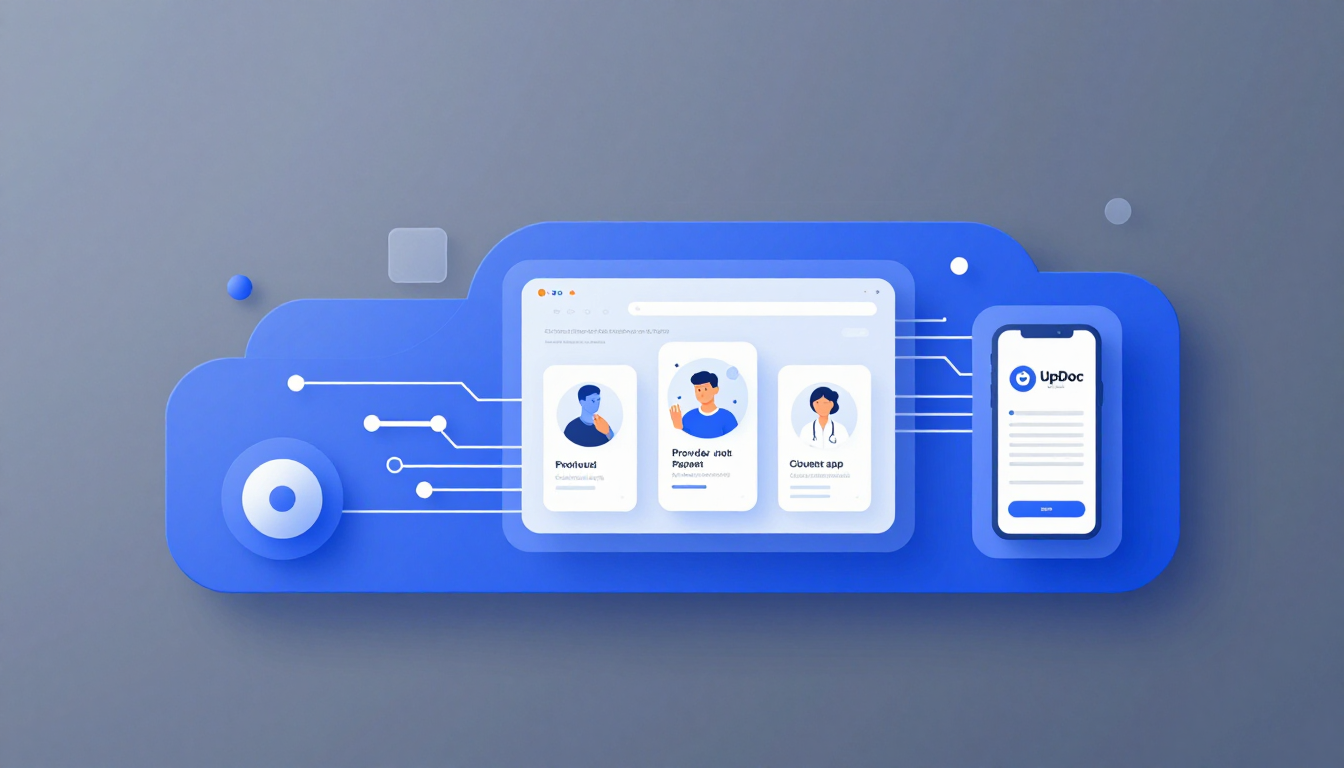
The system runs in three parts: a patient app, a provider portal, and a cloud service. The patient app? It’s the interface. You open it, type in your blood sugar, log your carbs, maybe even say, "I feel shaky." The app sends that data to the cloud.
Here’s the critical part: the LLM—the "Conversation Service"—never touches the insulin math. It’s there to understand you. To translate "I had pizza last night and my sugar’s up" into structured data. But the actual dose calculation? That happens in the "Clinical Service," a separate, deterministic module locked inside physician-defined boundaries.
If your doctor set your max bolus at 8 units? UpDoc won’t give you 9. Ever. Not even if you beg. Not even if you’re crying. The model can’t override. It can’t improvise. It can’t hallucinate a dose. It’s a gatekeeper, not a decision-maker.
This isn’t AI autonomy. It’s AI-assisted compliance. And it’s why the FDA didn’t shut it down.
Why the FDA Said Yes: d-Nav Was the Secret Weapon
UpDoc didn’t invent a new regulatory category. It rode the coattails of a 2019 device called d-Nav.
d-Nav was already cleared to adjust insulin doses autonomously. It used algorithms, not LLMs. But it did the same thing: read CGM data, calculate a dose, deliver it to the patient. The FDA had already vetted the clinical evidence—Bergenstal’s 2019 Lancet trial showed a 1.0% drop in HbA1c over six months. That’s huge. That’s the kind of data that makes regulators breathe easy.
UpDoc’s breakthrough? They replaced d-Nav’s rigid algorithm with a conversational interface. Same clinical function. Same safety boundaries. Just a better way for patients to interact with it.
The FDA cleared it in 85 days. That’s fast. For a medical device? Almost unheard of. Why? Because they didn’t have to re-prove the science. They just had to confirm: "Is this still d-Nav?" And the answer was yes.
The precedent? Narrow. It doesn’t mean every AI tool can clear now. It means: if your product does the exact same thing as a cleared device, and you just make it easier to use? You’ve got a shot.
What’s Actually Covered (And What Isn’t)
Let’s get real about scope.
UpDoc clears insulin adjustments for adults with type 2 diabetes. That’s it. No type 1. No glucagon. No blood pressure. No mental health coaching. No EHR write-back. No automated lab orders. No integration with your Fitbit.
The FDA didn’t clear an "AI concierge." They cleared a drug-dose calculator. Product code NDC, 21 CFR 868.1890. That’s the legal identity. The LLM is just the voice.
And here’s the kicker: it doesn’t even cover patients who need complex titration. If you’re on multiple daily injections, or you’re insulin-resistant, or you have kidney disease? UpDoc won’t touch you. It’s built for the 80% of type 2 patients who just need simple, predictable adjustments.
This isn’t a failure. It’s a feature. The FDA isn’t looking for AI that does everything. They’re looking for AI that does one thing, safely, consistently, and with clear boundaries.
Why It Failed the CDS Exemption Test
Here’s where most people get tripped up. You’d think, "Well, the doctor set the rules. Isn’t that clinical decision support?"
No.
The CDS exemption requires four things. UpDoc fails two.
Criterion 1: No ingesting signals from a monitoring system. But UpDoc pulls continuous glucose data from CGMs. That’s a signal. That’s a device.
Criterion 3: The recommendation must go to a healthcare provider. But UpDoc sends the dose directly to the patient. The patient acts on it. No clinician reviews it in real time. That’s not decision support. That’s device action.
So UpDoc didn’t just skirt the exemption. It smashed through it. And that’s why it needed a 510(k). The FDA didn’t make an exception. They applied the rules—exactly as written.
If you’re building something that gives instructions to a patient? You’re a device. No matter how much you say "the doctor is in control." The patient is the one acting. And that’s the line.
The $18M Seed: Why Mayo and Eli Lilly Backed This
Let’s talk money. $18 million. From Mayo Clinic and Eli Lilly. Not some VC fund that’s betting on the next ChatGPT. Two of the most conservative, risk-averse players in healthcare.
Why? Because they saw the same thing I did: this isn’t about AI. It’s about adherence.
Most patients with type 2 diabetes don’t adjust their insulin correctly. They’re scared. Confused. Overwhelmed. They skip doses. They guess. They end up in the ER.
UpDoc doesn’t cure diabetes. But it removes the guesswork. And guesswork kills.
Mayo knows the clinical need. Eli Lilly knows the drug. Together, they’re betting that a device that makes insulin dosing simple, safe, and accessible will change outcomes—and create a new revenue stream for insulin.
This isn’t a tech play. It’s a care delivery play. And the ROI isn’t in algorithms. It’s in fewer hospitalizations.
The Missing Pieces: What No One’s Talking About
Here’s the truth: we don’t know how many people are using this yet.
No one’s published real-world outcomes. No one’s disclosed reimbursement codes. No health system has announced a rollout. The FDA clearance is a green light. But the road ahead? Still unpaved.
Will insurers pay for it? Will clinics train staff to manage it? Will patients trust it after years of being told "AI can’t be trusted with your health?"
And what happens when a patient takes a dose and feels worse? Who’s liable? The doctor? The hospital? UpDoc? The app store?
The FDA cleared the device. But they didn’t clear the ecosystem.
This is where the real work begins.
The Bigger Picture: This Isn’t the End. It’s the First Step.
Some will say this is a slippery slope. That tomorrow, AI will be prescribing antibiotics or adjusting blood thinners.
I don’t think so.
UpDoc cleared because it was small. Precise. Bound. It didn’t try to be everything. It didn’t promise miracles. It just made one thing better.
That’s the lesson.
The future of clinical AI isn’t in general-purpose agents. It’s in hyper-focused tools that solve one painful, repetitive problem—and do it so well, patients and doctors don’t even notice the AI anymore.
UpDoc didn’t change medicine.
It just made insulin dosing a little less scary.
And sometimes? That’s enough.