
Workflows Over Weights: Why Anthropic’s Claude Science Prioritizes Process
Ask any computational scientist about their week, and you won’t hear tales of model-induced breakthroughs. You’ll hear about the grind: fighting incompatible data formats, manually tracking code environments, and the Sisyphean task of maintaining reproducible results across a dozen tools. Anthropic’s new workbench, Claude Science, isn’t trying to out-calculate the competition. Instead, it’s betting that the next wave of scientific productivity will be won by better workflows, not just an incrementally smarter foundational model.
This isn’t a new, larger, or "smarter" model. It’s a dedicated environment built on top of existing infrastructure, designed to act as the operating system for scientific research. Anthropic is correctly identifying that for professionals, the bottleneck isn't the AI's ability to calculate; it’s the inability of the researchers to manage the increasingly complex computational ecosystems they live in. It’s a shift from AI as a chatbot to AI as a research collaborator.
In June 2026, Anthropic launched Claude Science at an AI for Science briefing, explicitly clarifying it runs on the same models already available (including Claude Opus 4.8), with no special access or gating.
The Architecture of Delegation
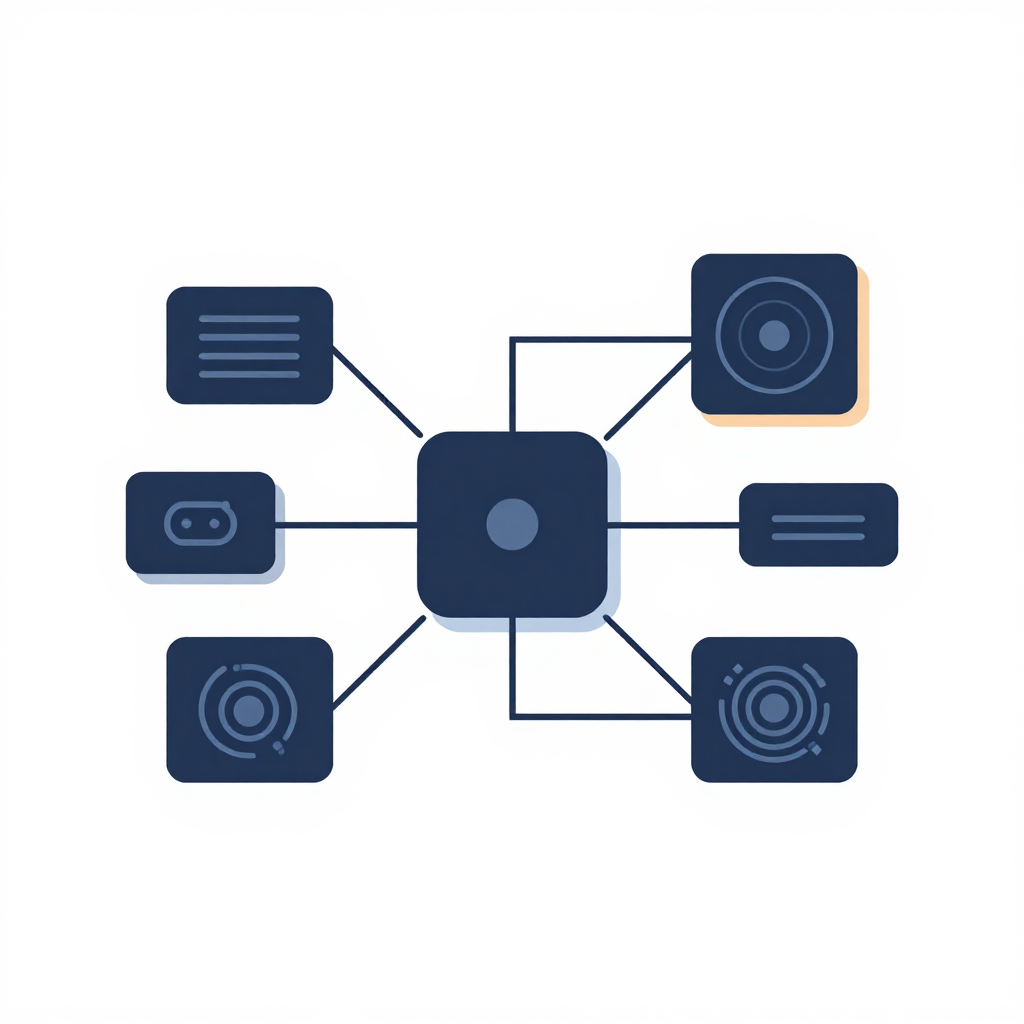
At the heart of Claude Science is the concept of intelligent delegation. Rather than a singular interface, the workbench provides a primary AI assistant that acts as a project manager. This manager orchestrates a swarm of specialized agents, each capable of handling distinct facets of a research project.
Whether dealing with genomics, protein folding, or chemistry simulation, the system leverages prebuilt toolkits. A researcher can task the project lead assistant with building an analysis pipeline, and the assistant can then spin up sub-agents to handle data fetching from the 60+ integrated scientific databases, execute scripts, and organize intermediate outputs. It’s essentially breaking down complex research tasks into manageable components, overseen by a high-level manager that ensures continuity. The fact-checking agent, which independently reviews calculations and citations, is a necessary step—though it’s worth noting that the system uses the same underlying model for fact-checking as it does for reasoning, rather than an external verification source.
Early users like the Allen Institute’s Jérôme Lecoq have already used Claude Science to build multi-agent computational review pipelines, and Stephen Francis’s group at UCSF cut germline glioma analysis time dramatically—results were independently validated.

Reproducibility: A Solvable Problem?
Perhaps the most significant value proposition is its approach to reproducibility. In scientific computational research, the 'black box' nature of AI and complex scripts often makes results difficult, if not impossible, to independently verify.
Claude Science attempts to change this by bundling the figures it generates with the context that birthed them. When the system renders a 3D protein structure or a set of chemistry diagrams, it doesn’t just show you the static output. It explicitly provides the exact code, the environment configuration, and the full message history that produced that specific graphic.
This is a subtle but critical shift in engineering. By forcing transparency into the figure-generation process, Anthropic is trying to lower the barrier for validating research. And for scientists who need to tweak designs, the workbench allows them to use plain-language prompting to modify the code behind the figure. It bridges the gap between high-level conceptual changes and low-level code implementation.
The New Rules of Competitive Science
The market for AI-driven scientific research is fracturing into three distinct distribution strategies, and the contrast is stark.
Anthropic is playing a "wide" game. By making Claude Science accessible through existing Pro, Max, Team, and Enterprise subscriptions, they are aggressively pushing for immediate, broad-based adoption across the scientific community. They aren't gatekeeping; they’re trying to become the standard workflow layer for researchers who already use Claude daily.
OpenAI, by contrast, is going "narrow." With GPT-Rosalind, they are fine-tuning specialized models and limiting access to a curated list of enterprise institutions in the U.S. It’s a prestige model—exclusivity and high-performance fine-tuning for selected partners like Amgen and Moderna.
Then there is Google DeepMind, which owns the infrastructure foundation. When you need the best structure prediction, you need AlphaFold. DeepMind bundles these foundational, proprietary models into the Gemini for Science platform, leveraging their unique intellectual property as the primary hook.
Which strategy wins? It depends on what researchers prioritize: pure model capability, ease of workflow integration, or exclusivity and institutional backing.
For scale, Anthropic is offering up to $30,000 in credits for 50 Claude Science research projects running from September through December 2026.
Looking Toward the Future
Claude Science is in beta now, and Anthropic is actively funding research projects to stress-test the workbench in the real world. By providing up to $30,000 in credits to 50 projects through July 2026, they are building a library of successful case studies in fields like biomedical research.
It’s an intelligent move. By embedding itself into active research pipelines now, Anthropic is trying to foster a community and a product-market fit that's difficult to replicate. Whether workflow automation is truly the key to unlocking the next generation of scientific discovery remains to be seen. But the bet is clearly marked: the companies that own the process of research will be more valuable than the companies that simply own the models used to do it. It’s a pivot that signals maturity in the AI space, shifting the focus from "what can the model do?" to "what can the scientist produce?"