
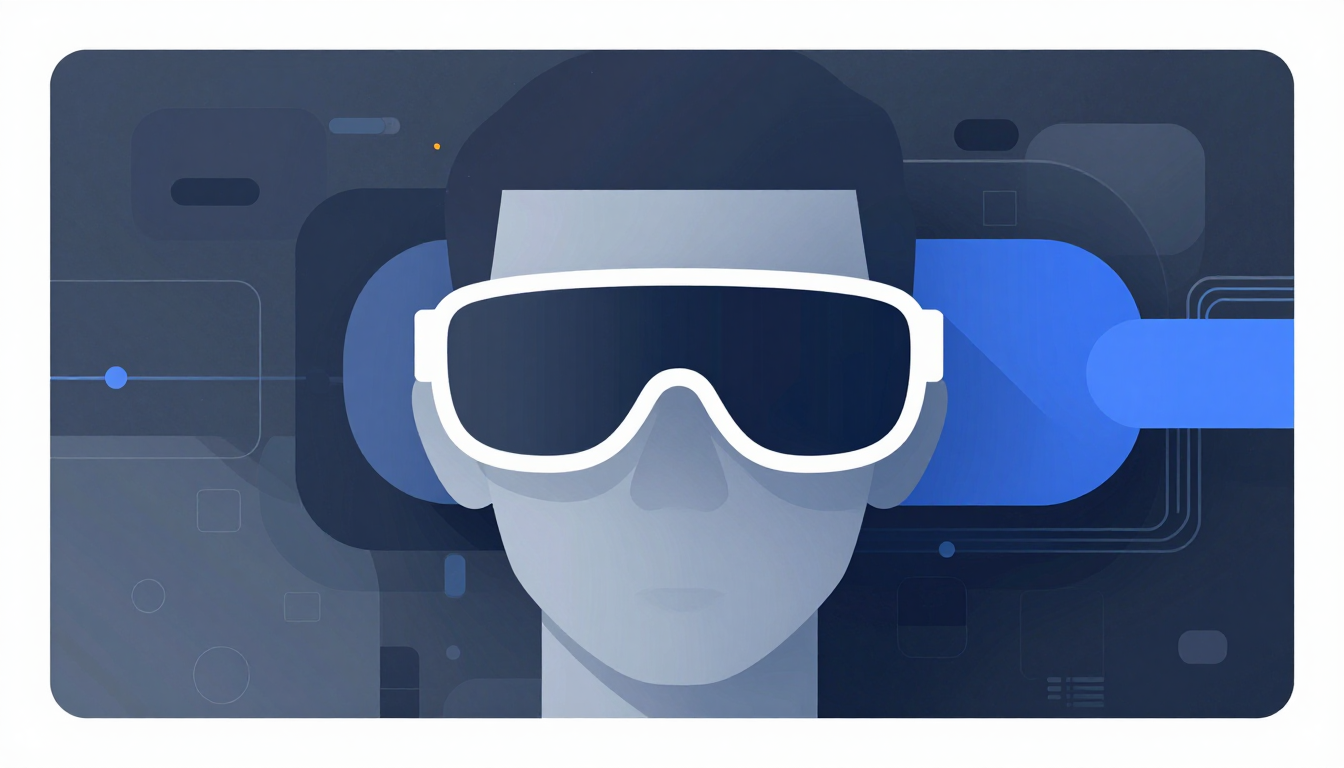
The Face of the Next Computing Platform
Smartglasses are no longer a futuristic concept — they're already in stores, on your celebrity friends' faces, and slowly, stubbornly, in our pockets as a backup to our phones. Meta's Ray-Ban smartglasses sell by the hundred thousand, capturing photos and video and audio while looking like a pair of ordinary Ray-Bans. Apple's preparing its own lightweight AR design under the codename Vision Air, and Google quietly demonstrated Project Astra — an AI glasses prototype that sees your world in real time and understands it with uncanny precision.
This isn't just another hardware upgrade. These devices are the last and best real estate on our bodies.
Think about it: smartphones demand you pick them up, smartwatches sit inert on your wrist until you tap the screen. Smartglasses? They're always on, always watching, always ready to respond before you even ask. They occupy the most intimate position possible — perched on your face, aligned with your eyes, the primary window to how you experience reality.
That matters. Because when a device can see what you see, hear what you hear, and understand your environment before you do, it stops being a tool and starts shaping your perception. The glasses themselves are unremarkable, the tech behind them isn't — and that combination makes smartglasses uniquely powerful, and uniquely dangerous.
The market is accelerating. In the past year alone, Meta shipped its third major update to Ray-Ban smartglasses with on-device AI that runs entirely offline. Apple's upcoming entry isn't a VR headset repurposed for wearables — it's something lighter, more fashion-forward, and built from the ground up for daily AR. Google's Project Astra prototype ran on a Pixel phone, but its capabilities — real-time translation, object recognition, hands-free assistance — point toward a future where your glasses become your AI's eyes and ears.
This race isn't just about who sells the most units. It's about who gets to decide how humans interact with AI in physical space — and whether we'll notice when the relationship shifts from convenience to control.

The Market Is Exploding—Quietly
Meta's Ray-Ban smartglasses have become a cultural phenomenon, selling hundreds of thousands of units and proving that consumers will wear AI-powered hardware on their faces. The device captures photos, records video, plays audio, and runs on-device AI models — all while looking like a pair of ordinary Ray-Bans. The Wall Street Journal reported on the accelerating market dynamics, with Meta investing heavily in AI capabilities while competitors scramble to catch up. Mark Zuckerberg has staked Meta's future on owning the next computing platform entirely, and smartglasses are a central pillar of that bet.
Apple is preparing its own entry with the Vision Air, a lightweight AR glasses design that could rival or surpass Meta's offering. Google has been quietly developing Project Astra, an AI-powered glasses prototype that can see and understand the world around you in real time. Each company brings different strengths: Meta's social graph, Apple's ecosystem lock-in, Google's search and AI dominance.
Startups are moving faster still. XREAL has built AR glasses that fold down to pocket size, and its partnership with Google on Project Aura at Google I/O 2026 signaled that the ecosystem war has entered a new phase. RayNeo, Even Realities, and others are pushing the boundaries of what lightweight AR glasses can do, targeting both consumer and enterprise use cases.
The market isn't just growing — it's becoming a three-way tug-of-war between platforms. And the winner won't be determined by hardware alone, but by who builds the most compelling set of experiences that people want to live with every day.

Why Glasses? Why Now?
The choice of eyewear as the form factor wasn't obvious. Early wearables tried watches, rings, earbuds — but glasses occupy the most intimate and visible position possible. They sit at the intersection of utility and identity — something people already wear, making the transition to smart glasses feel natural rather than forced.
More importantly, eyes are the primary interface through which humans experience the world. A device that can see what you see, understand your environment, and overlay digital information is uniquely positioned to become the most intimate computing platform ever created.
The AI revolution has finally made this possible. Modern on-device processors can run large language models and computer vision systems in real time, enabling features like real-time translation, object recognition, navigation overlays, and contextual assistance — all without requiring a phone in your hand or a headset over your eyes.
Glasses represent the convergence of several trends: miniaturized AI chips, improved battery technology, better cameras and microphones, and growing consumer acceptance of always-on devices. The result is a form factor that can deliver smartphone-level capabilities in a package that looks and feels like ordinary eyewear.
That's the hook. You don't need to change your behavior — just wear your existing pair of glasses, or swap into a new frame that includes the tech. The barrier to adoption isn't learning a new ritual; it's deciding whether you want your glasses to know more about your world than you do.
The Privacy Paradox
But here's the thing: smartglasses capture everything you see. Your home, your conversations, private moments — all are potentially recorded and processed by a device that's always on, always watching.
The tension is fundamental. The value of smartglasses comes from their ability to see and understand your world, but that same capability makes them the most privacy-invasive consumer device ever designed. Unlike a phone you can put down or a laptop you can close, glasses are always on, always recording, always watching.
The Wall Street Journal has documented mounting privacy concerns from regulators and civil liberties groups as the market grows. The question isn't just about what data is collected, but about the social norms that will govern when and where recording is appropriate. We need new frameworks that protect privacy without stifling innovation — a balance that hasn't been achieved with any previous consumer technology.
Apple has tried to address this by building hardware-level safeguards that limit continuous recording and require explicit user action. Google's Project Astra prototype includes on-device processing to keep sensitive data off the cloud. Meta's Ray-Ban smartglasses store media locally by default, only uploading when you explicitly choose to share.
Each company's approach reveals its philosophy: Apple trusts the hardware, Google trusts AI models, Meta trusts your willingness to share. None of these feels quite sufficient yet.
This is the privacy paradox: the devices we want most — the ones that understand us best — are also the ones most capable of watching us without permission. Getting it wrong could normalize surveillance as a feature of everyday life. As Kai-Fu Lee has argued, the always-listening paradigm raises profound questions about consent and data ethics that we must confront before ambient AI becomes ubiquitous.
The Arms Race Intensifies
This isn't just about one company winning — it's about establishing the standard for how humans interact with AI in physical space. Meta wants to make smartglasses the default social computing platform, turning Ray-Ban into a portal to a Meta AI world. Apple is betting on spatial computing and premium design, using its ecosystem lock-in to create a seamless experience across iPhone, Mac, watch, and glasses. Google is pursuing AI-native experiences that understand context — not just what you see, but why it matters and what to do next.
The race extends beyond these giants. XREAL's partnership with Google on Project Aura at I/O 2026 signaled that the ecosystem war has entered a new phase, combining Google's AI leadership with XREAL's form factor expertise. Apple's own Vision Air reportedly features a new micro-OLED display that could push battery life past eight hours, making all-day wear feasible for the first time.
Startups like RayNeo and Even Realities are pushing the boundaries of what lightweight AR glasses can do, targeting both consumer and enterprise use cases. Traditional eyewear companies are partnering with tech firms to blend fashion with function, turning hardware into something people wear without thinking — a crucial hurdle for mass adoption.
The market is fragmenting even as it grows, with different players targeting different use cases — from productivity to entertainment to health monitoring. This competition is driving rapid innovation. Each new generation of smartglasses gets thinner, lighter, more capable, and more affordable.
The question isn't whether this technology will become mainstream — it already is, in the case of Meta's Ray-Bans. The question is how we navigate the implications.
What We're Supposed to Do
The real estate on our bodies is being claimed. The question is whether we get a say in how it's developed, or whether we simply adapt to whatever the market delivers.
We need new social norms about when and where recording is appropriate. We need regulatory frameworks that protect privacy without stifling innovation. We need design choices that prioritize user control over data collection.
Most importantly, we need to treat smartglasses differently than previous consumer devices. Because the stakes are higher than any previous consumer device — smartglasses don't just serve us, they see what we see, hear what we hear, and potentially shape how we experience reality itself.
The next few years will determine not just which company wins, but what kind of relationship we have with the technology that lives on our faces. And that's a choice worth making deliberately, not just with your wallet.