
We All Track Who's Fighting Whom
Here's something you've probably noticed without thinking about it: when you start watching a new TV show, your brain immediately starts building a map of who's allied with whom — and more importantly, who's trying to destroy whom. You don't have to try. It just happens.
A new fMRI study from the University of Osaka and Japan's National Institute of Information and Communications Technology (NICT) has now proven that this isn't just a quirk of attention. It's structural. The brain literally builds its social map using conflict as the primary coordinate system, and friendly relationships — well, they don't leave nearly the same footprint.
The research, published July 6, 2026 in Communications Psychology (a Nature journal), used Representational Similarity Analysis on high-resolution brain scans to show that antagonistic relationships are encoded in two specific cortical regions with remarkable consistency across participants. Friendly ties? Under the same analytical criteria, they simply didn't register.
That asymmetry matters. A lot.
The Experiment: Six Episodes of SUITS and a 3-Tesla Scanner
The experimental design is elegant in its simplicity. Twenty-one university students — mean age 21.3, twelve male and nine female — were recruited on the condition that none had ever seen SUITS, the USA Network legal drama. They watched the first six episodes of Season 1 at home on their own computers, spread across several days. That's roughly five hours of dense interpersonal maneuvering: betrayals, backroom deals, mentorships forged and broken.
Each participant underwent fMRI scanning twice. First, before they'd seen a single episode — a clean baseline of how their brains represented eight main characters when those faces carried zero social context. Then, after they'd absorbed the full narrative arc, they were scanned again while viewing the same character faces.
The scanner was a 3-Tesla MAGNETOM Prisma with multiband EPI at TR = 1000 ms — serious hardware, not some undergraduate teaching setup. During each scan session, participants viewed 18 trials per character (six distinct facial images × three runs), with a simple face-repetition detection task to keep them attentive. Head movement stayed under 3 mm across all subjects, which tells you the data quality was solid.
After the second scan, participants rated all 28 possible character pairs on two dimensions: relationship strength (Strong to Weak) and valence (Antagonistic to Affiliative), using 7-point scales. Mean comprehension accuracy on post-episode quizzes was 90%, confirming everyone actually paid attention.
The pre-to-post design is the key move here. By comparing representational similarity across characters between baseline and post-viewing, the team could isolate exactly what changed in neural representation once social knowledge was acquired. That's how you separate learning effects from pre-existing biases.
The Asymmetry: Rivalries Anchor, Friendships Don't
This is where the paper gets genuinely interesting.
Using whole-brain searchlight RSA with cross-validated Mahalanobis distances (crossnobis) — a metric chosen specifically because it accounts for covariance structure and captures multivariate pattern differences in fMRI signals — the researchers constructed representational dissimilarity matrices from both neural activation patterns and behavioral ratings. Facial feature dissimilarity was controlled using ArcFace 512-dimensional embeddings, so the effects they found weren't just about faces looking different.
The result: antagonistic relationships were strongly and reliably mapped in two brain regions.
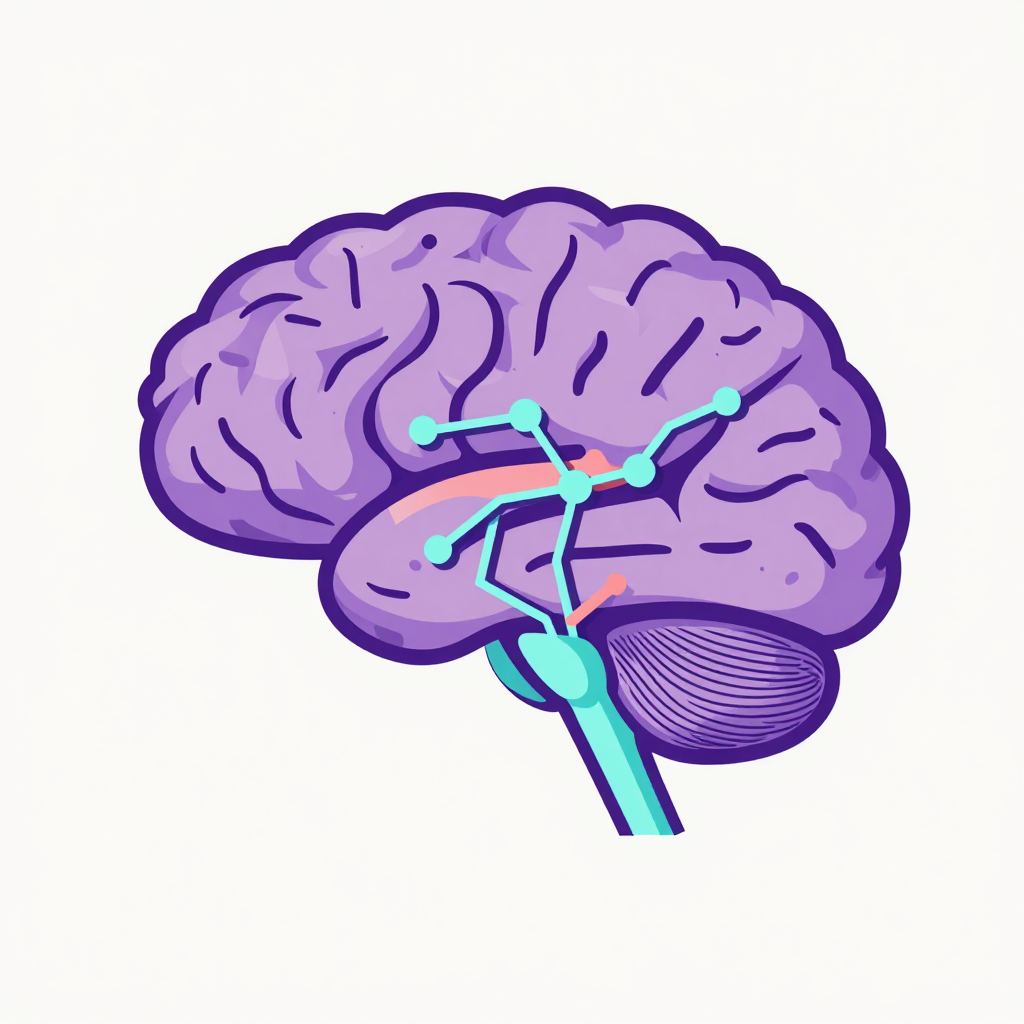
The left anterior supramarginal gyrus — a region associated with processing social affect, empathy boundaries, and perspective-taking. And the right medial prefrontal cortex — widely recognized as a core hub for social cognition and mentalizing, the kind of region that lights up when you're trying to figure out what someone else is thinking. Such hubs are vital for structural coordination, similar to the critical communication hubs analyzed in neurological studies of brain wiring.
Now here's the part that should make you pause: friendly, affiliative relationships did not show statistically significant neural clustering under the exact same criteria. Not a hint of it.
I know what you're thinking — maybe the brain just doesn't care about friends. But that's not quite right. The precuneus did show increased activation after drama viewing, suggesting enhanced retrieval of narrative-related person knowledge. The brain was definitely changed by the experience. It just chose to encode the conflict, not the camaraderie.
That's a distinction worth sitting with. The brain learned about everyone. It just decided that the enemies were more important to represent structurally.
Why Spite Wins: An Evolutionary Security System
Professor Tamami Nakano, the study's senior author, puts it this way: when we imagine a drama's character map, we pay attention not only to who is close, but also to who is in conflict. The study shows that this natural social understanding is reflected directly in the brain's architecture.
But there's a deeper reason, and it goes back millions of years before law firms and corporate rivalries.
From an evolutionary standpoint, tracking your enemies is far more critical for survival than tracking your friends. Allies are predictable and safe — they require fewer active mental resources to monitor because their behavior is, by definition, cooperative. Rivals and enemies represent immediate social and physical threats. Miss the signal, lose your life.
The brain, in this framing, acts as a security system. It prioritizes social friction and uses conflicts as heavy cognitive anchors to construct an accurate, highly detailed map of who poses danger to whom. Friendship gets a rough sketch. Enmity gets high-resolution mapping. This selective vigilance aligns with other research showing how early environmental factors program our focus toward negative cues, such as how childhood development and maternal history shape attentional biases when viewing emotional faces.
It's not that the brain is cynical. It's that it's pragmatic. You can afford to be casual about people who have your back. You cannot afford the same luxury with someone who might stab you in it.
This also explains why narrative fiction — which is essentially simulated social experience — triggers such strong relational encoding. Our brains weren't designed for Netflix, but they're still running the same survival software. A fictional rival activates the same neural priority system as a real one.
The Precuneus Detour: Memory Without Structure
One finding deserves its own callout because it's easy to misread.
The univariate analysis revealed increased activation in the precuneus after drama viewing. The precuneus is involved in self-referential processing and episodic memory retrieval, so this makes perfect sense — participants had acquired rich narrative knowledge about the characters and their world. Their brains were simply better at retrieving that information post-viewing.
But here's the crucial nuance: this region did not show statistically significant representational similarity patterns reflecting interpersonal relationships. In other words, the brain got better at remembering the story, but that improvement wasn't organized around social structure.
This matters because it rules out a trivial explanation. You might wonder whether the antagonism effect was just a byproduct of general attention or memory enhancement. It isn't. The relational mapping is specific — it lives in the supramarginal gyrus and medial prefrontal cortex, not in regions associated with general narrative comprehension.
The brain made two distinct kinds of changes: better memory retrieval (precuneus) and structured social mapping anchored in conflict (supramarginal gyrus + mPFC). They're separate processes, and only one of them cares about who's fighting whom.
What This Means for AI Social Modeling
Current AI systems are remarkably good at seeing who is connected to whom. Follow graphs, engagement metrics, co-occurrence patterns — machines can map the skeleton of a social network in seconds.
What they're terrible at is understanding the emotional valence of those connections. Is this relationship cooperative or adversarial? How strong is the trust? Where are the fault lines?
This study provides a concrete blueprint for addressing that gap.
The human brain doesn't represent social relationships as undifferentiated edges on a graph. It encodes valence — specifically, it prioritizes antagonistic valence with high-resolution neural mapping in regions dedicated to social cognition. If you want AI to infer human social dynamics with anything approaching human-like accuracy, you need to teach it to focus on adversarial tension the way the brain does.
That means designing machine learning architectures that don't treat all relationship types equally. It means building systems where conflict signals carry more representational weight than affiliation signals — not because conflict is more real, but because that's how human social cognition actually works.
The implications extend beyond social media. Any system that needs to model human groups — recommendation engines, content moderation tools, even collaborative AI assistants working in team contexts — would benefit from incorporating this asymmetry. The brain's strategy isn't a bug. It's an optimization.
Right now, most AI treats social networks as symmetric graphs. This research suggests that approach is fundamentally mismatched to how humans actually represent their social worlds.
Methodology and Limitations
A few things about the study's rigor that are worth noting.
The fMRI acquisition was thorough: multiband T2*-weighted gradient echo EPI on a 3T Prisma with a 64-channel array coil, 66 slices at 2.5 mm resolution, TR of 1000 ms. Field map corrections were applied for geometric distortion. Head motion was confirmed under 3 mm for all participants. The searchlight RSA used unsmoothed functional images to preserve fine-grained multivoxel patterns, with an 8 mm spherical searchlight moved systematically across the entire brain.
Statistical power was assessed: with 21 participants, the study has 80% power (two-sided α = 0.05) to detect standardized within-participant effects of approximately Cohen's d ≈ 0.62 or larger. That's a medium-to-large effect threshold, which means the null result for affiliative relationships is unlikely to be a power issue — if there were a meaningful effect, this study would have detected it.
The ethics approval came from NICT's Ethics Review Board (approval #2310240020). Participants received 16,000 JPY for their time. The study was not preregistered, which is a minor limitation worth acknowledging — though the open-access publication in a Nature journal and the detailed methods section provide reasonable transparency.
The sample was homogeneous (young Japanese university students), which limits generalizability. Cultural differences in social cognition are well-documented, and the antagonism-priority effect might vary across societies with different norms around conflict expression. That's a real boundary condition, not a dealbreaker, but it deserves mention.