

Scaling the Enterprise: Why Europe is Doubling Down on Industrial AI
For years, the global discourse surrounding artificial intelligence has been dominated by the frantic pace of consumer-facing innovation. Foundation models capable of generating photorealistic imagery, sophisticated chatbots, and transformative creative tools have captured the general public’s imagination and a disproportionate share of venture capital investment. Silicon Valley has, for some time, been the epicenter of this push toward ubiquitous, consumer-centric AI applications.
Yet, as the hype cycle begins to mature, a contrasting narrative is gaining significant traction across the Atlantic. European industry leaders, policymakers, and technologists are increasingly redirecting their sights toward a different, more grounded ambition: the practical, industrial-scale deployment of artificial intelligence into the backbone of their everyday economy.
At VivaTech 2026, this shift is expected to be a central theme, bringing together founders, investors, and enterprise leaders to grapple with what many now consider the true frontier of AI: the transition from high-level, experimental foundation models to reliable, production-grade enterprise systems. The question is no longer just "What can this model do?" but rather "How do we securely and reliably integrate this into foundational systems such as manufacturing, logistics, healthcare, and energy grids?" This is the next phase of the AI competition, and it is a challenge where Europe believes it holds a distinct competitive edge, banking on deep industrial expertise rather than just raw model-building capability. This shift is about the fundamental restructuring of how legacy industries operate in an AI-first world—a stark contrast to the Agent Adoption Gap: Moving From Enterprise ROI to Consumer Utility, which explores different adoption trends.
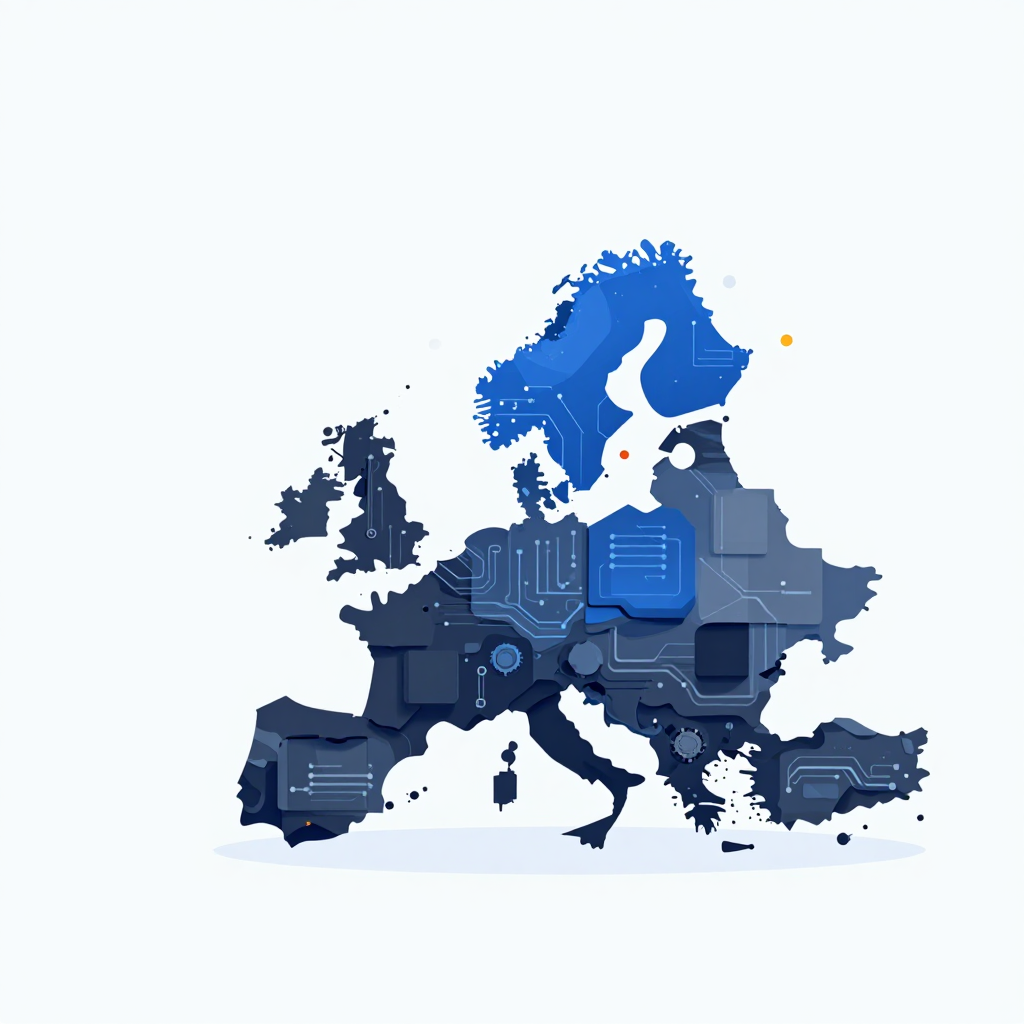
Moving from Experimentation to Production
The first wave of AI adoption was marked by excitement and experimentation. Organizations of every conceivable size rushed to deploy copilot assistants, test conversational agents, and explore the myriad of use cases promised by burgeoning generative AI technologies. These initial ventures were crucial, providing a baseline of understanding and uncovering potential roadblocks. However, as organizations attempt to build upon these early pilots, they are running headlong into the harsh, complex realities of enterprise-grade deployment.
The challenges are far more nuanced than simply scaling compute resources or fine-tuning models. Moving AI from a sandbox environment into the mainstream of a large organization requires navigating a labyrinthine set of requirements: governance, compliance, cybersecurity, operational reliability, and long-term sustainable integration.
This is the "hard part" of the AI story. For many organizations, these questions were considered secondary, or barely considered at all, during the initial rush to implement generative AI. Today, they are prerequisites for any serious enterprise deployment. Startups seeking to enter this space are increasingly judged not on the novelty of their underlying architecture, but on their ability to integrate seamlessly into existing, often legacy, IT infrastructures, as well as their aptitude for navigating complex regulatory landscapes. The conversation has matured from a focus on clever output to a prioritized focus on infrastructure, deployment security, and measurable operational value. Companies are realizing that the cost of failure in a production environment is far higher than a hallucinating chatbot—it’s about data integrity, system stability, and ensuring that AI outputs don't expose the enterprise to debilitating risks. Leaders are now looking for solutions that aren't just intelligent, but also auditable, explainable, and resilient to adversarial inputs. This transition requires a fundamental rethink of the AI tech stack, placing robust ETL (Extract, Transform, Load) processes, data lineage, and MLOps at the absolute center of the enterprise strategy. The industry is moving from 'AI for the sake of AI' to 'AI as an industrial tool.'

The European Advantage: Industrial Depth and Regulatory Trust
Europe’s emphasis on enterprise and industrial AI is not merely a defensive posture; it is a strategic leveraging of its established economic strengths. Unlike a consumer-centric market that heavily prioritizes rapid feature iteration, European economies are structurally built upon deep-rooted industrial clusters—manufacturing, logistics, healthcare, cybersecurity, and energy infrastructure. These systems are profoundly complex, essential to the functioning of everyday life, and consequently demand high levels of reliability.
European companies are uniquely positioned to address these demands because the "AI-in-the-wild" problems—governance, safety, and operational reliability—are ones the continent has spent years preparing for, often through rigorous regulatory frameworks. While some in the United States might view regulation as a friction point to rapid innovation, European leaders are increasingly articulating a different view: that clear, enforceable regulatory frameworks, like the EU AI Act, can serve as a powerful trust signal for large-scale enterprise adoption.
Trust is the ultimate commodity in industrial AI. A manufacturing plant may be hesitant to deploy an unverified model into its core operational pipeline, but it will be far more compelled by systems developed within a framework that prioritize compliance, robust security, and transparent operational standards. By focusing AI application on these deep-industrial sectors, Europe is betting that the winning strategy in the next phase of the AI race will involve embedding AI into the critical infrastructure that keeps the global economy functioning. The strategy hinges on the realization that in B2B and industrial contexts, the value is not in the model itself—which is increasingly becoming a commodity—but in the application of that model to proprietary, specialized datasets within a secure, compliant environment. European firms that have spent decades digitizing and automating these sectors are now applying AI to optimize complex supply chains and predictive maintenance cycles, leveraging unparalleled domain knowledge that consumer-focused AI startups often lack. This domain-specific advantage, combined with a commitment to high-standard regulatory compliance, creates an environment where industrial AI can flourish as an indispensable operational partner rather than an experimental curiosity.
VivaTech 2026: A Forum for the True Future of AI
As VivaTech 2026 unfolds, it arrives at an inflection point. The event represents an essential forum to move beyond the superficial hype and engage with the practical, yet profoundly complex, transition of AI from conceptual excitement to structural integration. The discussions in Paris are expected to highlight the stark divergence between those focused on the next consumer-facing headline and those focused on the reliable, secure, and industrial-scale application of AI.
Europe’s path forward is clear: the next phase of AI supremacy may very well be determined not solely by who builds the largest models, but by who best masters the art of effective, secure, and large-scale deployment. For founders, policymakers, and corporate leaders, the reality is that the enterprise AI ecosystem is becoming impossible to ignore. Whether AI fulfills its promise to transform our most critical economic systems will be defined by the hard, foundational work happening now—a reality that makes VivaTech 2026 a must-attend event for those seeking an unvarnished, front-row view of the industry's next great challenge.
We are entering the era of 'Industrial AI maturity.' The companies that win tomorrow won't just be those that can build AI models, but those that can build AI-enabled organizations. This involves not just technical breakthroughs but fundamental shifts in corporate culture, workforce education, and risk management. As attendees congregate in Paris for VivaTech 2026, the underlying current of the event will be this transition: moving from the excitement of the novel to the rigor of the indispensable. The future of AI is not just being written in the flashy presentations of the consumer tech giants; it is being forged in the factories, clinics, and power plants across Europe where AI is becoming, quietly and effectively, the new infrastructure of the industrial age.
Sources:
- TechCrunch: Why enterprise AI will be a major focus at VivaTech 2026
- Deloitte: AI Enterprise Transformation
- European Commission: European Approach to Artificial Intelligence