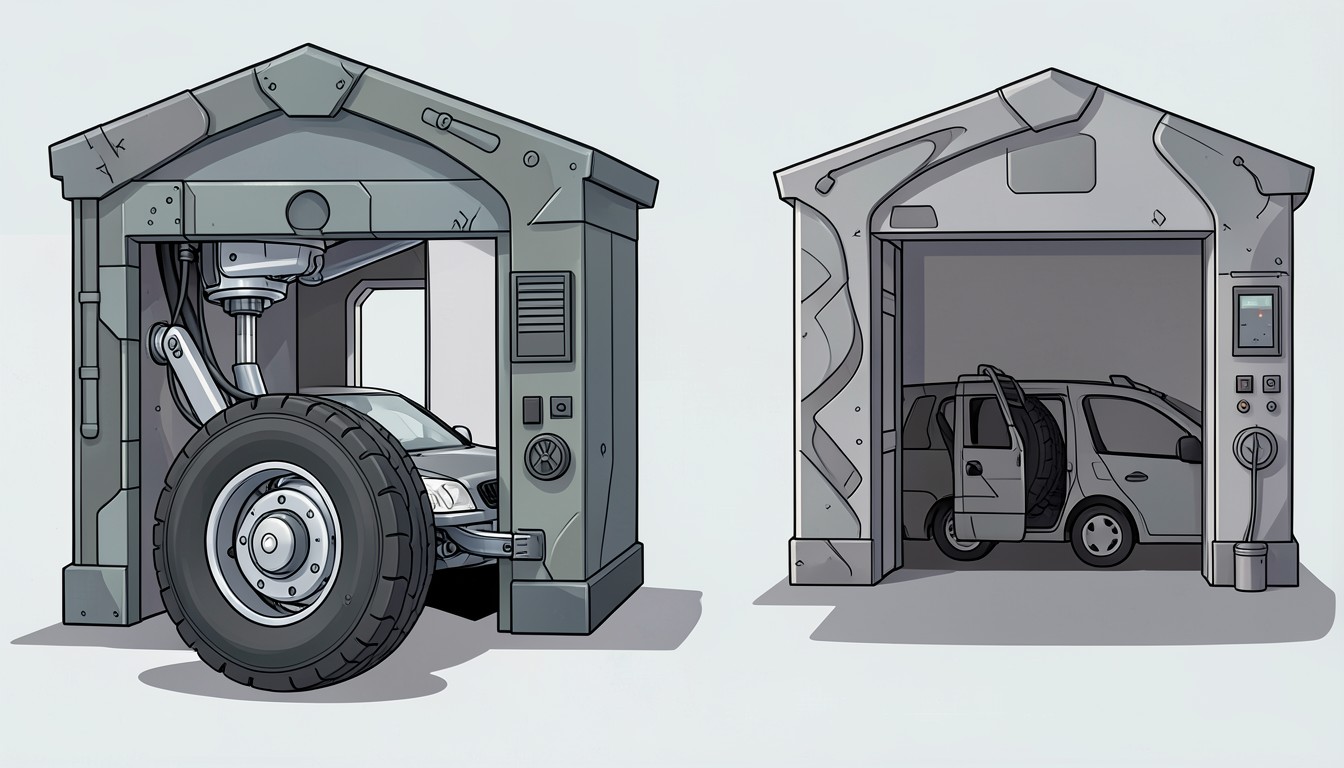
The Seasonal Scramble Meets Automation
Every autumn across Canada, millions of drivers experience a familiar ritual of dread: booking the semi-annual tire swap. Whether it is navigating packed phone lines, waiting weeks for an open slot, or idling in fluorescent-lit waiting rooms while shop technicians race against the first biting snowfall, the seasonal tire crunch is a formidable logistical beast. For garage owners and service managers, it is an exhausting bottleneck marked by severe labor shortages, grueling physical demands, and relentless customer pressure.
Now, a San Francisco startup is bringing a touch of factory-floor autonomy straight to the service bay. PitPro Automation has deployed its very first automated tire-changing system north of the border, setting up shop at a prominent Kal Tire location in Calgary, Alberta. If the pilot proves successful, Canadian motorists might soon have their winter tires unbolted, hoisted, and torqued into place by a pair of oven-sized robots.
Inside the Oven-Sized Service Bay
Let's be honest: changing tires all day is punishing, backbreaking work. It requires constant crouching, lifting heavy alloy wheels, and hammering away at stubborn lug nuts until your joints ache. Independent tire shops across North America have struggled immensely with chronic staff shortages and high turnover rates. Workers frequently burn out or migrate within months to less grueling retail or food service jobs. As PitPro founder and CEO Jeremy Conrad recounted during a recent interview, one shop manager noted they needed special wage approvals after a fast-food joint opened across the street and poached half their crew.
PitPro's system is engineered to slide right into existing maintenance bays without requiring a costly architectural overhaul. The hardware consists of two boxy units, each roughly the dimensions of a kitchen oven. Armed with onboard optical sensors and precision robotic arms, the machines locate and loosen lug nuts, securely store them during the swap, lift off the old wheels, and mount fresh rubber with exact torque specifications.
Crucially, the hardware is built to share space efficiently. Because the robots occupy a footprint that leaves the rest of the bay accessible when not in use, human mechanics can still utilize the stall for other routine maintenance tasks. That flexibility is a major selling point for service chains wary of sinking capital into bulky, single-purpose equipment that locks up a valuable revenue-generating lift all day.
Why Calgary? The Chains and Fleets Strategy
While PitPro has spent significant time courting commercial fleet operators—enlisting former Ford Pro executive Ted Cannis as an advisor to tap into nationwide fleet relationships—retail tire chains present an enormous commercial runway. Kal Tire stands as one of Canada's largest independent tire service chains, making it an ideal testing ground for high-volume consumer traffic.
Targeting major chains rather than independent mom-and-pop garages is a deliberate tactical choice. Chains feature standardized floor plans and repeatable operating procedures, making it significantly easier to scale a robotic deployment once the initial operational kinks are ironed out. And in a country where winter tire mandates and harsh climates make seasonal swaps an inescapable yearly ritual, the sheer volume of cars needing service is practically limitless.
Dandelions and Dust: Real-World Engineering Hurdles
Transitioning any piece of advanced hardware from a controlled laboratory into a dusty, active garage environment is always messy. Garage doors stay open to let fresh air, exhaust ventilation, and vehicles through, exposing delicate sensors and robotic actuators to grit, fluctuating weather, and unexpected environmental curveballs.
Case in point: during the Calgary installation, Conrad encountered a hurdle nobody in the San Francisco tech hub had budgeted for. A thick wave of windblown dandelion seeds swept through the open doors, coating the robotic units in a fuzzy white blanket.
Fortunately, the fluff turned out to be more of a humorous photo op than a functional flaw. Conrad noted that the sensors adapted just fine, though it served as a vivid reminder that real-world deployment throws unexpected curveballs no software simulator can fully anticipate.
What This Means for the Canadian Garage
Robots aren't about to replace human mechanics entirely, especially given the broad range of diagnostics, complex repairs, and custom troubleshooting cars demand. But by shouldering the repetitive, backbreaking heavy lifting of seasonal tire swaps, automation could offer a vital safety valve for overextended service departments struggling to keep pace with demand. For broader context on how AI is turning robots into general-purpose workers, see our companion piece Robot Workers Rising: How AI Drives General-Purpose Autonomy in Robotics.
As PitPro refines its Calgary pilot and eyes broader rollouts across North America, the sight of a robotic arm wrestling a set of winter treads off a family sedan might soon become as normal as the complimentary coffee machine in the waiting room. For Canadian drivers shivering through their first October frost, relief can't come fast enough—whether it's handed over by a person or bolted on by a machine. Industry leaders are converging on the same thesis from the other direction; Rivian CEO RJ Scaringe's take on robots and autonomy in transportation, covered in RJ Scaringe at TechCrunch Disrupt 2026: EVs, Robots, and Autonomy, pairs well with what is now playing out in a Calgary service bay.