We often imagine that feeling happier or calming a racing mind requires a retreat, an expensive getaway, or a major lifestyle overhaul. Yet a useful mental pause can be much smaller: a few minutes of noticing the breath, looking closely at a calming image, or bringing attention to another person. Modern neuroscience has helped psychologists develop simple ways to redirect attention and settle stress in ordinary settings. These practices are not cures or substitutes for needed care, but they can provide a brief reset and make the next moment easier to meet.
What Is Mindfulness? Benefits, How to Practice, and More
Mindfulness means deliberately bringing attention to present-moment experience with openness rather than immediately judging or fighting it. It can include awareness of breathing, bodily sensations, sounds, or thoughts. Mindfulness is not the demand to empty the mind or feel relaxed on command. The practice is noticing when attention has wandered and gently returning it to an anchor.
That distinction matters. A person can feel anxious while practicing mindfulness; success is not measured by whether discomfort vanishes. Instead, the practitioner is making room to observe experience without automatically following every worry. This can interrupt a cycle in which hypothetical fears repeatedly capture attention. The American Psychological Association (APA) describes mindfulness as a psychological approach with roots in contemplative practice; it is now used in a range of health and psychology contexts. Benefits vary by person and practice, and mindfulness should be understood as one possible coping tool, not a guarantee.
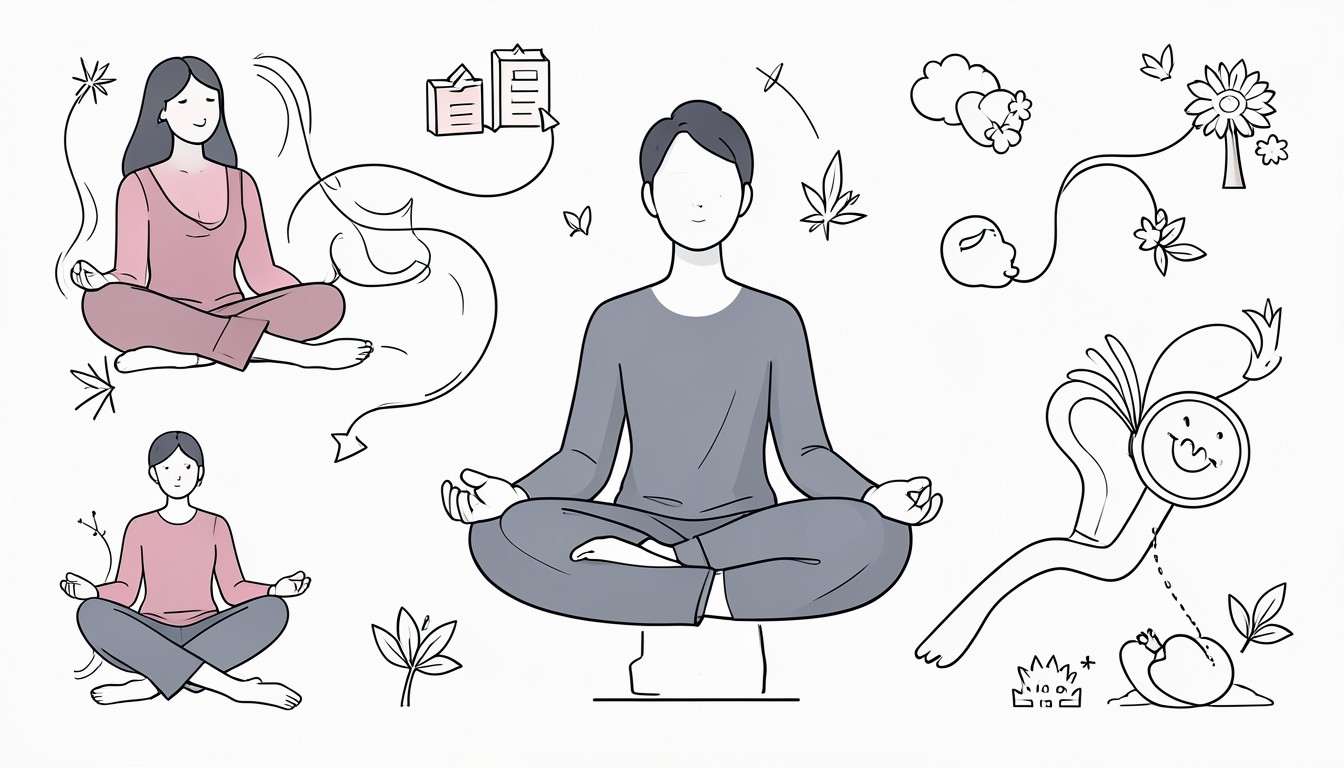
A simple start is to sit comfortably, allow the eyes to rest or close if that feels safe, and notice a few natural breaths. Attend to the physical feeling of breathing rather than forcing a particular rhythm. When thoughts pull attention away, recognize that gently and return to the next breath. Even a short interval can be a useful experiment. If focusing inward feels uncomfortable, choose an external anchor, such as sounds in the room or colors in a nearby object.
Mindfulness Meditation YouTube: Choosing a Brief Guided Practice
Searching for mindfulness meditation YouTube videos can make guided practice easy to try, especially for someone who prefers a spoken prompt to sitting alone. A guided meditation may cue breathing, a body scan, or noticing thoughts. Choose a short, reputable recording with a pace and voice that feel comfortable; there is no need to follow a video that makes claims of instant healing or promises a particular outcome. A phone timer or audio-only practice can also work when watching a screen would be distracting.
A guided session is a structure, not a requirement. The useful element is directing attention and returning to the present when it wanders. Try a few minutes first, and stop or switch to an outward focus if the exercise increases distress. People with trauma histories or intense anxiety may find some body-focused practices difficult; a clinician can help adapt approaches. Mindfulness & meditation are broad categories, and no single format is right for everyone.
Small Attention Shifts as Everyday Mental Vacations
A brief change in attention can give a worry loop less room to dominate. In a Psychology Today article, psychologist Elinor Greenberg describes low-cost strategies informed by neuroscience that may take under 15 minutes and can be used discreetly. These are practical experiments rather than guaranteed treatments. The shared principle is to move attention from repetitive, hypothetical thinking toward something concrete, sensory, or socially engaged.
Look closely at nature
Choose a nature photograph, a view through a window, or a real outdoor scene. Spend about 20 seconds noticing specific details you find appealing: the shape of a leaf, a patch of light, a bird, or the colors in a sunset. The Psychology Today article notes research suggesting that viewing nature images may help restore attention and improve mood. That does not mean a photograph will resolve serious or persistent distress, but careful looking can serve as a pleasant interruption and a small attention exercise.
Check in with breathing
When caught in an unpleasant thought, notice whether you are breathing and what the breath feels like. Avoid trying to control it at first. The concrete sensation offers attention a different track from rehearsing a hypothetical future. If breath awareness feels uncomfortable, notice another neutral sensation—feet touching the floor, hands resting, or sounds nearby. The goal is not to prove that a worry is irrational; it is to create a little distance from its momentum.
Turn attention outward
Self-consciousness often narrows attention toward evaluating how we appear. In a conversation, experiment with noticing the other person's tone, the subject they care about, or the general mood they convey. This is not an invitation to scrutinize or judge them. It is a way to listen with genuine interest instead of continually monitoring yourself. You may learn something about the person, and attentive listening can make an interaction more connecting.
Try the “pretend host” reframe
At a gathering, imagine taking on a small host-like role: look for someone who seems left out and offer a simple, low-pressure greeting. Greenberg describes this as shifting the focus from worrying about one's own impression to helping another guest feel included. It will not suit every social situation, and it need not become a performance. A modest question or welcoming gesture is enough; the point is to redirect attention toward a manageable action.
A Ten-Minute Body Scan
A body scan is a guided or self-guided practice of moving attention through different parts of the body and noticing sensations as they are. Rather than trying to make the body feel a certain way, observe what is present: warmth, pressure, tingling, tension, or perhaps very little sensation. A brief scan can counter the habit of spending the whole day in abstract thought and may help some people recognize tension earlier.
Try beginning with the feet and slowly moving attention upward, or follow a guided recording. If a sensation is unpleasant, you can pause, open your eyes, or shift attention outside the body. There is no need to force stillness or endure distress. The Psychology Today source describes brief body scans as a stress-reduction tool; individual responses differ, and a scan is best treated as a low-stakes practice rather than a test of willpower.
What Mindfulness Research Can—and Cannot—Tell Us
Mindfulness meditation research includes different practices, populations, and outcomes, so findings should not be compressed into a claim that meditation works equally for everyone. The source discussed here presents neuroscience as informing practical ways to redirect attention and describes meditation and body scans as useful tools for some psychological concerns. It also frames these strategies as usable alongside psychotherapy or independently. That is a balanced way to approach them: try a specific practice, notice its effects, and keep what is helpful without assuming it replaces professional support.
Nature exposure offers another example of how context may matter. Research referenced by the source includes work on nature and restoration of attention. A separate research report on nature experience and rumination examines changes associated with time in nature and activity in a brain region involved in mood-related processing. Such findings are not proof that a quick glance at a picture has the same effect as time outdoors, nor do they establish that one brief exercise prevents anxiety or depression. They help motivate practical questions about attention, setting, and how we feel afterward.
Making a Brief Practice Work in Real Life
Attach a small exercise to an existing routine: notice three breaths before opening email, study a nature image during a screen break, or listen to a short guided meditation after arriving home. Keep the intention modest. A mental vacation is a pause, not an obligation to become happy immediately. If the first exercise is not a fit, change the anchor: from breath to sound, from a body scan to looking around, or from a video to quiet outdoor observation.
It can help to check in before and after: How intense does the stress feel, and what would be a kind next step? The answer might be returning to a task, taking a real walk, contacting someone supportive, or seeking professional help. Anxiety that is persistent, severe, or disrupting daily life deserves more than quick fixes. Short mindfulness and attention-shifting practices can complement longer-term coping strategies, but they should not delay care when it is needed.
Sources
- Greenberg, Elinor. “How to Use Tips Based on Neuroscience to Relieve Stress.” Psychology Today, September 30, 2026. https://www.psychologytoday.com/us/blog/understanding-narcissism/202609/how-to-use-tips-based-on-neuroscience-to-relieve-stress
- Bratman et al. (2015), nature experience and cognitive benefits, as referenced in the Psychology Today article.
- Ulrich et al. (1991), nature images and attention, as referenced in the Psychology Today article.
- Farb et al. (2023), attention to breathing, as referenced in the Psychology Today article.
- “Nature Experience Reduces Rumination and Subgenual Prefrontal Cortex Activation.” North American Association for Environmental Education, https://eepro.naaee.org/research/eeresearch/nature-experience-reduces-rumination-and-subgenual-prefrontal-cortex-activation
- Frontiers in Psychology, 2019, https://www.frontiersin.org/journals/psychology/articles/10.3389/fpsyg.2019.03092/full