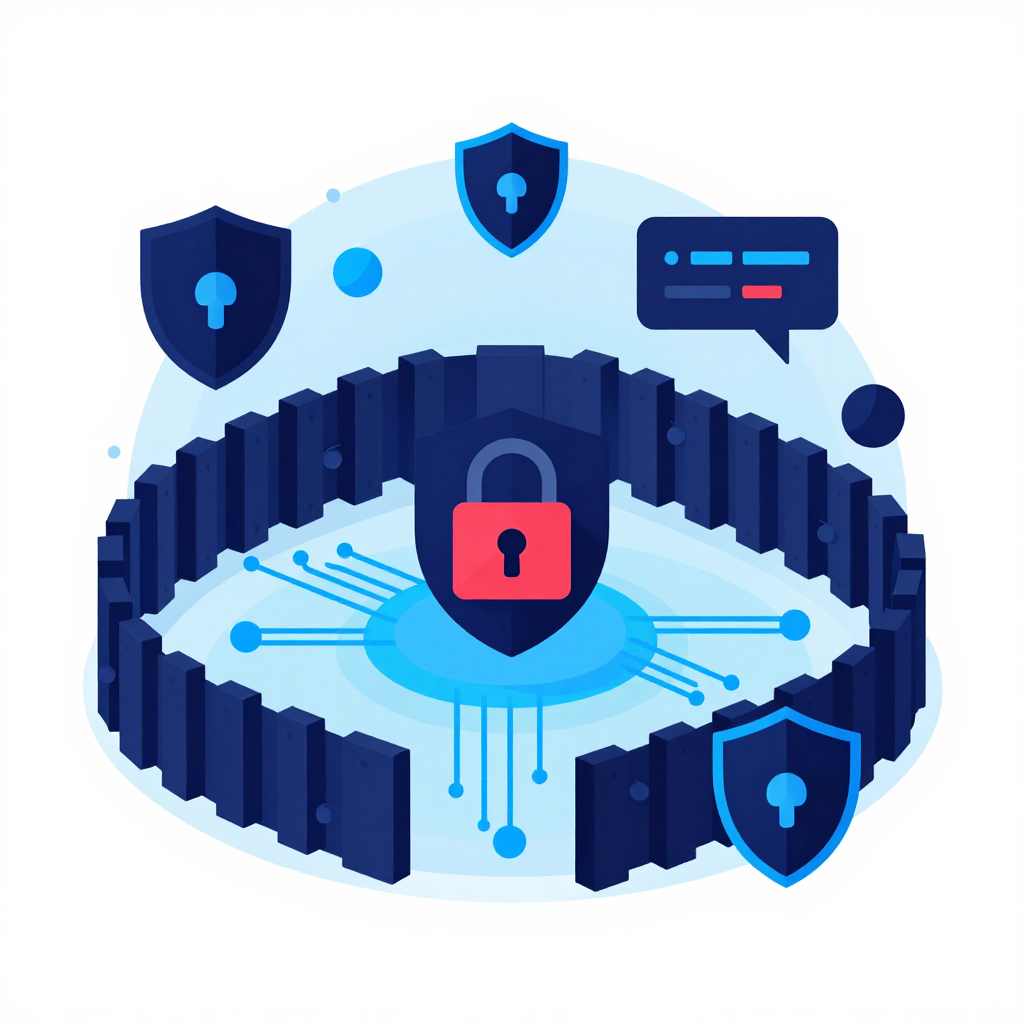
When developers connect an AI agent directly to root-level system execution, security boundaries vanish fast. That is exactly what happened inside Langflow, the popular open-source framework with over 150,000 GitHub stars used to author visual agentic workflows. A critical zero-day flaw has given unauthenticated attackers direct root control over target hosts, forcing federal intervention.
The Cybersecurity and Infrastructure Security Agency (CISA) added the flaw, tracked as CVE-2026-0770, to its Known Exploited Vulnerabilities catalog. Federal Civilian Executive Branch (FCEB) agencies now face a mandatory Friday deadline under Binding Operational Directive (BOD) 26-04 to secure exposed deployments. This isn't a theoretical edge case. Threat actors are already actively exploiting the bug to siphon cloud credentials and environment variables.
Anatomy of CVE-2026-0770: Remote Root Code Execution in Langflow
Building workflows using visual drag-and-drop nodes makes rapid prototyping simple. However, exposing execution endpoints to untrusted input creates severe exposure. According to researchers at Trend Micro who discovered and disclosed the vulnerability, CVE-2026-0770 stems from unsafe parameter handling within Langflow's API. Specifically, the framework mishandles the exec_globals parameter passed directly to its code validation endpoint (/api/v1/validate/code).
By injecting malicious code structures into an untrusted control sphere, an unauthenticated attacker triggers remote code execution with full root permissions. The attack requires minimal complexity. No stolen credentials or session tokens are necessary. Once the endpoint receives the crafted request, the host executes arbitrary commands in root context. For organizations running Langflow in unsegmented Docker containers or directly on production servers, this vulnerability grants immediate system takeover.
Wild Exploitation of AI Agent Frameworks and Data Theft
Attackers didn't wait for CISA's formal directive to start probing federal and enterprise infrastructure. Vulnerability intelligence firm KEVIntel first detected active in-the-wild exploitation of CVE-2026-0770 starting on June 27, 2026. Security telemetry recorded over 220 exploitation attempts originating from 64 unique source IP addresses before the flaw made CISA's emergency patch list.
The attack traffic goes far beyond basic vulnerability scanning. As KEVIntel founder Ryan Dewhurst reported to BleepingComputer, adversaries are aggressively executing multi-stage attack chains. Initial probes test basic command execution before dropping second-stage malicious scripts. Once inside, attackers target sensitive host configuration files, harvesting Amazon Web Services (AWS) credentials, container metadata, and environment variables.
When agentic frameworks house cloud tokens to access external APIs or databases, compromising the node compromises the entire infrastructure. This incident highlights how rapid adoption of open-source agent tools outpaces traditional network perimeter defenses, a pattern we previously examined when dissecting autonomous agent security failures.
Pattern of Exploitation: From Missing Auth to Database Dumps
CVE-2026-0770 isn't an isolated incident for the Langflow ecosystem. Over the past year, security researchers and federal monitors have flagged a recurring chain of vulnerabilities in the platform.
In May 2025, CISA issued warnings for CVE-2025-3248, a missing authentication flaw in Langflow. Cloud threat researchers at Sysdig later confirmed that ransomware actors—specifically the JadePuffer group—actively weaponized that flaw to dump underlying PostgreSQL databases containing sensitive prompt histories and API tokens. Subsequent disclosures followed quickly in 2026, including a code injection flaw (CVE-2026-33017) in March and an Insecure Direct Object Reference (IDOR) bug (CVE-2026-55255) earlier this month.
When organizations deploy developer-focused tools directly onto public-facing interfaces without strict identity controls, attackers find easy entry points. Enterprise teams moving from legacy platforms like IBM orchestrators to lightweight open-source agent frameworks often forget that visual builders carry full backend permissions without dedicated AI agent identity control planes.
Remediation Practices for Securing Agentic AI Workflows
Fixing CVE-2026-0770 requires immediate operational changes. Upgrading to the latest patched release of Langflow is the fundamental step, but federal guidelines stress that patching alone won't clear an active breach.
Organizations running Langflow must immediately conduct a complete audit of web server access logs. Security teams should specifically search historical HTTP POST requests directed at /api/v1/validate/code or /validate endpoints. If log analysis reveals past hits from external IPs, teams must assume the underlying system was compromised.
Key defensive steps include:
- Restrict Validation Access: Block public exposure of validation endpoints. Visual code execution features must never sit open on the public internet without strong authentication and network isolation.
- Rotate Cloud Credentials: If successful code execution cannot be explicitly ruled out, immediately rotate all AWS secret keys, database connection strings, and API keys stored in environment variables.
- Isolate Container Environments: Run agent authoring engines inside non-root, read-only containers with strict resource limits and egress firewall rules.
- Enforce CISA BOD 26-04 Rules: Federal agencies and federal contractors must comply with CISA guidelines by verifying that no unpatched instances remain connected to administrative networks.
Developers learning how to build agentic workflows through online tutorial guides or GitHub templates often deploy default setups without reviewing local security settings. Adopting robust security practices early prevents simple operational oversights from exploding into network-wide intrusions.
Strengthening Defenses Against AI Cybersecurity Threats in 2026
The rapid weaponization of CVE-2026-0770 reflects a fundamental shift in how adversaries target enterprise software stacks in 2026. As artificial intelligence AI cybersecurity implementations become core components of software engineering, attack surfaces expand rapidly across visual builders, vector database connectors, and model orchestration layers.
Securing these platforms requires moving past the assumption that internal developer environments are safe. When an agent framework accepts raw code for validation, it acts as an execution engine. Threat actors know that developers routinely store high-privilege service tokens within agent configurations. Catching these probes requires active network monitoring and continuous threat hunting, mirroring broader shifts toward securing agent infrastructure.
The directive from CISA serves as a sharp reminder for all security leaders: if you build or host agentic AI systems, securing the host environment is just as necessary as securing the model's prompts. Patching CVE-2026-0770 before the federal deadline isn't just about regulatory compliance—it's about stopping active root compromise on your network today.