

The Gilded Cage of Cloud Subsidies
Silicon Valley has always loved a free sample, but the current banquet is downright absurd. Tech giants are throwing millions of dollars in free computing power at early-stage AI startups. They call it nurturing innovation. It isn't. It's a calculated strategy to secure future market share. By offering massive, zero-cost buckets of compute, cloud providers are ensuring that the next generation of software is built entirely within their proprietary walls. It is a classic land-grab.
Startups take the bait. Why wouldn't they? Training foundational models or running intensive inference workloads requires astronomical resources. According to reports from the Wall Street Journal, this aggressive handout of free computing power is the latest weapon in the battle for startup loyalty. It feels like venture capital in kind. Yet, this corporate philanthropy is never free. It creates a deep technological dependency that is almost impossible to shake once the credits run out and the monthly invoices arrive. For these startups, the compute credits are a lifeline, but they are also a leash. The cloud giants aren't just selling infrastructure; they are buying the future.
The Mechanics of Infrastructure Captivity
To understand this trapping mechanism, we must look at how modern cloud infrastructure is built. In cloud computing, providers offer three primary service models: Infrastructure as a Service (IaaS), Platform as a Service (PaaS), and Software as a Service (SaaS). Tech portals like GeeksforGeeks point out that IaaS gives you raw virtual machines and storage, while PaaS provides the operating systems and databases to build applications.
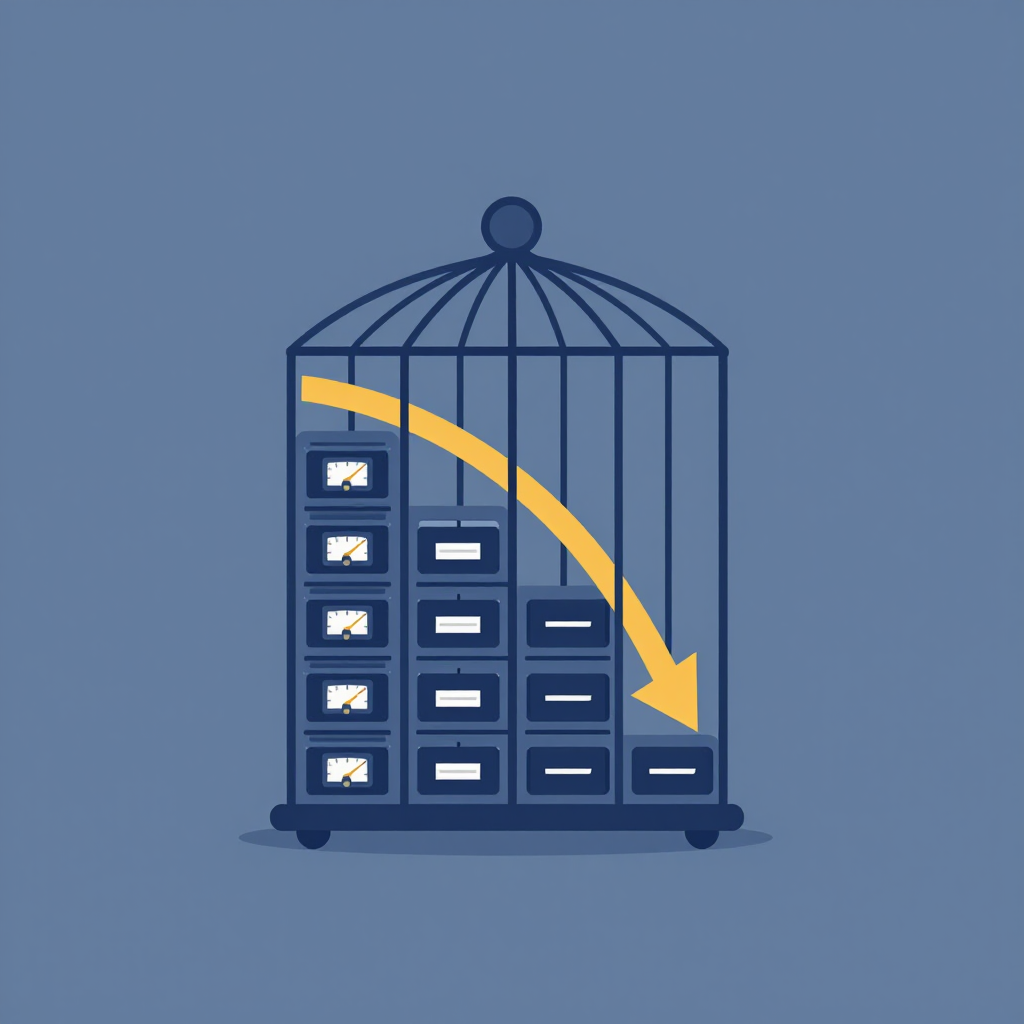
AI startups don't just use virtual machines. They rely on specialized API integrations, optimized vector stores, and custom pipeline workflows. When a startup gets $250,000 in free cloud credits, they spend it setting up these advanced platform systems. This is the trap. Moving an application from one cloud provider to another isn't as simple as migrating some code. It requires rebuilding entire database structures and data pipelines from scratch. Educational resources from Simplilearn emphasize that the benefit of cloud computing is scaling without massive capital expenditure (CapEx). However, this scaling comes at the cost of operational lock-in. When the free credits disappear, the startup faces a choice: pay the premium or face complete engine breakdown.
Mistral and the Illusion of Sovereign Tech
Even European champions are not immune to this structural capture. Take Mistral AI. The French startup has been heralded as Europe's champion, a sovereign alternative to American AI hegemony. Yet, beneath their claims of 'openness,' they rely on massive cloud partnerships for distribution and compute. We have written elsewhere about how Mistral AI is something stranger than a simple open-source protagonist. They are deeply tied to the infrastructure of American tech conglomerates.
This is the central paradox. You cannot have sovereign software when your foundation models are trained on servers owned by Microsoft, Amazon, or Google. By tying their open-weight models to these cloud platforms, startups are essentially functioning as marketing departments for Western infrastructure giants. The 'open' label becomes a marketing strategy, attracting developers who are then nudged to run these models on proprietary clouds. It is an elegant sleight of hand. The ethics of AI transparency demand that we look at the hardware layer, not just the model weights. If the infrastructure is locked behind corporate monopolies, the models themselves cannot be free.
The Balance Sheet Reality of Free GPU
At major ecosystem events, the hype surrounding startup financing remains astronomical. During the recent YC Spring 2026 Demo Day, we saw early-stage companies commanding record valuations, driven by the promise of agentic AI systems. On paper, these companies look incredibly wealthy. But their balance sheets tell a darker story. Their seed rounds are immediately cannibalized by cloud computing bills.
If you raise a million dollars from VCs but must spend half of it on GPU compute, you aren't really funding software development. You are simply acting as a pass-through entity. The venture money flows from the LP to the VC, then to the startup, and finally into the bank accounts of the cloud providers. This is not sustainable growth. The cloud giants know this. They hand out free compute to ease the pain of high CapEx. By the time a startup's seed round is exhausted, they have already built their entire technological stack around a specific provider's platform services. The transition from subsidized development to enterprise billing is the key friction point for AI monetization.
Resisting the Gilded Trap of Easy Compute
What is the alternative? How can AI startups build truly independent systems? It begins with structural awareness. Tech executives at the WSJ Tech Summit discussed the massive challenges of AI resurgence and the push for long-term corporate adoption. They are starting to realize that the cloud cost curve is an existential threat.
Startups must design for portability from day one. That means avoiding proprietary cloud databases and refusing to build applications that rely on single-provider API ecosystems. It requires utilizing open-source orchestrators and building on containerized IaaS frameworks rather than locking themselves into high-level PaaS offerings. Of course, this approach is more difficult. It requires actual engineering effort and higher initial setup costs. But it is the only way to preserve autonomy. If the AI revolution is to be democratic and transparent, it cannot be subsidized by the very monopolies it seeks to disrupt. We need to stop celebrating free credits and start demanding infrastructure neutrality.