
Rewiring the American Mind: Security, Stress, and the Search for Meaning at 250
The United States has reached its 250th year. It feels like a moment to pause, yet most of us are running on high-speed, high-stress fumes. We’re dissatisfied, polarized, and seemingly stuck in a perpetual loop of national contention. But is this actually worse than ever? If we look at the historical records, the answer is often 'no.' The anxiety we feel, though, is absolutely real—and it’s driven by mechanisms that were designed for survival, not for the endless, high-speed feed of twenty-first-century information.
As we hit this milestone, it's essential to recognize that while our country doesn't work perfectly, neither do our brains. The good news? We can absolutely use our brains more intentionally to improve the country. It’s a matter of shifting how we process the world around us. Instead of just reacting to the noise, we can choose to be more purposeful, more calm, and more constructive. It’s what I call applied resilience, and frankly, it’s not just a nice idea—it’s an urgent requirement for the stability of our civic discourse.
The Biological Operating System
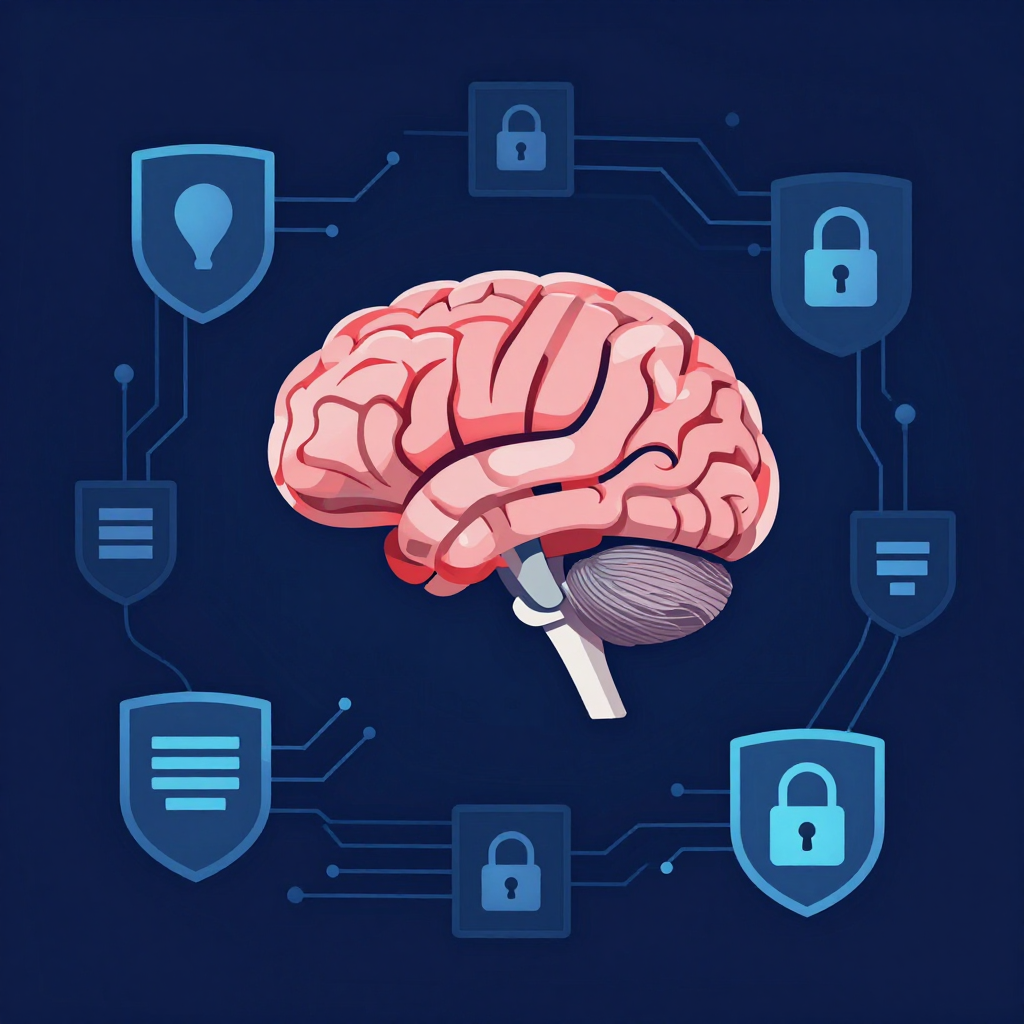
Think of the human brain as an old, robust operating system that’s been upgraded, but not entirely fixed. At its core, we still have a survival-focused amygdala that loves a quick threat alert. Fear, anger, and suspicion are its go-to emotions. It doesn't care about balanced viewpoints or long-term perspective; it cares about staying alive in a world full of immediate, tangible threats.
Now, superimpose that on a modern, technologically driven landscape where we are bombarded 24/7 with images of doom from places we’ve never been. It’s a perfect mismatch. We’re constantly using cognitive shortcuts to judge breaking news, leading to escalation rather than comprehension. When our brains are wired to prioritize danger, a constant, high-definition stream of external problems just keeps that alarm bell ringing. It’s a self-feeding loop of stress and reactivity that leaves us feeling exhausted and disconnected, not just from each other, but from our own capacity for rational, informed decision-making. We're effectively misusing our own hardware. We need a way to override this knee-jerk programming, particularly when it comes to how we filter information about the country we live in. Overcoming that innate impulse to see difference as danger is perhaps the most important work of our 250th year.
How a Security & Compliance Analyst Sees the Social Feed
In my work as a security & compliance analyst, I spend my days looking for anomalies in the noise. When you’re auditing systems, you learn quickly that not every alert is an actual threat, and reacting emotionally is the fastest way to break something that was otherwise running fine. The same logic applies to our national conversation.
We’re currently being fed a steady, unfiltered diet of outrage. From a systems perspective, this is a massive vulnerability. We're prone to "clicking the link" on the latest inflammatory headline, and in doing so, we're feeding a system of division that thrives on our emotional response. If we treated our media consumption with half the rigor we treat our enterprise systems, we might realize that a lot of what we consider 'urgent' is just noise designed to capture attention. Developing the discipline to fact-check, to pause before sharing, and to seek out nuance isn’t just good citizenship—it’s good security hygiene. It's similar to how cybersecurity professionals manage system integrity, where understanding the core domains of threat analysis remains critical. For instance, in our guide on how the CISSP domains fit into everyday operations, we trace how baseline compliance must translate into active defense. We need to start treating our attention as a valuable, limited resource that shouldn't be exploited by external actors feeding on our worst impulses. Protecting our attention is protecting the integrity of our own thought process.
Securing the System: From Compliance to Conversation
We talk constantly about security & compliance, but we rarely apply that mindset to our civic lives. Consider a scenario where we have a robust security & compliance center office 365 environment. We wouldn’t dream of opening every alert to its maximum severity without first configuring proper policies, setting up automated filters, and ensuring we have meaningful, actionable data. You wouldn't use a security & compliance analyzer veeam to indiscriminately block every user based on slight deviations from baseline behavior; you’d use it to understand the baseline and act only when the data warrants a real, substantial response.
As we navigate the next era of our democratic life—perhaps even for our own 365-day cycle of civic improvement—we need to adopt this kind of systems thinking. We have to set our own 'policies' for what we consume and how we engage. Are we creating a baseline of mutual respect, or are we allowing the system to be compromised by emotional reactivity? We are, each of us, a node in the national network. And if the nodes are running compromised 'scripts'—our cognitive biases—the whole system is going to be unstable. We have an opportunity to harden our cognitive environment. It starts with us. Improving the country is just as much about securing the integrity of our own dialogue as it is about building better laws or systems. It's a continuous process of auditing, configuring, and acting with intent. We don't just 'set and forget' our security posture; we manage it through changing times, evolving threats, and new realities. The same must be true of our civility. We are responsible for the code running in our own heads, and it is entirely within our power to refactor it to better serve the common good.
A Cloud Security Incident Response Playbook for Dialogue
So, what does a cloud security incident response playbook look like for a national conversation? It starts with acknowledging that a 'breach' of civility has already occurred the moment we start shouting.
First, we need to contain the incident. Stop the escalation. If a conversation turns hostile, take a breath. Do not reply instantly. Take the 'pause'— it is arguably the most valuable tool in our arsenal.
Second, analyze the damage. How much of the anger is based on facts? How much is just emotion designed to provoke? A good analyst knows the difference between an actual breach and a false positive. We need to do the same for our anger. Where is this fear coming from? What’s the evidence?
And finally, remediation. How do we return to a baseline of trust? We listen, honestly and without intent to trap, to the other side. We focus on areas where we might actually share a goal, even if our methods differ. We work on the long-term project of building better bridges, not just reacting to the latest bridge fire. It’s not about convincing everyone to agree; it’s about making sure that the disagreement doesn't destroy the possibility of continuing to work together. Just as clean API configurations must isolate untrusted inputs (which we see in modern secure setups like the Agent-Safe WebMCP framework), our incident response playbook for civic conversation needs to contain the breach immediately. If we want this country to continue on for another 250 years, the responsibility to act—calmly, analytically, and with a commitment to the whole—rests with us. We have the tools. It’s time we used them properly. The future of our civic experiment is not pre-destined; it is built, day by day, interaction by interaction. Let's make sure those are interactions that strengthen the bond, not break it further. We have the capacity, let's use it.