
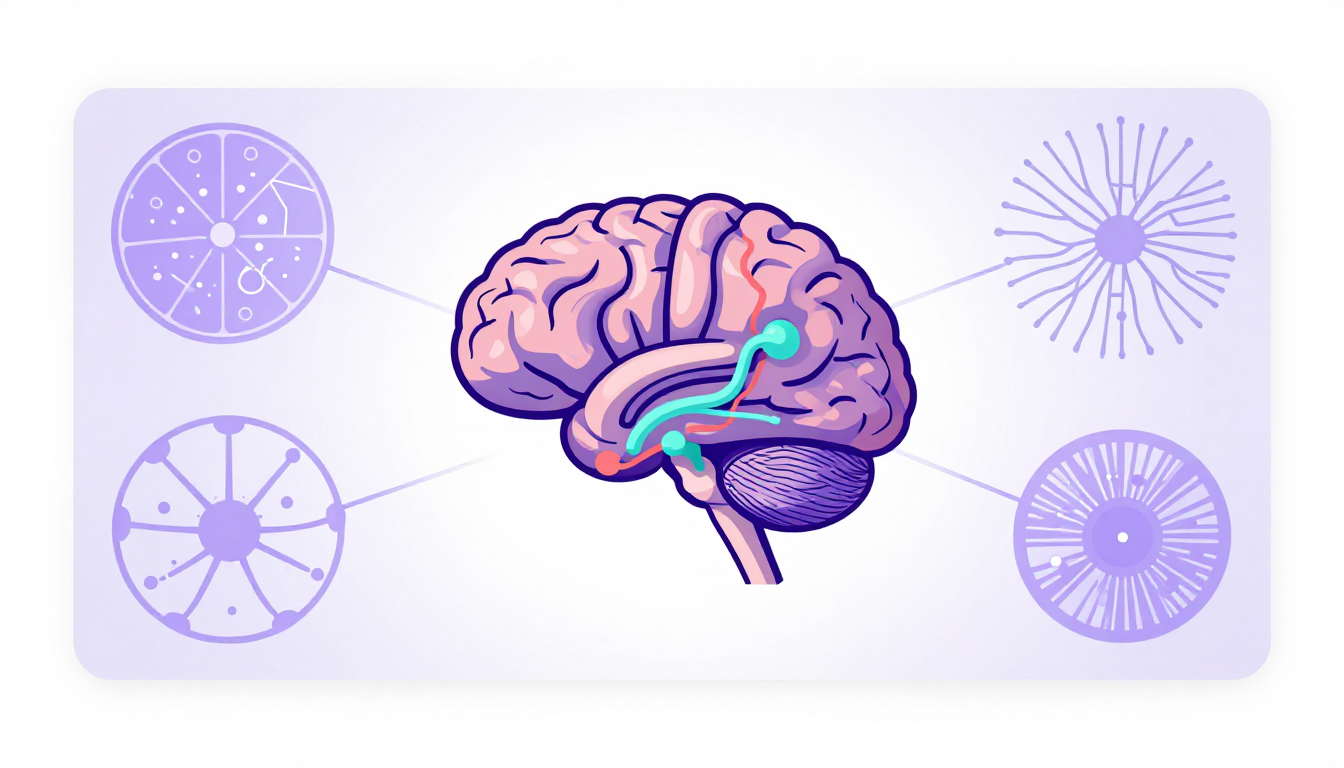
The Brain’s Silent Editor: How Your Frontal Lobe Orchestrates What You See and Hear
You know that feeling when you're watching a movie—say, a complex drama with rapid dialogue and subtle visual cues—and it all just effortlessly flows together? You’re digesting the spoken words, tracking microscopic changes in an actor's expression, noticing the background musical shifts, and parsing the scenery, yet the entire experience feels seamless. It’s an illusion of simplicity, a testament to the fact that we’ve evolved to process complex, multi-layered environments almost constantly. Your brain, in this moment, is juggling multiple sensory threads and weaving them into a cohesive story.
Beneath that smooth, immersive surface, however, your brain is engaged in a frantic, high-stakes balancing act. It’s deciding, in mere milliseconds, which sensory stream deserves the most spotlight at any given moment. Should it prioritize the dialogue you're trying to follow? Or the visual subtleties occurring on the screen? A groundbreaking new study suggests the answer lies in a part of the brain we traditionally thought of as an executive manager of higher-level planning: the frontal cortex.
Rather than being a passive receiver of sensory information that waits for pre-processed input, the frontal cortex acts more like a master traffic controller of our multi-layered sensory inflow. It’s actively filtering, prioritizing, and reallocating neural resources to make sense of our complex, multisensory environments. This isn’t a task that gets done after conscious awareness arrives—it’s front-loaded, happening fast enough to dictate what even makes it into your conscious perception. It’s the brain's internal editor, hard at work, cutting and pasting our reality in the blink of an eye.
The Internal Division: A Modular Map in the Frontal Lobe
For a long time, the prevailing wisdom held that sensory processing was largely delegated to early sensory cortices—areas specialized for sight, sound, or touch—with the frontal cortex tasked only with analyzing that pre-packaged information later in the process. It was viewed as the "CEO" that only got the executive summary once the sensory departments had done all the heavy lifting of raw data analysis.
This latest research, utilizing direct intracranial recordings, paints a different picture entirely. It suggests the frontal cortex is organized with a surprising, rigid modularity. When researchers traced neural activity, they discovered a distinct anatomical segregation that seems to pre-sort incoming sensory data:
- The ventral (lower) frontal regions, specifically areas like the ventrolateral prefrontal cortex (vlPFC), showed a clear, inherent bias for auditory processing. Sound, it seems, has its own dedicated office here.
- The dorsal (upper) frontal regions, like the dorsolateral prefrontal cortex (dlPFC), were significantly more tuned to visual streams. This is the visual suite.
This is a profound realization. It tells us that this spatial organization isn't just a feature of early, low-level sensory areas; it persists up into the executive realm. Your frontal lobe isn't just pondering abstract thoughts; it's mentally mapping the sensory incoming stream, neatly sorting sounds into lower cabinets and sights into upper ones, ready for immediate, targeted processing. It’s a level of functional architecture that we’re only just beginning to truly grasp, and it turns our model of how top-down processing works on its head. The executive isn't just managing the report—it's actively involved in sorting the data before it's even fully compiled.
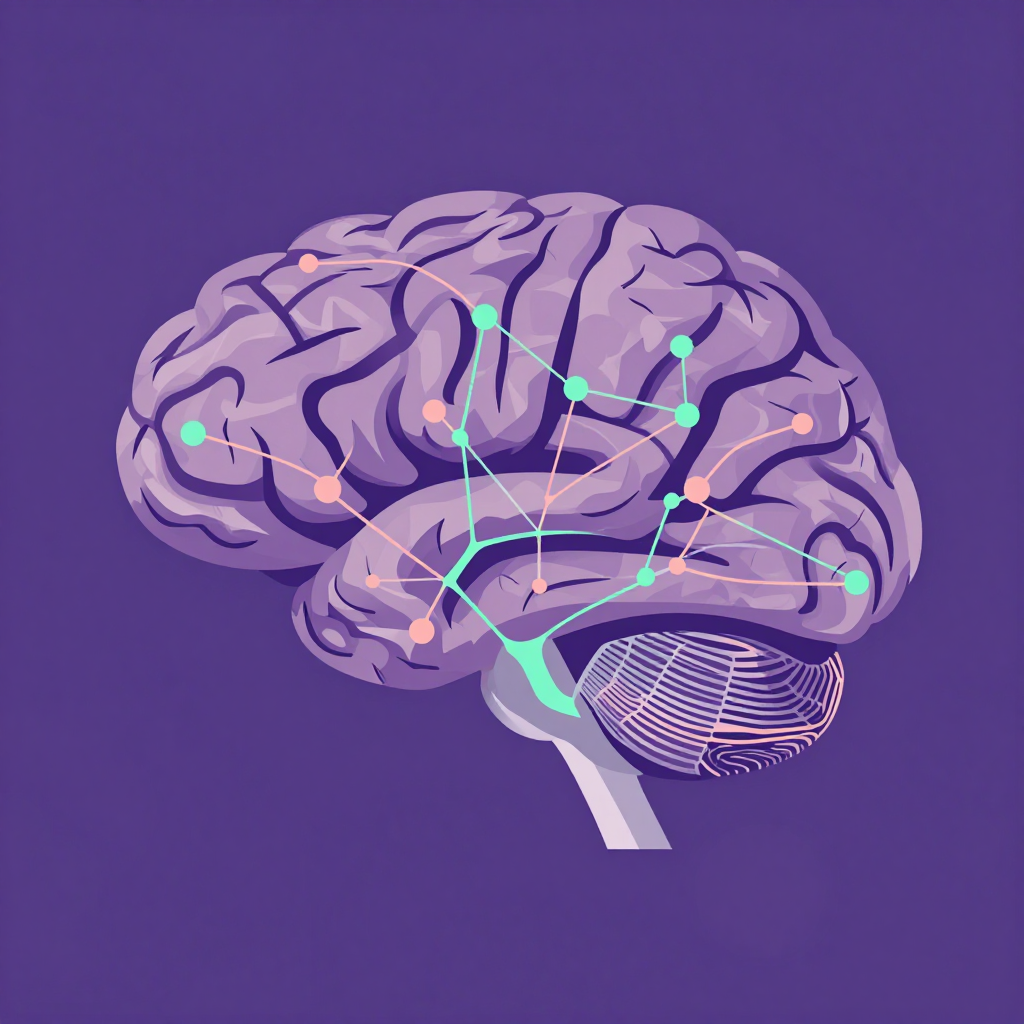
The Millisecond Language Pivot
The true beauty of this mechanism, however, is revealed when the environment itself changes, forcing the brain to adapt on the fly—the ultimate test of this "traffic controller."
The researchers monitored 19 epilepsy patients (a cohort of 19 with a staggering 2,688 electrodes in total) while they watched a 12-minute portion of the multilingual short film Foreign Language. The scenes shifted between native English and subtitled German, French, or Greek, creating a naturalistic test of sensory prioritization in a high-stakes, real-world context.
During English dialogue, where understanding was direct and linguistic throughput was high, the brain’s frontal cortex heavily leveraged its auditory division. It was tuned into the words. But the moment the language shifted to something unfamiliar, the neural activity performed a lightning-fast pivot. The brain almost instantly increased its resource allocation to the dorsal (visual) regions, effectively switching its primary sensory gear. It was pivoting to prioritize subtitles, facial expressions, and gestures—the visual cues now essential for narrative comprehension.
This reweighting is breathtakingly fast. It happens in milliseconds, a dynamic, real-time adaptation that allows you to shift your focus the second dialogue threatens to lose its clarity. It’s not just a slow, intentional shift; it's a seamless hand-off between neural networks, and it's essential for navigating our messy, unpredictable world where we are bombarded with competing sensory inputs every day.
Overcoming the Latency Barrier: Intracranial Recording
You might ask, "If this is so important, and if it's happening right there on the surface of the frontal lobe, why haven't we seen it before?" The answer has everything to do with how we probe the living, breathing human brain.
Traditional tools, most notably functional MRI (fMRI), revolutionized neuroscience by allowing us to watch the brain in action without needing to open the skull. They are phenomenal for identifying where things happen. But fMRI has a significant, and often fatal, limitation in this context: it measures blood oxygenation levels (the BOLD response), not electrical activity itself. Blood flow is painfully slow, occurring over seconds—a lifetime in neural processing speed. As a result, fMRI frequently misses the rapid, blink-and-you-miss-it pivots of human thought, smearing them into one slow, unintelligible bloom of activity. It’s like trying to watch a hummingbird’s wings flapping with a camera that only captures one frame every ten seconds.
The researchers in this study sidestepped that barrier by using the only tool with the necessary resolution: intracranial electrocorticography (iEEG). By recording directly from electrodes surgically placed in 19 epilepsy patients, they could monitor high-gamma (70–150 Hz) electrical activity with millisecond precision—activity that is closely linked to the firing patterns of large neuronal populations. This allowed them to catch the brain in the act, observing the neural shifts as they unfolded in the exact same timeframe as the viewer's actual conscious experience. It’s an invaluable, rare glimpse into the real-time dynamics, the sheer rhythm of human perception.
Future Frontiers: From Clinical Therapies to Adaptive AI
This discovery has consequences that stretch far beyond understanding how we watch movies, or how we handle subtitles. It opens a fascinating new door for neuroscientific application, one that could shape the next decade of research and technology.
For one, it could change how we approach clinical therapies for cognitive and sensory disorders. If the frontal cortex is a master traffic controller, then understanding how it fails or underperforms could lead to novel, targeted therapies for conditions like autism, attention deficits, complex language processing disorders, or even profound hearing loss. If we can map where that controller is misdirecting sensory traffic, we might, in the future, be able to help "re-train" the controller itself, using targeted neurological interventions to improve how patients process their daily sensory diet.
It’s also an exciting stencil for artificial intelligence. Today’s multimodal AI is incredibly resource-hungry, often processing audio and visual inputs with equal, high-intensity fervor, regardless of the context. Imagine, instead, AI models designed with this frontal-cortex-inspired gating mechanism—models that automatically scale back power consumption when audio is clear but instantly, intelligently reallocate computational resources the moment visual cues become the primary source of understanding. It’s a principle of architectural elegance that human biology has already mastered, and it’s one that could dictate the future of efficient, adaptive technology.
This research, alongside studies like those mapping language-specific hardware in the bilingual hippocampus and AI-driven epilepsy detection, highlights how our understanding of the brain's functional architecture is rapidly evolving.
Ultimately, the study reminds us, in a very elegant way, that we are not passive observers of our reality. The brain is an active participant, constantly shaping, filtering, and prioritizing the world before it even enters our conscious mind. And in the frontal cortex, it has the perfect editor, working diligently to ensure that even amid the chaos of constant, unpredictable sensory influx, we don't just see and hear, but we understand. That, to me, is the true marvel of the human experience.