
The Chocolate Bar You'll Never Finish
Here's a question that sounds simple but actually cracks open half of human economics: would you take one chocolate bar right now, or wait a week and get two? Most of us have strong opinions about this. We call the person who grabs the single bar "impulsive" and the one who waits "disciplined." We build self-help books on that distinction. We pathologize it.
But what if neither choice is wrong? What if the "right" answer depends entirely on whether you live in a country where next month's salary actually arrives, or one where inflation eats your paycheck before you spend it?
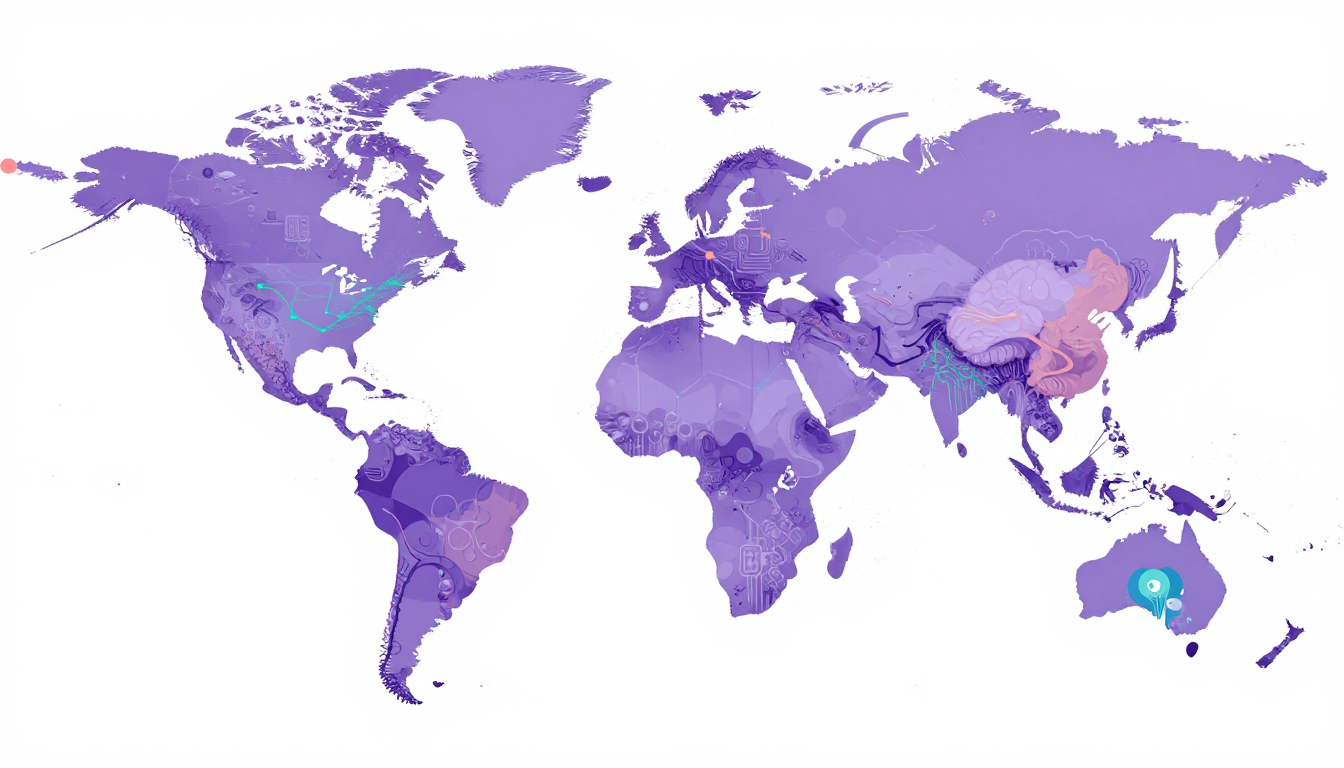
That's the provocation at the center of the TRICC Project — a cross-cultural investigation into intertemporal choice that's about to become one of the largest psychological studies ever attempted. Coordinated by Dr. Kristof Keidel and Prof. Dr. Ulrich Ettinger at the University of Bonn, the project is surveying roughly 15,000 participants across 77 countries. The goal isn't to declare a winner in the now-versus-later debate. It's to map how different environments — economic, cultural, even emotional — tilt the scales.
Why Money, Not Meaning
You might expect a study about life choices to ask people about abstract values — health, relationships, legacy. The TRICC researchers chose money instead. And there's a good reason for that.
"They are particularly easy to compare and quantify," Keidel explains. When you're running experiments across 77 different currencies, economies, and purchasing-power contexts, you need a metric that translates cleanly. A dollar in Zurich isn't the same as a dollar in Lagos, but it's still a dollar — measurable, comparable, mathematically tractable.
This isn't a dismissal of deeper motivations. It's methodological honesty. If you want to build a global model of how people discount the future, you need numbers that survive translation. Money does that. Everything else gets lost in cultural interpretation.
The survey itself takes only a few minutes. Adults can participate online through the project's SOFIS survey platform, and participants will be able to see how their answers compare across cultures once the data is published. The deadline for participation is August 18, 2026.
The Brain's Tug-of-War
Here's where my developmental psychology training kicks in, because this is genuinely one of those questions that reveals how our brains are built.
Intertemporal choice isn't just a spreadsheet problem. It's an evolutionary conflict wired into your neural architecture. Deep in your brain, older survival networks — the ones that kept our ancestors alive when tomorrow was never guaranteed — push you toward immediate consumption. Grab the food. Secure the shelter. Don't trust a promise from the future.
Then there's your prefrontal cortex, the relatively new addition to the human brain that handles planning, simulation, and restraint. It has to work overtime to override those older impulses. It has to construct a mental model of a future that doesn't exist yet and convince you it's worth waiting for.
Self-restraint isn't a character trait. It's a cognitive workout. And like any workout, it gets harder when you're tired, stressed, or just plain uncomfortable.
That's why mood matters. The Bonn researchers specifically track situational factors — not just stable cultural traits — because people seeking immediate emotional comfort are fundamentally more likely to choose near-term gratification. You don't need a psychology degree to notice this. You just need to have ever eaten an entire pizza at 11 PM while feeling anxious.
For more on how emotional regulation shapes decision-making, see our coverage of meditation's measurable effects on brain structure and emotional resilience.
No Right Answers, Just Rational Adaptations
This is the part that will make self-help authors uncomfortable: the researchers explicitly state there are no "right" or "wrong" decisions here.
When resources are limited, choosing the smaller reward immediately isn't weakness — it's rational optimization. If you live in an economy where tomorrow's money might be worth half of today's, or where a hospital bill could wipe out your savings before the year ends, securing consumption now is the smartest move available. Waiting for a future reward in that context isn't patience. It's gambling.
I've studied adolescent risk-taking long enough to recognize this pattern everywhere. Kids in unstable environments don't develop worse impulse control. They develop different impulse control — calibrated to environments where the future is genuinely uncertain. Calling that a deficit says more about the caller's privilege than the subject's psychology.
The Bonn team understands this. They're not trying to identify which cultures are "better" at delayed gratification. They're trying to understand how macro factors — national financial stability, social safety nets, cultural traditions around saving and consumption — shape human impulsivity and patience across the full spectrum of human experience. And these patterns often trace back even further — research shows your earliest money memories, formed before age 7, create unconscious patterns that steer adult financial decisions.
Breaking the WEIRD Trap
If you've read any psychology textbook in the last thirty years, you've probably encountered the WEIRD problem without knowing its name. Western, Educated, Industrialized, Rich, Democratic — that's the population slice that has disproportionately shaped our understanding of human nature.
Most psychological theories were built on data gathered from college students in affluent democracies. That's not a criticism of those studies — they were often excellent work within their scope. But it means our models of human decision-making are based on a narrow sample that doesn't represent the majority of humanity.
The TRICC Project is one of the first serious attempts to correct this. By deploying a massive, self-funded research grid across 77 nations — with over 100 collaborating labs coordinating the survey — the project can finally untangle how local cultural traditions, national financial stability, language structures, and social safety nets shape the way people evaluate future rewards.
And here's something that should please any researcher frustrated by grant bureaucracy: the project is entirely financed by the internal budgets of the participating labs. No third-party funding. No bureaucratic overhead. Just researchers pooling their resources to ask a question that matters.
What This Means Beyond Academia
Let's be honest about why this study matters. It's not just an academic exercise in mapping human patience.
The findings will directly inform economic policy design, public health messaging, and sustainability initiatives worldwide. If we understand how different populations actually discount the future — not how we wish they would — we can build interventions that work with human psychology instead of against it.
Retirement savings programs? They need to account for the fact that in high-inflation environments, delayed rewards feel abstract and unreliable. Public health campaigns about exercise and diet? They need to recognize that immediate comfort-seeking isn't a moral failure — it's often a rational response to present stress.
As Keidel puts it, the researchers want to "find out what makes us humans tick and how we can help ensure decisions can be made as well as possible." That's not just research. It's a commitment to building a world where people from every cultural background can make choices that actually serve their lives — not choices that conform to someone else's idea of patience.