
The False Choice of Total Digital Abstinence
We are told that modern tech requires all-or-nothing devotion. You're either fully plugged into the attention-economy hellscape of iOS and Android, or you're a rugged luddite clutching a dusty Nokia brick. It's a fake choice. Stripping your life down to a basic voicephone sounds romantic in a Substack essay. In practice, it breaks your daily routine. You can't hail an Uber when your car breaks down, your friends ignore your SMS messages because they live on WhatsApp or iMessage, and navigation becomes a series of printed transit directions.
As someone who spent years analyzing mobile OS evolution—from the Symbian era to Android's transition to AI-first UX—I see this dumb phone surge as an inevitable pendulum swing. Users are tired of operating systems designed to treat their attention as a monetization surface. We know from research on evidence-based habits that lasting lifestyle improvements require environmental changes. You can't just wish away screen addiction. You have to change the interface.
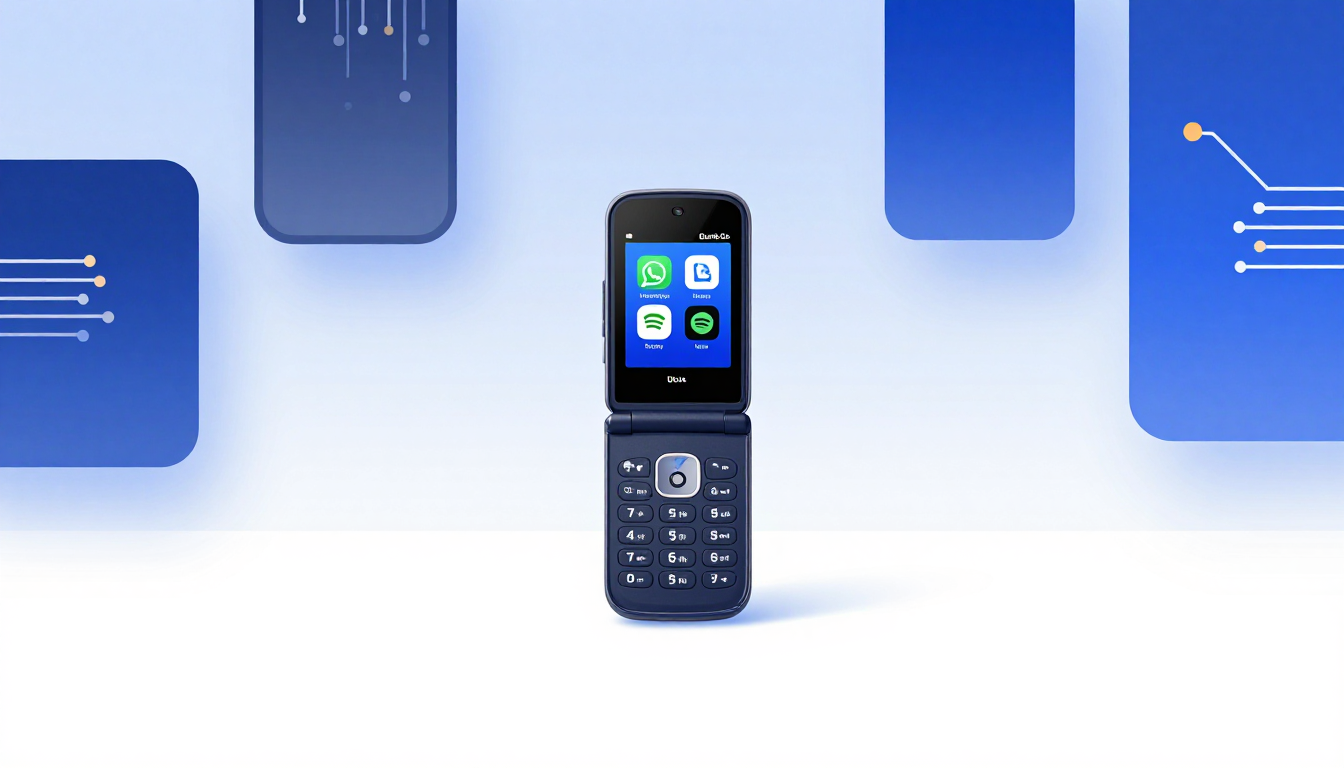
Then came Dumb Co. Run by a post-iPhone generation of builders in Washington, DC, the startup was born out of a "Month Offline" social challenge in 2025. They realized that total digital abstinence is a luxury few can afford. Instead of building a bespoke, expensive minimalist phone, they took a different, almost cheeky approach: modifying a $20 TCL flip phone to sync with your smartphone. It's a compromise that admits the smartphone won the war, but refuses to let it occupy every waking second.
Hacking a Cheap Flip Phone to Run Apple Music
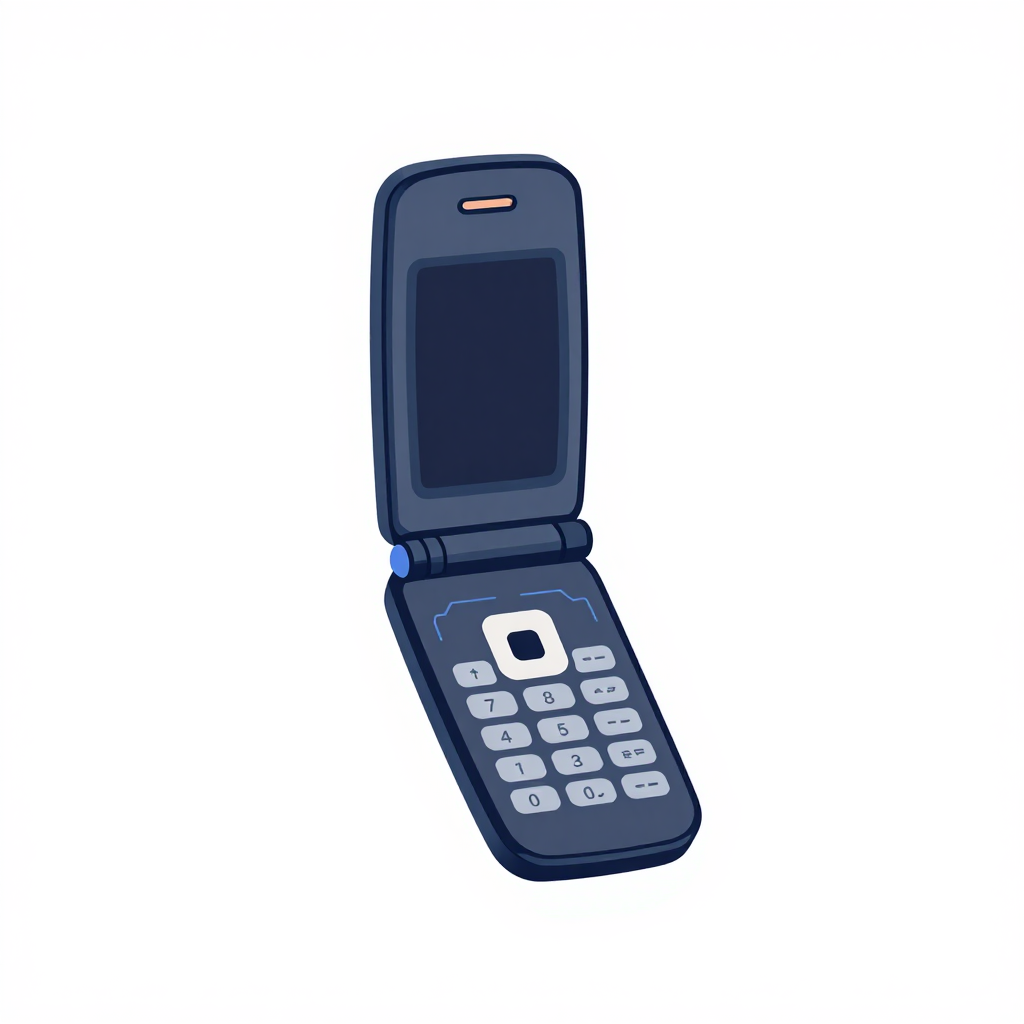
Let's look at the hardware. It's literally a $20 TCL flip phone. Out of the box, these run bare-bones operating systems that make you feel like it's 2004. But Dumb Co loads custom software onto these low-power devices. It is a hacked setup in the best sense. They have managed to bundle modern, essential applications onto a processor that would choke on a standard Instagram feed.
Through their custom layer, users can load WhatsApp, Spotify, Apple Music, and Uber. Getting iMessage to work on a non-Apple flip phone is a notorious platform engineering headache, but they pulled it off by routing through a third-party app. It's clunky, slow, and forces you to type with T9 tactile keys. That's exactly the point. It's accessible enough that you don't miss a ride or an urgent group chat, but slow enough that you'll never scroll mindlessly for three hours. The interface stops the dopamine loops cold.
The Midpoint Strategy: Why Call Forwarding Wins
The real design trick is not the phone itself. It's the sync mechanism. Dumb Co’s device is designed to cooperate with your smartphone, not replace it. The primary phone stays home. You turn on call and text forwarding, slip the smartphone into the black velour pouch that comes in the box, and walk out the door with just the flip phone.
When you want the full-octane operating system, you turn call forwarding off and go back to your iPhone. This dual-device architecture solves a massive friction point. Most digital minimalism campaigns fail because the user hits a hard wall—they need to check Slack, scan a QR code, or sync their work calendar. The sync model turns the smartphone into a home-based hub and the flip phone into the mobile node. It acts as an analog firewall, offering a more curated approach to mobile pairing.
The Therapy Behind the Product: Breaking Screen Addiction
Lydia Peabody, Dumb Co's founding CMO, experienced this shift firsthand. A former licensed therapist, she ran the Month Offline challenge and watched her own screen-induced anxiety evaporate. The psychological parallel she draws is striking. She compared smartphone dependency to vaping or Juul habits. When you first step away, the craving is physical. But after a few weeks of complete disconnection, the craving turns into a mild repulsion. You look at the glowing screen and feel tired, not eager.
This is a major topic path in digital minimalism. Major technology outlets like Wired have written at length about the deliberate focus on screen-time reduction. It is a cultural recoil. Dumb Co’s communications director, Afreka Ebanks, bedazzled her flip phone and noted that carrying it around becomes an conversational icebreaker. People see you typing on a tiny screen at a stoplight and ask questions. It forces social interaction back into the physical world.
Can We Really Coexist with the Smartphone?
The road is not smooth. Modern web applications are massive. Running a client-heavy app like Uber or Spotify on cheap TCL hardware means you will wait. T9 texting is slow. When TechCrunch tested the device for a month, the reviewer had to write down transit directions beforehand and send voice memos instead of attempting long T9 messages. But they made it across town to a library event without their iPhone, even if they had to send one text on the flip phone just to be sure they were getting off at the right train stop. It is not frictionless.
But friction is the goal here. The ultimate metric of a digital minimalism device is not how much you use it, but how much it lets you ignore it. When you are on a beach with nothing but a sandwich, two bottles of water, sunscreen, and a flip phone, you do not feel the urge to pull out your screen and photograph your lunch. You just eat it. That is the bridge Dumb Co is trying to build: a way to exist in a hyper-connected world without losing your mind to it.