

The July Jobs Report: More Hires, But Still a Long Road Ahead
Numbers moved, but did the needle?
The nation’s July jobs report just hit the wires, and it’s a bit of a mixed bag. We’re looking at more than 163,000 new nonfarm payrolls, which sounds like growth, right? Well, it is, but it’s accompanied by an unemployment rate that’s climbed up to 8.3%.
If you’re waiting for a clean narrative—one that says we’re either "out of the woods" or "diving back in"—you’re not going to get it today. The economic data is rarely that kind. Instead, we’ve got a snapshot of a labor market that’s struggling to generate the kind of momentum the average American worker actually needs.
It’s easy to focus solely on the 163,000 figure. In isolation, bringing nearly a quarter-million jobs into the economy sounds sturdy. But let’s keep it real: in an economy as massive as ours, 163,000 is barely holding the line. It’s not enough to significantly dent the long-term unemployment figures. It’s certainly not the kind of expansion that makes headlines for the right reasons.
For more context on how labor market dynamics affect economic growth, see our guide to labor force participation trends.
Why 8.3% Still Matters
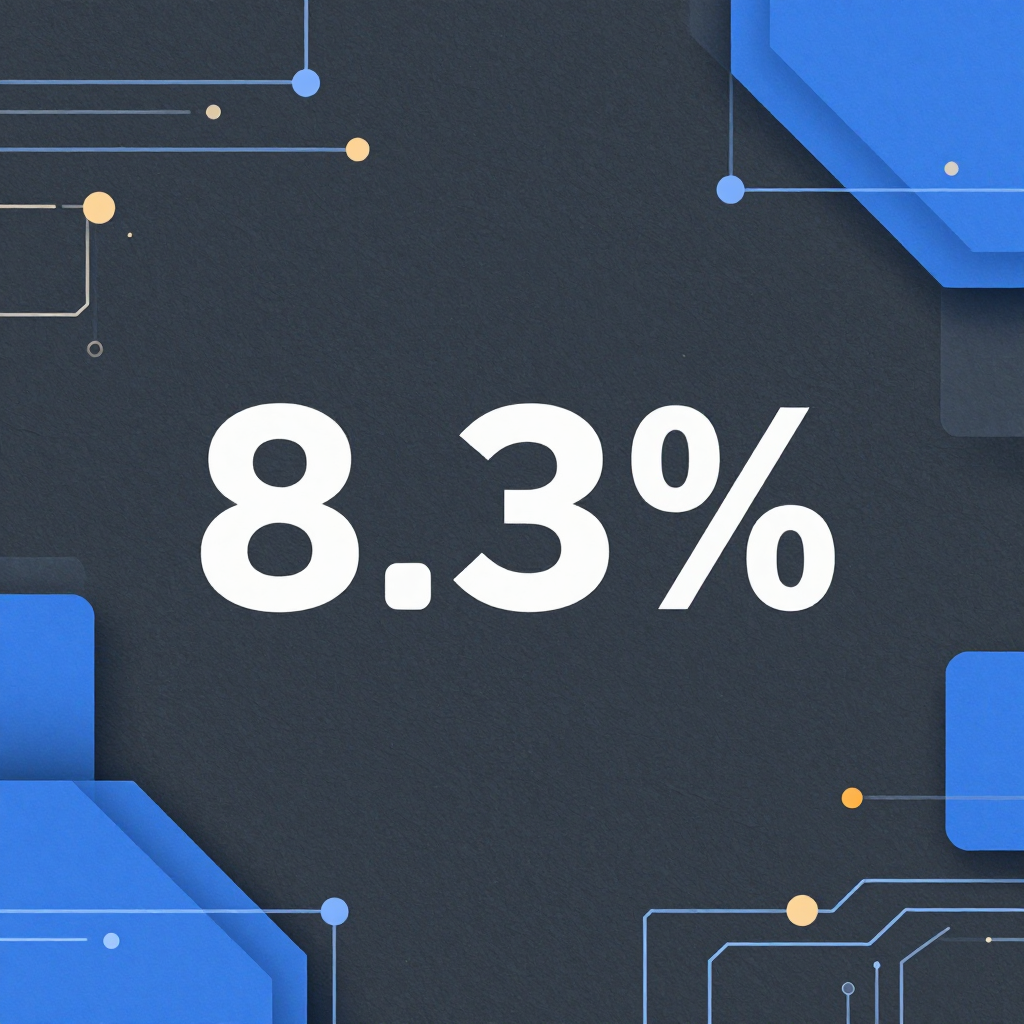
The headline unemployment rate drifting up to 8.3% is just plain frustrating. It’s a statistic that hits deep, even if it’s just a "tick" according to the talking heads. That percentage isn't just a number; it’s families making tough choices at the grocery store, it’s grads struggling to land their first gig, and it’s older workers finding the transition to a new job market brutally difficult.
What’s driving the jump? Often, these shifts aren't just about jobs lost; they’re about labor participation. If more people feel discouraged and stop looking, the rate moves. When they start looking again and can't find work immediately, the rate creeps up. Watching the unemployment rate is watching the pulse of confidence in our workforce. Right now, that pulse is a bit uneven.
Related: Understanding labor force participation metrics.
Understanding the Payroll Growth
The 163,000 number comes from diverse sectors, but when you look under the hood, the quality of these jobs matters just as much as the quantity. We aren't necessarily seeing a surge in high-growth, high-wage roles. Instead, we're seeing steady, sometimes sluggish additions that help maintain stability, but aren't fueling a rip-roaring recovery.
Is it enough to change the Fed’s trajectory? That’s the question everyone is asking. A report like this—decent, but not explosive—tends to leave decision-makers right where they were: cautious and data-dependent. It doesn't scream for aggressive stimulus, but it certainly doesn't suggest that the economy is self-correcting at a pace that suggests a bright, immediate future.
See our analysis of Fed policy responses to labor market data.
Navigating a Muddled Economy
So, where does this leave us? Economists have this annoying tendency to describe everything as "transitional." But that word masks the day-to-day struggle. We are in a period of intense, grinding adjustment. Businesses are cautiously optimistic, which is just another way of saying they’re terrified of over-hiring.
Consumers are doing their part, but they’re not doing it with abandon. They’re cautious, too. When you add all that caution up, you get a labor market that grows in fits and starts, like a sluggish engine that refuses to fully turn over.
The 163,000 figure is a reminder that we can, and do, create jobs. The 8.3% is a reminder that we aren't creating enough of them fast enough. It’s a classic, frustrating case of "good news, bad news."
The Long Road to Normalcy
We have to adjust our expectations. We’re not likely to see a sudden, dramatic turn where everything clicks back into place. The path forward is going to be incremental. Every thousand jobs added is a step, yes, but we’re measuring this recovery in miles, not feet.
We need to pay closer attention to the quality of growth, the industries that are hiring, and the segments of the population that are being left behind. Broad numbers like 8.3% and 163,000 provide the big picture, but they also hide the nuance. Understanding that nuance is the only way to really grasp what’s going on in the hallways of companies and the living rooms of our neighborhoods.
For more perspectives on labor market resilience, explore our coverage of economic recovery and unemployment patterns.
Sources
- Wall Street Journal: Economy Adds 163,000 Jobs in July
- U.S. Bureau of Labor Statistics: EmploymentSituation – July 2024
- Reuters: U.S. jobs report analysis