Qualcomm Is Late, But Not Done
Let's be honest: Qualcomm walking into the datacenter market feels like watching a heavyweight step into the ring three rounds after the bell has already rung. NVIDIA owns this space. AMD is digging in. Intel is fighting for its life. And here comes the company that basically invented your phone's modem, announcing it wants to build CPUs for AI clusters.
But Tony Pialis — Qualcomm's datacenter EVP and GM — didn't flinch during the company's Investor Day presentation on June 24, 2026. His answer to the obvious question — are you too late? — was characteristically blunt: "When the company turns its attention to solve a new problem, we revolutionize the solution and push our way to the forefront."
Fair enough. The question isn't whether Qualcomm is late. It's whether the Dragonfly platform they're unveiling actually delivers something the market hasn't already gotten elsewhere. And based on what we've seen so far, there's a real argument that it does.
The C1000 CPU: Raw Numbers
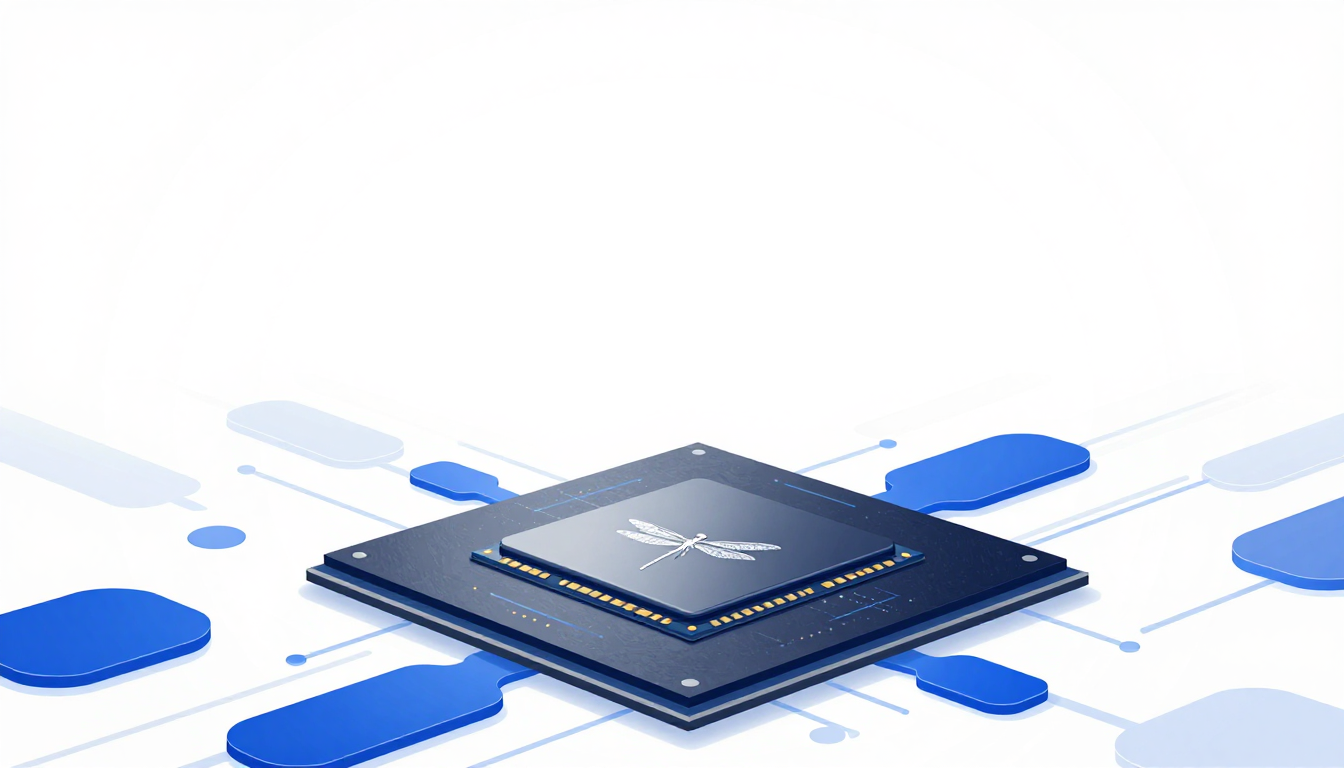
At the heart of Dragonfly sits the C1000, a datacenter-grade processor built on Qualcomm's custom Oryon architecture. The specs Pialis threw out are aggressive:
- 250+ cores in a chiplet-based design
- Operating at more than 5 GHz
- Claimed 2x better performance per watt versus competitor processors
- Roughly 30% more speed than comparable datacenter chips on the market
That last number is the one that makes people lean forward. If Qualcomm can actually deliver 30% more speed than what AMD's EPYC or Intel's Xeon lines are producing today, that's not a niche play — that's a market disruptor.
The chiplet approach is worth noting too. Qualcomm has been doing chiplets for years in mobile (think Snapdragon's modular design), and porting that philosophy to the datacenter is a smart move. Smaller dies mean better yields, easier scaling, and — critically for a newcomer — the ability to iterate faster than companies stuck with monolithic designs.
High-Bandwidth Compute: Fixing the Memory Wall
Here's where things get genuinely interesting. The C1000 isn't just another CPU trying to compete on raw clock speed. Qualcomm is tackling what the industry increasingly treats as AI datacenters' single biggest problem: memory bandwidth.
Their answer is High-Bandwidth Compute (HBC) technology. The pitch: integrate an XPU beneath a DRAM stack so compute and memory live closer together than they normally would. Qualcomm claims this delivers SRAM-like performance advantages inside a high-bandwidth memory package while reducing the amount of data that has to move around.
Translation: less time waiting for data, more time computing on it. For AI inference workloads — which are notoriously memory-hungry — that's the kind of architectural shift that can change the economics of running a cluster.
NVIDIA has been addressing this with HBM in their GPUs, but Qualcomm's approach is different because it's baked into the CPU design from the ground up rather than bolted on as an accelerator. That matters if you're building a system where the CPU is doing more of the heavy lifting.
Production Timeline and Variants
The C1000 processors are expected to enter production in the second half of 2028. That's a long runway — roughly two years out — but in semiconductor time, it's actually reasonable for a first-generation datacenter product.
Qualcomm plans to ship multiple C1000 variants targeting different workloads:
- Agentic AI — the emerging category of on-device and edge AI agents
- General-purpose computing — the bread-and-butter datacenter workload
- AI head-node workloads — the orchestration layer that manages distributed training and inference
That last one is a smart wedge. Head nodes don't need the most raw compute power — they need reliability, low latency, and good connectivity. If Qualcomm can win that role first, it builds a beachhead inside customer clusters without having to displace NVIDIA GPUs from the compute plane immediately.
Beyond CPUs: The Full Dragonfly Portfolio
Pialis was clear that CPUs alone don't make a datacenter company. Qualcomm is targeting three additional segments alongside the C1000:
Connectivity. The QAM16 coherent-lite optical modules could enable cluster-to-cluster distances up to 20 kilometers. In an era where hyperscalers are building distributed AI clusters across campuses and even cities, that kind of optical reach is genuinely useful. Qualcomm's pedigree in wireless and modem tech gives them credibility here that pure-play CPU companies simply don't have.
Custom silicon. Qualcomm wants to design and fabricate bespoke AI and cloud DC CPUs end-to-end for what Pialis called their "highest tier of customer." This is essentially a white-glove foundry-style service for the biggest names in the business — and it's a play that mirrors what TSMC and Samsung do for their top clients, but with Qualcomm doing the architecture too.
AI accelerators. These will also use HBC technology to tackle memory bottlenecks in AI workloads. Microsoft has already committed to using Qualcomm's HBC-based accelerators, which is a significant validation from someone who knows what they're talking about when it comes to AI infrastructure at scale.
The Customer Wins: Microsoft and Meta
Two major announcements during Investor Day deserve their own attention:
Microsoft plans to deploy Qualcomm's HBC-based AI accelerators. Satya Nadella made a guest appearance at the event, which signals this isn't a casual pilot — it's strategic. Microsoft has been diversifying its AI chip supply chain for years (remember Cobalt? Granite?), and Qualcomm looks like it's becoming a genuine part of that plan.
Meta announced plans to deploy Dragonfly C1000 CPUs under a multi-generation agreement. Mark Zuckerberg also appeared at the event. Meta's been building custom silicon through its ACI division for years, so if they're bringing in Qualcomm as a partner rather than just a supplier, that says something about the C1000's competitiveness.
These aren't vanity customers. Both companies have the technical depth to tear a chip apart, benchmark it mercilessly, and walk away if it doesn't perform. The fact that they're signing multi-gen deals suggests Qualcomm has earned their trust.
The Modular Acquisition: Software Matters
Hardware is only half the story in datacenters. You need compilers, runtime libraries, optimization toolchains, and a software stack that actually works with existing frameworks. Qualcomm's acquisition of Modular — an AI software stack company — addresses this gap directly.
Qualcomm says the deal gives them access to "hundreds of billions in new market space," which is corporate-speak for: we're not just selling chips, we're selling a platform. Modular's software expertise will presumably get folded into the Dragonfly ecosystem, making it easier for customers to actually use Qualcomm hardware without needing a team of custom compiler engineers.
This is the kind of move that separates companies that sell silicon from companies that build ecosystems. AMD learned this the hard way — their hardware was competitive for years, but it took ROCm and genuine software investment before customers started taking them seriously in AI workloads.
The Real Question: Can Qualcomm Execute?
Here's where I'll be honest about my skepticism. Qualcomm has a phenomenal track record in mobile, PC, and automotive chips. But datacenters are a different game entirely. The sales cycles are longer, the validation requirements are brutal, and customers who've built their infrastructure around NVIDIA's CUDA ecosystem aren't going to switch overnight.
The 2028 production timeline gives Qualcomm time to mature the C1000, but it also means they'll be competing against whatever NVIDIA, AMD, and Intel have released by then. The gap that looks wide today could narrow significantly in two years.
That said, Qualcomm's approach is smart. They're not trying to beat NVIDIA at its own game — they're building a platform that addresses specific pain points (memory bandwidth, power efficiency, total cost of ownership) and targeting workloads where those advantages matter most. Agentic AI, head-node orchestration, and custom silicon for hyperscalers are all areas where there's room for a credible alternative.
The Meta and Microsoft deals prove the technology has legs. The Modular acquisition shows they understand software matters. And the chiplet-based C1000 design demonstrates they're bringing real architectural innovation to the table rather than just rebranding existing mobile tech.
Qualcomm might be late to the datacenter party. But if Dragonfly delivers even half of what Pialis is promising, they might just be the guest who changes the whole conversation.
Related Articles
- Etched’s $1 Billion Inference Bet: How a Stealth Silicon Startup Forced NVIDIA to Rearrange Its Math
- Rent-a-GPU Outfits Secure Billions in Venture Capital to Meet AI Demand