The Tool-Loading Problem Nobody Wants to Talk About
Here's something most developers gloss over until their monthly bills arrive: every tool you give an AI agent has to live in its context window. All of them. Even the ones it never touches.
You build an agent with fifty functions — database queries, payment processing, email sending, CRM updates, the usual sprawl. That's fifty function signatures, fifty docstrings, fifty parameter schemas all getting stuffed into the prompt before the agent even sees the user's first message. Some of those signatures are long. Some models charge per-token on input like crazy. And suddenly your simple customer service agent is burning through context faster than you can say rate limit.
This isn't theoretical. I've seen teams hit $400 monthly API bills on agents that should cost $40. The culprit? Not the LLM calls themselves — it's the tool definitions being re-sent with every single request, round after round.
Alibaba's new open-source framework SkillWeaver takes a blunt approach to this problem. Instead of loading the entire tool library into context, it routes each request only to the tools that actually matter. The result, according to their benchmarks, is a 99% reduction in token usage for tool-related context.
That number sounds like marketing copy until you realize what it means in practice: an agent that was consuming 8,000 tokens per request for tool definitions now consumes about 80. The model gets the same capabilities. It just stops drowning in boilerplate.
How SkillWeaver Actually Works
The core insight is embarrassingly simple once you see it. Most agent frameworks — LangChain, CrewAI, the default setups in basically every tutorial — take this approach:
- Define all available tools
- Dump their schemas into the system prompt
- Let the model decide which tool to call based on the user input
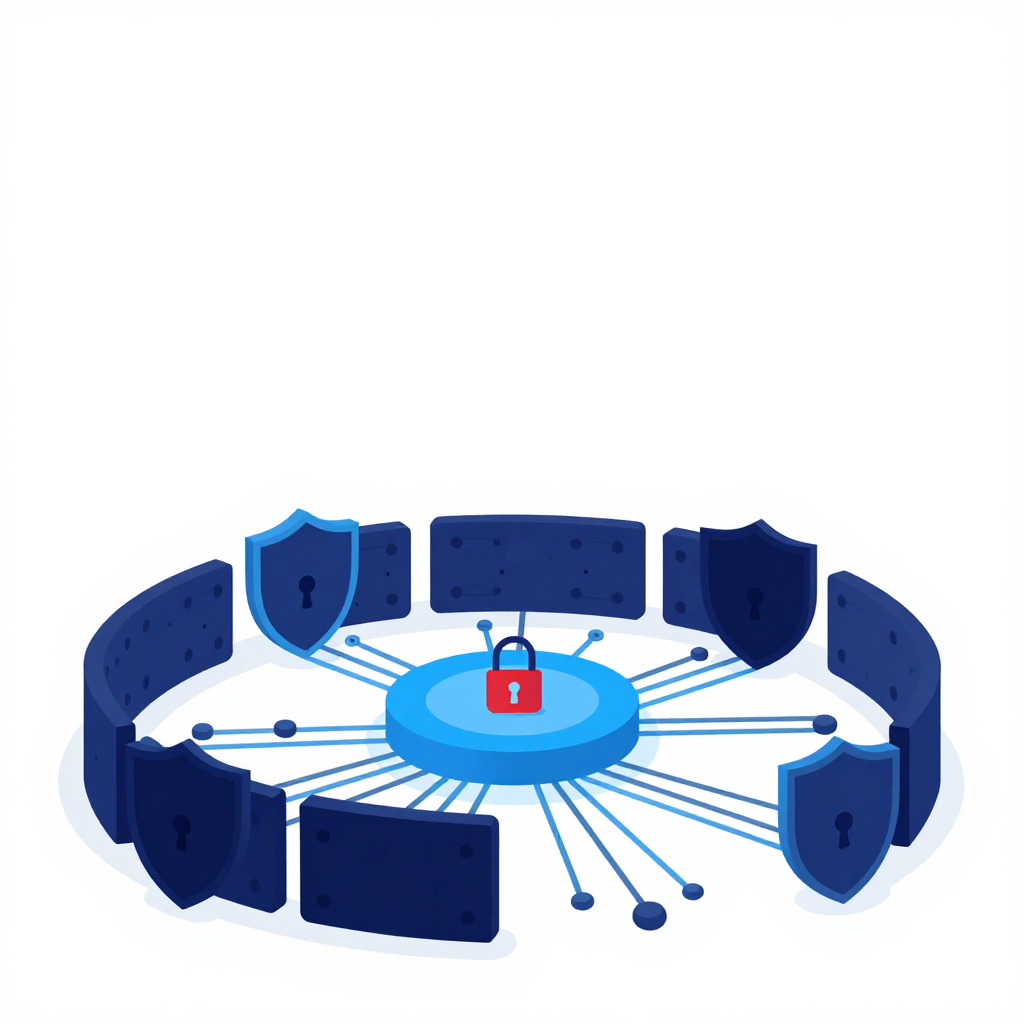
SkillWeaver replaces step two with something closer to what a human ops engineer would do. Before the LLM sees anything, a routing layer analyzes the incoming request and selects only the relevant subset of tools. Maybe that means three out of fifty. Maybe just one.
That filtered set gets injected into the context window instead of the full library. The model then makes its tool-calling decision from a much smaller, more focused candidate pool.
The routing itself appears to use a combination of semantic matching and lightweight classification — the kind of thing that runs in milliseconds and costs pennies compared to what you save on the LLM call. The framework handles this transparently, so from the developer's perspective you're still defining tools the same way. The magic happens in the selection layer between your code and the model.
This is different from approaches like LangChain's built-in tool selection, which typically uses a two-step process where the model first picks tools then executes them. SkillWeaver's routing happens before the LLM gets involved at all, which is why the token savings are so dramatic — you're not paying for the model to reason about which of fifty tools might apply. You've already done that work.
Why 99% Token Reduction Actually Matters
Let's do some real math here, not the sanitized version.
Say you're running an agent with 100 tools. Each tool averages about 200 tokens of schema and documentation. That's 20,000 tokens of tool context per request before SkillWeaver. With the framework routing to an average of two relevant tools, you're looking at roughly 400 tokens. That's a 98% reduction right there.
Now multiply that by requests per day. A moderately active agent handling customer inquiries might process 10,000 requests daily. That's 200 million tokens per day being saved on tool definitions alone.
At typical API pricing of $2-15 per million input tokens depending on the model, you're looking at $400-$3,000 per day in savings. Per agent.
And it's not just cost. There's latency too. Smaller context windows mean faster inference. Faster inference means your agent responds quicker. Quicker responses mean better user experience. Better user experience means fewer people abandoning the chat before getting help.
The compounding effect is where it gets interesting. When your tool context shrinks, you have more room in the window for actual conversation history, retrieval results, and other useful context. Agents that were previously hitting context limits and truncating important information suddenly have breathing room.

Why Every Security & Compliance Analyst Needs Tool-Routing
From a governance standpoint, dumping your entire tool library into an agent is a massive liability. Any experienced security & compliance analyst knows that unrestricted capabilities invite disaster. If an agent has access to fifty backend tools, a prompt injection attack can potentially invoke any of them. The attack surface is huge.
Think of it like running a security & compliance analyzer veeam on your infrastructure. You want automated, policy-driven inspection that reports configuration drift, but you do not want that scanning engine to expose unnecessary system paths or write access keys to the wider network. In the same way, an agent needs tool-level authorization.
When you load every tool's full schema into context, you're also loading every tool's parameter descriptions, its error messages, its edge cases. That's a lot of information about what your systems can do and how they behave — information that could be extracted through prompt injection or social engineering of the agent itself.
A smaller tool surface area means less information leaked per request. If an attacker is trying to understand your agent's capabilities through adversarial prompting, they get a much narrower view when only two tools are visible instead of fifty.
This is the principle of least privilege in action. The agent only sees the tools it needs for the current task, not the full arsenal. It implements zero-trust boundaries at runtime. In modern systems, waiting for manual intervention for access approvals poses massive bottlenecks — we saw how organizations like Robinhood modernized this by building tools for high-velocity access approvals. But automated systems must be secured.
As we look at how AI is breaking traditional cybersecurity, speed and control become the ultimate defense metrics. SkillWeaver offers a way to shrink this attack surface preemptively, which helps in reducing security operations complexity by preventing alert fatigue and agent tool bloat.
What This Means for Agent Architecture Going Forward
SkillWeaver represents a shift in how we think about agent tool management. The default assumption for the past year or so has been "give the model everything and let it figure it out." That works fine when you have ten tools and a 128K context window. It falls apart fast as tool libraries grow.
The routing-first approach that SkillWeaver popularizes is likely going to become standard practice, not a differentiator. We're already seeing similar patterns in other frameworks — LangChain's recent tool selection improvements, Anthropic's built-in tool routing hints, the emerging pattern of pre-filtering before context injection.
For developers building agents today, the practical takeaway is straightforward: if your agent has more than five or six tools, you should be evaluating whether your current framework is loading the full tool library on every request. The cost savings alone justify the switch. The latency improvements and expanded effective context window are bonuses.
The open-source nature of SkillWeaver means there's no vendor lock-in, which matters in a space where frameworks change faster than people can read the documentation. You can adopt the routing pattern without committing to Alibaba's broader ecosystem.
Getting Started With SkillWeaver
The framework integrates with existing agent setups rather than requiring a complete rewrite. If you're using LangChain, CrewAI, or building custom agent loops, the routing layer slots in between your tool definitions and the model call. The API surface is designed to feel familiar — you still define tools the same way, you still call them the same way. The framework handles the selection logic invisibly.
For teams evaluating this, I'd recommend starting with a single agent that has a large tool library and running A/B tests comparing full-context versus routed context. The cost difference will be obvious from day one, and the latency improvement shows up in user-facing metrics within a week.
The full framework is available through Alibaba's open-source channels, and the documentation covers integration patterns for the major agent frameworks. Given how quickly agent tool sprawl is growing across organizations, this feels like one of those infrastructure improvements that separates teams managing costs from teams getting surprised by them.
Source: VentureBeat — New Alibaba AI Framework Skips Loading Every Tool, Cutting Agent Token Use 99%