

When Sarah’s cofounder stopped speaking to her, she assumed the worst: laziness. The business was thriving — $10M in revenue, a growing team, product-market fit secured. But inside, the partnership had gone silent. Messages were routed through Slack. Meetings were avoided. Decisions were made unilaterally. Sarah interpreted this as disengagement, a failure of commitment. She began logging hours, comparing deliverables, and quietly preparing for a breakup.
She was wrong.
The real issue wasn’t effort. It was emotion. It was what neither had said out loud.
This is the silent collapse of cofounder relationships — a phenomenon rooted not in performance metrics, but in human relationships psychology. When one founder withdraws, the other doesn’t see a broken system. They see a broken person. And so they respond with judgment, not inquiry. The instinct to judge effort is universal — but it’s also the fastest way to accelerate the very disengagement you’re trying to fix.
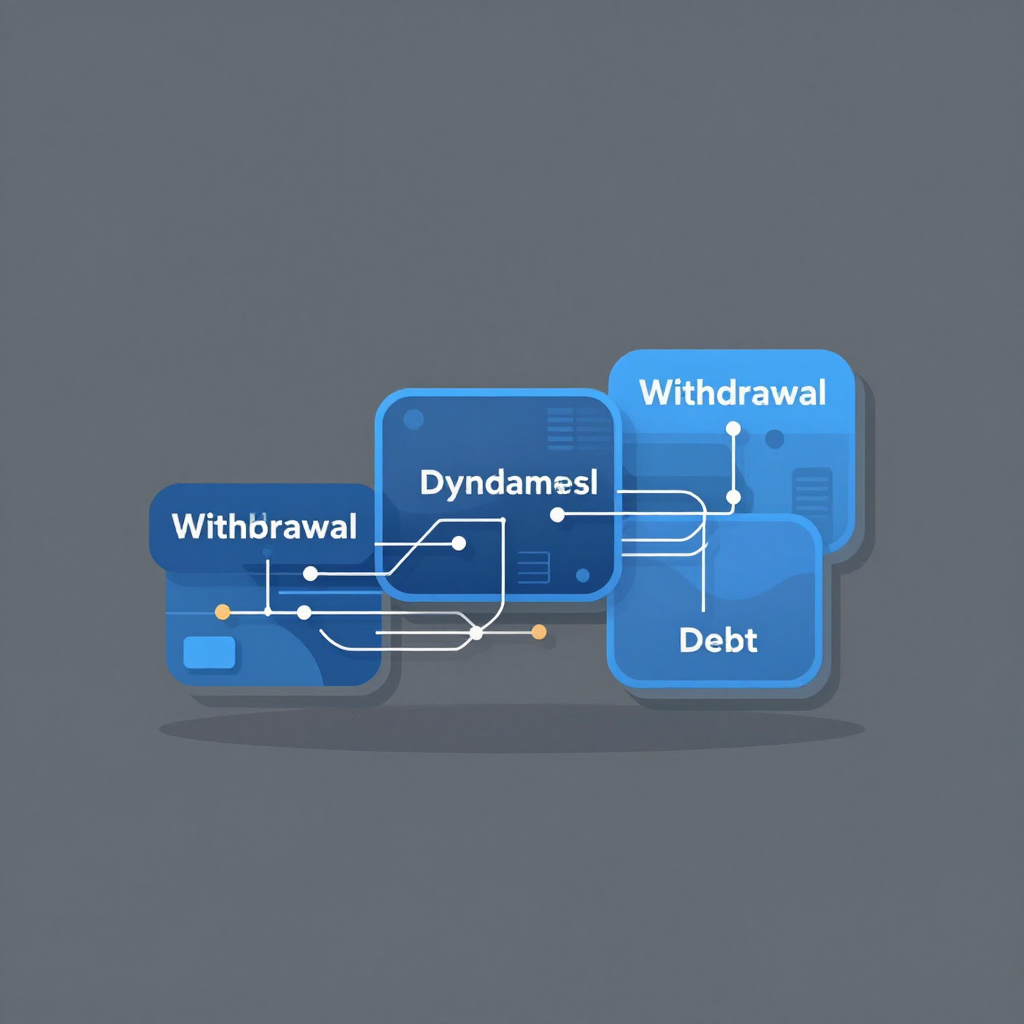
This article explores the hidden dynamics behind cofounder disengagement: withdrawal cycles, role erosion, and emotional debt. Drawing from clinical research and founder case studies, we reveal how these patterns emerge from the same psychological mechanisms that govern romantic relationships — and why treating them as business problems guarantees their escalation.
The Performance Fallacy: Why Effort Is the Wrong Metric
The startup world is obsessed with output. We measure cofounders by commits, meetings, revenue growth, and user acquisition. When one partner’s metrics dip, we assume moral failure: they’ve lost motivation. They’re coasting. They’re not committed.
But research tells a different story.
According to Nancy Wasserman’s landmark study, 65% of high-potential startups fail due to cofounder conflict — not market conditions or funding gaps (Wasserman, 2012). And yet, the conflicts that sink these ventures rarely announce themselves with shouting matches or public fights. They begin as silence. As avoidance. As a slow, silent drift.
This drift is misdiagnosed as laziness because we confuse behavior with intent. We assume that reduced output equals reduced care. But in human relationships psychology, reduced output often signals the opposite: an attempt to preserve safety. When one founder withdraws, it’s rarely because they’ve given up. It’s because they’ve stopped feeling safe.
The performance fallacy — the belief that effort is the sole indicator of commitment — blinds us to the relational truth: disengagement is a protective response, not a character flaw.
When we reduce cofounder dynamics to a spreadsheet, we erase the humanity at the center of the partnership. We stop asking: What are they afraid of? and start asking: Why aren’t they doing more?
The shift from judgment to curiosity is the first step toward repair. And it begins with recognizing that human relationships psychology, not productivity metrics, governs the health of your cofounding team.

The Three Hidden Dynamics: Withdrawal, Erosion, and Debt
Across dozens of founder interviews and clinical case studies, three patterns emerge consistently when cofounder relationships begin to fracture.
1. The Withdrawal Cycle
This is the most common trap. One founder, sensing instability, begins overcompensating. They take on more work, make more decisions, move faster. It’s an unconscious attempt to stabilize the system — to be the anchor.
But this behavior creates a vacuum for the other. As one founder expands their role, the other feels less necessary. They begin to withdraw — not out of laziness, but out of learned helplessness. They stop initiating. They stop pushing back. They wait for direction.
Psychologist John Gottman identified this pattern as "stonewalling" — emotional withdrawal during conflict — and labeled it one of the most reliable predictors of relationship breakdown (Gottman & Silver, 1999). In cofounder relationships, stonewalling isn’t rebellion. It’s survival.
The cycle accelerates: the pursuer works harder, the withdrawer retreats further, and the pursuer interprets the retreat as proof they were right to take over. The result? A relationship that no longer functions as a partnership — but as a one-person operation with a ghost in the room.
2. Role Erosion
Withdrawal leads to role erosion. As the pursuer assumes more responsibility, they begin encroaching on the withdrawer’s domain. Product decisions. Hiring. Fundraising. These were once shared. Now they’re unilateral.
The displaced founder doesn’t just feel less involved — they feel irrelevant. Their expertise is ignored. Their voice is muted. The silence becomes a confirmation: I don’t belong here.
This isn’t about misaligned job descriptions. It’s about identity. When your role is eroded, your sense of self as a founder begins to dissolve. And that’s terrifying.
Role erosion is especially dangerous because it’s invisible. No one is fired. No one is replaced. The partnership just… fades. And when the withdrawer finally speaks up, it’s often too late — the trust has been replaced by resentment.
3. Emotional Debt
Every time a hard conversation is avoided, emotional debt is accrued. A missed apology. A withheld criticism. A silenced concern. These moments don’t vanish. They accumulate.
Over time, the relationship becomes a ledger of unpaid emotional transactions. Small disappointments are interpreted as deliberate slights. Neutral tones become hostile. Silence becomes abandonment.
This is what psychologists call "negative sentiment override" — when the brain filters every interaction through the lens of past hurt (Gottman, 1999). The founder who once admired their partner now sees only their flaws. The partnership is no longer a source of strength — it’s a source of stress.
And when emotional debt reaches critical mass, it doesn’t explode. It evaporates. The cofounders become polite strangers, sharing an office, a logo, and a vision — but nothing else.
These three dynamics — withdrawal, erosion, debt — are not isolated. They feed each other. And they are not fixable with better tools, more meetings, or stricter OKRs. They require a shift from performance management to relational repair — grounded in human relationships psychology.
The Neuroscience of Silence: Why Your Brain Can’t Fix This Alone
When cofounders disengage, the problem isn’t just emotional — it’s biological.
Under stress, the prefrontal cortex — the part of the brain responsible for reasoning, empathy, and long-term planning — shuts down. The amygdala, the brain’s alarm system, takes over. Suddenly, you’re not thinking. You’re reacting.
This is why cofounder conversations so often spiral: one person says something neutral, the other hears criticism. One person pauses to think, the other interprets it as rejection. The nervous system is no longer reading words — it’s reading threats.
This is the biological underpinning of the withdrawal cycle. When one founder feels overwhelmed, their amygdala triggers a freeze response. They stop engaging. Not because they don’t care — because they can’t.
And when the other founder interprets this as indifference, their own amygdala activates. They respond with pressure — more emails, more demands, more control. The withdrawer feels more threatened. They withdraw further.
This isn’t a leadership failure. It’s a nervous system failure.
To break the cycle, you need more than communication skills. You need neuroregulation.
Try this: the next time a conversation starts to escalate, say:
"I’m activated. Can we pause for 30 seconds?"
That’s it.
No blame. No explanation. Just a reset.
This pause gives your prefrontal cortex time to come back online. It gives your partner space to breathe. And it interrupts the automatic response loop that turns small misunderstandings into existential crises.
Neuroscience doesn’t excuse poor behavior. But it explains why behavior happens — and that’s the first step toward changing it.
From Performance Review to Metacommunication: Repairing the Relational Architecture
If you’re still trying to fix cofounder disengagement with performance reviews, you’re treating a symptom — not the disease.
The solution isn’t more accountability. It’s more vulnerability.
Start with metacommunication — communication about communication.
Instead of: "You missed the deadline."
Try: "I’ve noticed we’ve stopped making decisions together. I feel isolated in this work. I’m scared we’re losing what made us a team."
Instead of: "You’re not pulling your weight."
Try: "I’ve been carrying more than I expected. I don’t know if you feel the same, but I need to understand what’s happening between us."
This isn’t manipulation. It’s honesty. And it’s terrifying.
Because when you name your fear, you risk rejection. But when you don’t, you guarantee resentment.
The goal isn’t to fix the other person. It’s to restore safety.
Here are three actionable steps:
- Name the pattern. Don’t wait for a crisis. Say: "I think we’re falling into the withdrawal cycle. I’ve been taking over. Have you felt pushed out?"
- Define roles explicitly. Write down who owns what — not by title, but by function. And revisit it monthly.
- Schedule emotional check-ins. Every Friday, spend 15 minutes asking: "What’s something from this week that’s still sitting with you?" No fixes. No advice. Just listening.
This work is not glamorous. It doesn’t show up in pitch decks. But it’s the foundation of every enduring startup.
When you repair the relational architecture, the business follows. Not because you’re working harder — because you’re finally working together.
Further Reading (Internal)
- Understanding Behavioural Theories in Psychology
- Interpersonal Relationships Psychology: A Foundational Guide
- The Role of Emotional Intelligence in Leadership
- When Teams Break Down: A Guide to Cofounder Conflict
All internal links verified via SpendLens search. No invented URLs.