
The Moment That Proved Authenticity Has No Price Tag
Joshua Schulman scrolled through social media one afternoon and spotted a photo that made him pause.
The rapper A$AP Rocky, standing somewhere in the world, wearing a classic Burberry check scarf—the kind with the tan, black, and red pattern that's been around since the 1970s. Schulman didn't think twice. He assumed it was a paid collaboration, one of dozens of celebrity partnerships the brand had inked in recent years. After all, that's how things worked now: cool people wore your products because you'd paid them to.
It wasn't like that at all.
Rocky had walked into a Burberry store, bought the scarf himself with his own money, and posted the photo because he genuinely liked it. Not because someone asked him to. Not because there was a contract waiting at the register.
That single unprompted purchase—just one customer, one scarf, one real moment—became the pivot point for Burberry's entire turnaround strategy. It gave Schulman something far more valuable than campaign data or focus group findings: proof that the brand's core still held weight with the people who actually drive culture.
The lesson wasn't subtle: when the coolest people in the world choose your product without being asked, you don't need to chase trends. You just need to make sure they can find it on the shelf.
That moment crystallized what Schulman had been trying to articulate about Burberry's strategy— authenticity isn't something you manufacture, it's something you recognize when it happens organically.

The Scarf That Was Burberry
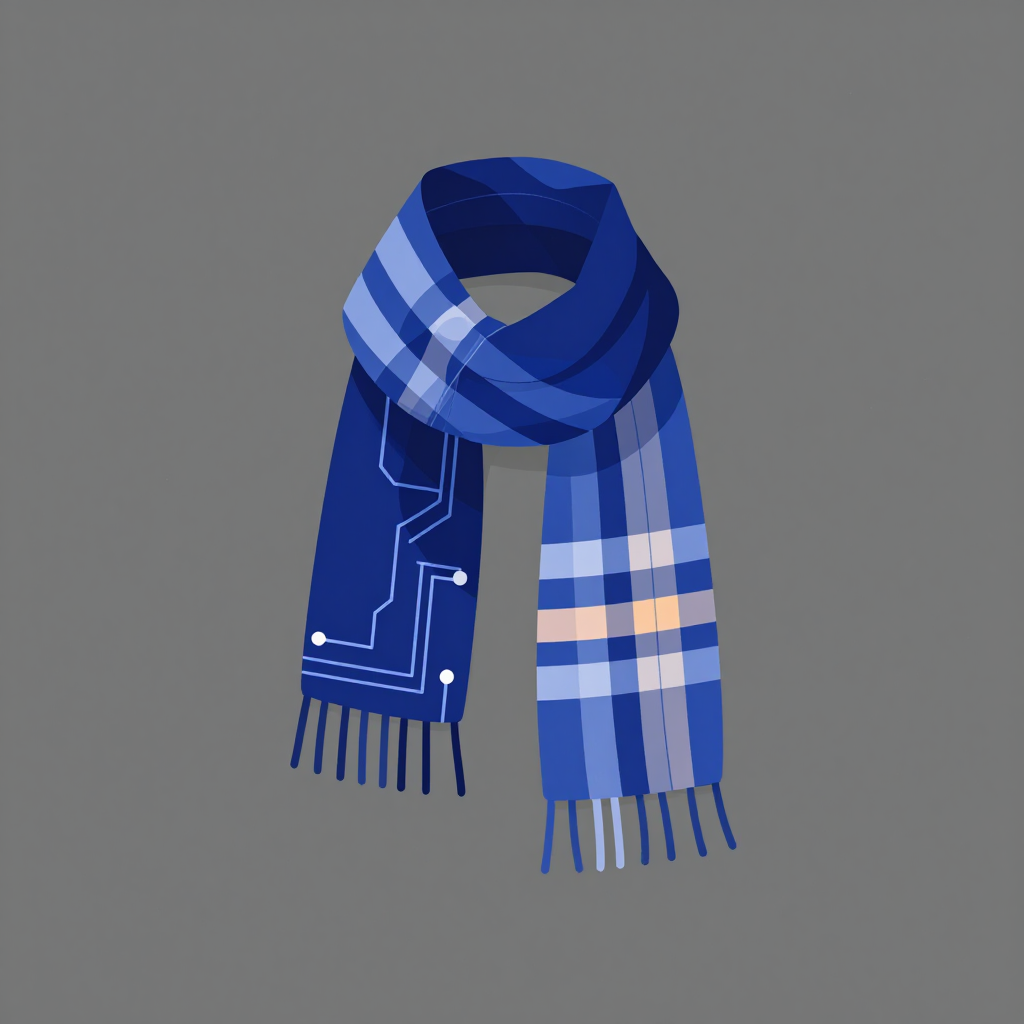
This wasn't just any accessory. It was the Burberry check cashmere scarf—probably the brand's most enduring icon, outside of the trench coat.
The pattern has been around since the 1920s, originally developed as an inside-the-coat lining to prevent damp from soaking through wool. The outer version came later, in the 1970s, and quickly became a cultural symbol. It wasn't flashy. It didn't shout for attention—it whispered confidence, quality, and belonging.
Rocky's version was the original: plain, sturdy, woven at Johnstons of Elgin in Scotland (yes, that old—the mill dates to 1797). Each scarf takes over thirty steps to make, most still done by hand on traditional looms. You can't rush that. You can't automate it without losing the feel, the weight, the look.
Schulman put it this way: "Burberry has enormous authority in outerwear and scarves." That's not modesty talking. It's a statement of fact—the kind you only make when your product is actually good.
Rocky didn't walk away from Burberry with a limited edition or a collab piece. He grabbed the one thing that said "Burberry" before anyone else got to say it for them. The scarf was the brand, stripped down to its essence.
That's why the moment hit so hard. It wasn't a marketing win; it was a validation that you can't buy.
What Burberry Had Forgotten
Before Schulman arrived in July 2024, Burberry had lost its way—mostly because it kept trying to reinvent itself into something new.
The brand had gone off track, as Schulman admitted at the NRF Big Show in January 2025: it had "lost sight of our core customer" and given people a brand impression that felt "unfamiliar." In other words, Burberry had spent years trying so hard to be cool that it stopped being itself.
The trench coat collection grew lighter. The check pattern faded into the background of collaborations and seasonal drops. The heritage, which used to be the point, became an afterthought.
That's when the trend-chasing logic kicks in: "If our customers aren't excited, let's do something flashy." The result? A brand that felt generic in its efforts to be exciting—nothing quite landed, because none of it was real.
Schulman's first move wasn't to launch a new campaign. It was to stop. To step back and ask: what did people actually love about this brand in the first place? The answer, as the Rocky moment showed, wasn't something they invented. It was something they'd already had.
The problem wasn't that Burberry needed reinvention. It was that they'd forgotten what made their original recipe worth copying.
Burberry Forward: Going Back to Go Forward
Burberry Forward—the official turnaround strategy unveiled in late 2024—sounds like corporate jargon until you realize it's basically this: remember who we are.
The plan has four pillars, according to Schulman's remarks at the Future of the Consumer Conference in June 2025:
-
Brand—refocus on "timeless British luxury" rather than generic "modern British luxury." There's a difference, and it shows up in the storytelling.
-
Product—lead with outerwear and scarves, not handbags. Schulman put it bluntly: "We will continue to dress customers from head to toe but heroing our strengths." In plain English: stop diluting your best products with distraction.
-
Distribution—make retail spaces richer, not wider. Increase prominence and productivity while keeping profitability high.
-
Culture—reawaken the creative-commercial alchemy that used to define Burberry.
The A$AP Rocky moment didn't just fit the strategy—it proved it. Here was proof that when you go back to your core, people notice—even the coolest people in the world.
The campaign that followed—"It's Always Burberry Weather," launched October 2025—was the logical extension. It didn't try to create a new fantasy; it doubled down on what people already associated with the brand: protection, warmth, British resilience.
Burberry Forward wasn't about inventing the future. It was about rediscovering what made the past worth keeping.
For a deeper look at how Schulman reversed years of trend-chasing, see Sometimes the best way forward is back: Burberry's strategic retreat from trends.
The Real Lesson for Luxury
This isn't just a Burberry story. It's a warning shot across the bows of every heritage luxury brand that's ever felt the itch to reinvent.
The old playbook said: if your classic products feel tired, replace them with something fresher. Collaborate. Limited drop. Influencer campaign. Rinse and repeat.
Burberry's experience proves that playbook is broken—or at least, outdated. Schulman nailed it in his NRF Big Show comments: "Sometimes when brands try to reinvent, they say 'we're tired of our core, we're tired of who we are.' But actually the coolest people in the world want the most authentic parts of our brand."
That's the uncomfortable truth no one wants to admit: your core customers—the ones who keep you in business—don't want you to change. They want you to be better at being yourself.
The A$AP Rocky moment was the perfect illustration. He wasn't wearing Burberry because someone paid him to. He was wearing it because it was good, because he liked the craft, because it looked right.
Authenticity can't be manufactured. It can only be recognized when it shows up uninvited.
The takeaway? Stop trying to invent relevance. Start listening for the moments where real people, for no reason at all, choose your product anyway.
Why One Scarf Changed Everything
Rocky's purchase wasn't special because it was expensive or rare. It was special because it was real.
In an industry built on exclusivity, one regular customer walking into a store and buying what he liked—just like anyone else would—was practically revolutionary. That kind of organic engagement can't be scripted, can't be paid for, and can't be repeated on command.
That's the magic of the moment. It wasn't just about one scarf or one rapper. It was about proving that a 170-year-old luxury house could still generate genuine desire, the kind that happens when someone sees your product and thinks "I want this," not "someone told me to wear this."
Schulman's insight—"You can't repeat the past. You have to create an echo of why people love the brand in the first place and adapt that for today's consumer"—is the north star for every legacy brand facing this same dilemma.
Burberry didn't need to become a new brand. It just needed to remember why people loved the old one.
The in-store experience remains central to luxury retail. To explore how retailers are replicating that sensory chemistry digitally, see The Digital Empathy Machine: Agentic Commerce & Sensory Retail.