
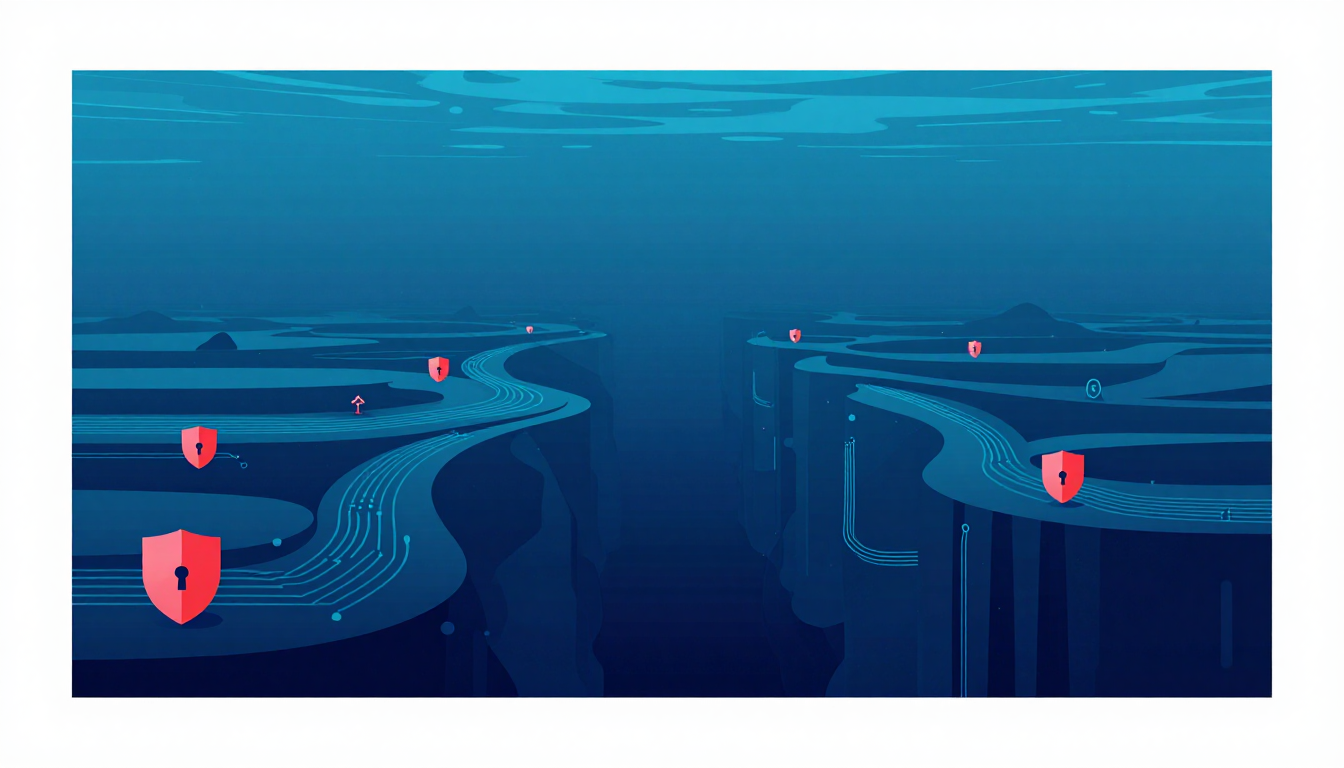
The Mid-Ocean Ridge: Ground Zero for Tectonic and Systems Drift
Mid-ocean ridges are the longest mountain range on Earth — roughly 65,000 kilometers of continuous underwater spine where the crust literally splits and pushes outward. To a geophysicist, it's a dynamic boundary where magma rises from the mantle and solidifies into new basaltic crust. To a security & compliance analyst, it's the most honest metaphor I've ever seen for configuration drift in cloud environments.
Here's the thing: you don't build a secure perimeter and walk away. The moment you deploy, subtle currents of updates, microservice migrations, permission changes, and policy exceptions begin driving your environment apart. Just as the Earth's crust splits at tectonic boundaries, cloud configurations experience constant undercurrents of change. We build baselines — like the standard compliance configurations in a security posture blueprint — but the day-to-day operations introduce new API endpoints, modified network security rules, and shifting data pools. If you aren't paying attention, the distance between your secure baseline and actual runtime reality grows. Eventually, the drift creates cracks wide enough for a major incident.
The ridge doesn't care that you didn't plan for it. Neither does your cloud tenant.

How Harry Hess Mapped the Seafloor Spreading Mechanics
Harry Hess proposed his theory of seafloor spreading in 1962, and it changed everything we knew about the planet. Magma upwells due to mantle convection currents, solidifies at the ridge axis into basaltic crust, and gets pushed outward by a combination of ridge push and slab pull forces. The ocean floor isn't a static basin. It's a conveyor belt. The oldest parts get shoved toward subduction zones while the center is constantly generating new material.
This conveyor belt model replicates what happens in modern SaaS environments with brutal accuracy. Think about your configuration management in the security & compliance center Office 365. Rules are added, updated, and retired every single day. A single cloud tenant contains thousands of shifting permissions — dynamic groups, external sharing links, conditional access policies that evolve faster than your documentation can track them. If you treat your settings like static rock, you miss the tectonic reality.
The continuous addition of new accounts and services creates an active upwelling of infrastructure. To defend this boundary, you have to understand the forces of push and pull. You need a system that maps how policies diverge over time. Without that baseline, you're trying to defend a moving target — and every incident response playbook I've seen fail started with someone assuming the ground was still.
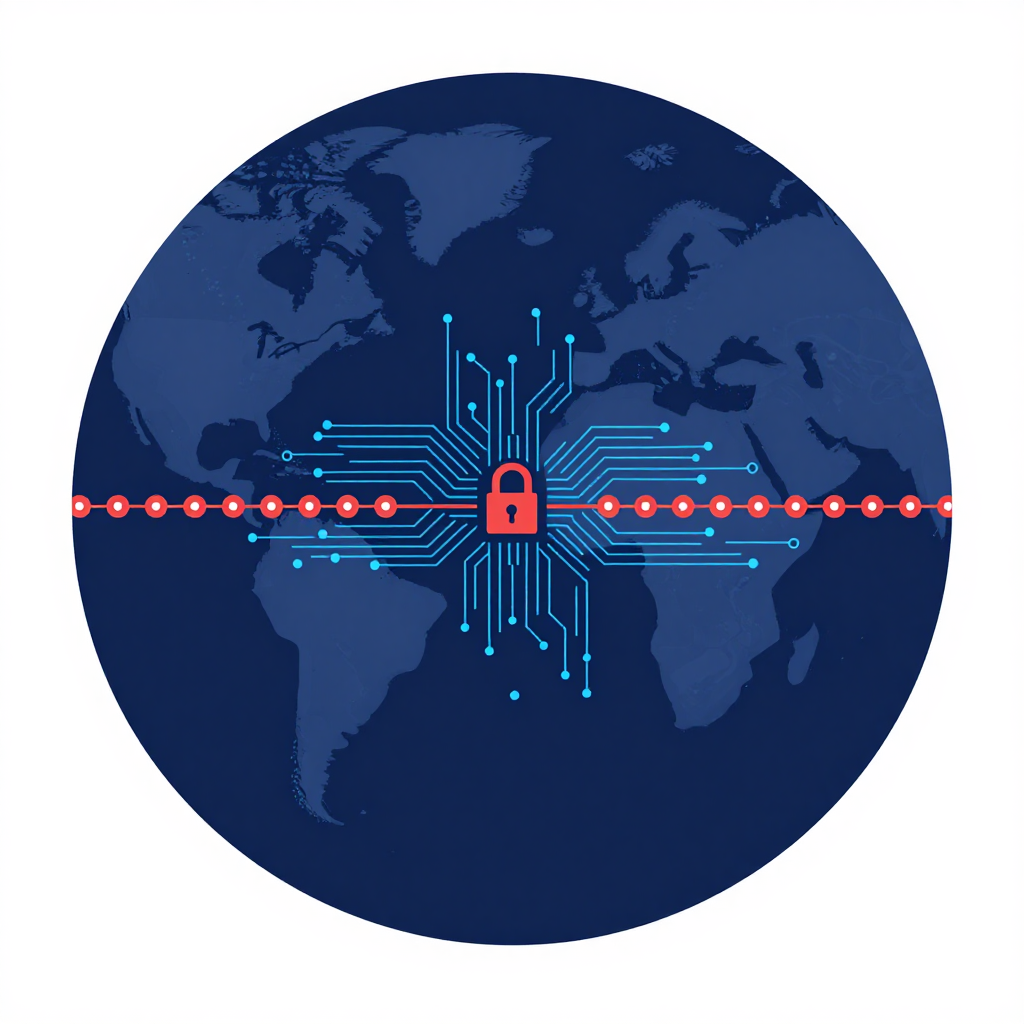
Symmetrical Stripes: The Evidence of Inevitable Divergence
Hess's theory wasn't just a clever guess. The evidence confirming seafloor spreading is striking: symmetrical paleomagnetic stripes recording geomagnetic reversals, a clear age gradient where younger crust clusters near the ridges, and increasing sediment thickness as you move away from the ridge axis. When magnetic poles flipped historically, iron-bearing basalt crystallized at the ridge and locked the orientation in place. As the seafloor spread, it left a mirrored magnetic progress report on both sides. You can read the history of the Earth just by looking at the magnetic signature of the rocks.
In IT compliance, your audit trails are those magnetic stripes. If you look at logs generated by tools like the security & compliance analyzer Veeam, you should see a mirrored history of modifications, backups, and restores. A proper audit log doesn't just show you what the system looks like today — it shows the age gradient of your controls. You can trace back to when a policy was altered, why a specific admin bypassed a restriction, and where data was moved.
When an incident occurs, these footprints are what keep you from driving blind. If your security system doesn't generate immutable, symmetrical records of every change, you have no way to prove compliance to an auditor or trace an attacker's movement. The rocks don't lie, and neither should your logs.
Real-Time Telemetry: How We Watched the Sea Floor Spread
The way we monitor deep-sea changes has evolved dramatically. According to NOAA, seafloor mapping began with early lead lines dropped from ships, moved to 1920s single-beam sonar, advanced to 1960s multibeam sonar, and settled into modern satellite altimetry combined with newly developed continuous seafloor monitoring systems. We went from dropping a weighted rope in the dark to mapping the entire ocean floor with high-resolution acoustics.
But mapping is static. The real breakthrough came at the Axial Seamount, an active volcanic site on the Juan de Fuca Ridge. Researchers deployed a newly installed continuous monitoring system that watched the seafloor spread in real-time — something Ars Technica documented this year. This network of tiltmeters, pressure sensors, and hydrophones captured the inflation of the magma chamber, the micro-earthquakes of shifting plates, and the sudden deflation as magma erupted and the ocean floor split.
In the security space, this is the difference between an annual SOC 2 audit and continuous compliance monitoring. The old way — lead lines — is like running a vulnerability scan once a quarter. By the time you get the report, it's already historical fiction. A modern security & compliance analyst needs real-time telemetry. You need to see the spikes in API traffic, the sudden policy deflations, and the micro-anomalies of unauthorized access as they happen. The Axial Seamount team didn't wait for the next eruption to measure what happened. Neither should you.
Why the Security & Compliance Analyst Must Monitor Structural Drift
So, why does a security & compliance analyst care about deep-sea geophysics? Because the continuous expansion of ocean basins, driving plate tectonics as a whole and facilitating volcanic and seismic activity, has shaped our geography over millions of years. Tension builds up slowly, but it releases in seconds during an earthquake. The exact same rule applies to enterprise IT.
When an organization fails to bridge the gap between engineering speed and compliance requirements — a challenge we detail in explaining operational GRC strategies — systems drift occurs. Software engineers spin up new dev environments, bypass proxies, and create shadow databases. The surface looks calm, but underneath, the tension is mounting. When the rupture finally happens (whether through a data leak or a ransomware attack), it isn't an isolated event. It is the natural, inevitable result of system drift that went unmonitored.
You can't manage what you don't measure. A security analyst must be the geologist of the system, calling out the friction points before they snap. The seafloor doesn't negotiate with you. Neither does your compliance framework.
Constructing a Cloud Security Incident Response Playbook for Tectonic Changes
If drift is inevitable, your response must be programmatic. You cannot wing it when the ground starts shaking. This is where a formal cloud security incident response playbook comes into play. It behaves like a seismic response protocol — when the telemetry reports a breach in Office 365, or a system failure in your backups, the playbook outlines immediate containment, isolation, and recovery steps.
We should move away from legacy methods of securing our servers. I've spent years explaining why legacy SSH keys and unmonitored jump boxes are a disaster. We need auditable tunnels, session managers, and real-time activity streaming. If you don't secure the access pathways to your cloud resources, the tectonic shifts in user rights will leave doors wide open. Make sure your playbook is not a static PDF sitting on a SharePoint drive. It needs to be an automated, tested workflow.
Treat your compliance as an active, breathing system. Monitor the pressure, audit the changes, and build barriers that can handle the inevitable drift of your digital boundaries. The ocean floor is still spreading right now, whether you're watching it or not. Your security posture should be no different.