The Orchestration Tax Nobody Talks About
Every AI team that's shipped a retrieval-augmented generation system knows the drill. You get the embeddings working, you wire up the vector search, and then comes the part where things actually break in production. The reranking service goes down at 2 AM. You're juggling API versions that don't play nice together. And somewhere in there, you've built retry logic that nobody documented.
MongoDB's Native Reranking, currently in public preview and powered by Voyage AI, is trying to make all of that disappear. It runs directly inside the MongoDB aggregation pipeline and can improve retrieval quality by up to 30%, according to the company. But the real story here isn't the accuracy bump—it's what it eliminates.
Mike Leone, principal analyst at Moor Insights & Strategy, put it bluntly: "The lasting gain is never building the retry logic, the failure handling, and the version juggling that a separate reranking service forces on you. That orchestration is invisible in a demo and a real tax once the app is live."
That's the part vendors don't always highlight in their pitch decks. The orchestration tax. It's not glamorous, but it compounds over time.
Why Developers Care More Than CIOs Right Now
Stephanie Walter, practice leader for the AI stack at HyperFRAME Research, sees this as a developer productivity play first. "Native Reranking reduces the work that developers usually do," she said. "The immediate impact is a little less code."
But Walter's pointing at something deeper than just fewer lines of code. When you remove the reranking service from the equation, developers stop spending their weeks wiring infrastructure and start spending them on what actually matters—improving how the application behaves, tuning prompts, fixing edge cases that only show up in production.
The trade-off is real though. You're trading one kind of complexity for another. Now you're dependent on MongoDB's implementation, its roadmap, and its uptime. That's not nothing.
The Cost Math That Actually Matters
Here's where things get interesting from a financial perspective. Every passage you send to a language model is something it has to read and reason over on expensive GPU compute. That cost scales with how much you feed it. Trim irrelevant passages before they reach the model, and you stop paying frontier-model rates to reason over context that was never going to matter.
Ashish Chaturvedi, leader of executive research at HFS Research, put it this way: "As enterprises adopt larger, pricier models, the cost of padded context compounds fast. And in the agentic era, the math gets worse, because bad retrieval doesn't just produce one bad answer. Rather, it triggers a wrong step, a retry, and a fresh round of tokens across the whole trajectory."
That last point is critical. In agentic workflows, where AI systems make multiple sequential decisions, bad retrieval doesn't just waste tokens on one call. It cascades. One wrong step triggers a retry, which triggers more retries, and suddenly your inference bill looks nothing like what you budgeted for.
Walter called retrieval optimization "one of the most practical levers for controlling AI spending" right now. And she's not wrong. It's not the flashiest optimization, but it's the one that shows up in your monthly invoice.
The Vendor Lock-In Question You Can't Ignore
Let's be honest about the trade-offs. The very simplification that makes Native Reranking attractive today can become a problem tomorrow.
Leone warned about this directly: "The very simplification of the enterprise AI stack that Native Reranking offers today can become vendor lock-in later, increasing the cost of switching platforms."
Igor Ikonnikov at Info-Tech Research Group pointed to another limitation. The value of native reranking depends entirely on whether MongoDB serves as your primary data repository. If your data lives across multiple systems—Postgres for transactions, Snowflake for analytics, Elasticsearch for search—you're still going to need cross-system orchestration. Native reranking in MongoDB doesn't solve that problem.
So before you commit, ask yourself: is MongoDB really the center of your data universe? Or are you just moving one integration headache to a different vendor?
What CIOs Should Actually Evaluate
Both Walter and Chaturvedi pushed back on the idea that retrieval accuracy should be the sole evaluation metric. Walter said CIOs need to assess platforms based on their ability to balance retrieval accuracy with operational simplicity, governance, latency, and data freshness. Chaturvedi added that total cost of ownership matters too—engineering effort to maintain retrieval quality, token consumption patterns, and the number of operational failure points your architecture introduces.
Chaturvedi also framed this in trust terms: "Most enterprises cite inaccuracy as their top AI risk as adoption scales. Better retrieval is infrastructure for earning that trust, because enterprises are unlikely to hand greater decision-making authority to AI agents unless they can trust the quality of the information those systems retrieve and reason over."
That's a useful lens. It's not just about cost or complexity. It's about whether you can actually hand decision-making over to AI systems without getting fired when they make mistakes.
The Broader Industry Shift Nobody's Naming Yet
MongoDB isn't doing this alone. Over the past several months, EnterpriseDB (EDB), pgEdge, and Databricks have all introduced architectures designed to consolidate AI, transactional, and analytical capabilities into their respective data platforms. The pattern is clear: databases are becoming AI platforms.
Leone called this "part of a broader industry correction after enterprises spent the first wave of generative AI deployments assembling multiple specialized services, creating operational complexity that frequently slowed production deployments."
Chaturvedi described it as a shift away from an "assembly-required" model toward integrated platforms that package core AI capabilities together. The integration tax is real, and the market is finally pushing back against it.
What This Means for Your Stack
If you're running MongoDB Atlas as your primary vector store and your data lives there, Native Reranking is worth evaluating. The 30% retrieval quality improvement is meaningful, and the reduction in operational overhead could free up engineering time that's currently being consumed by infrastructure maintenance.
But if your data is distributed across multiple systems, or if you're already committed to a different vendor's ecosystem, the lock-in risk might outweigh the convenience. You'd be trading one set of problems for another.
The key insight from all the analysts I spoke with: don't evaluate this on accuracy alone. Look at the total cost of ownership, including the engineering effort to maintain it, the token consumption patterns, and how many failure points your architecture introduces. The cheapest retrieval is the one that doesn't break at 2 AM.
Native Reranking might be that solution for some organizations. For others, it's just a different kind of complexity to manage.
The choice, as always, depends on where your data actually lives and how much you value simplicity versus flexibility.

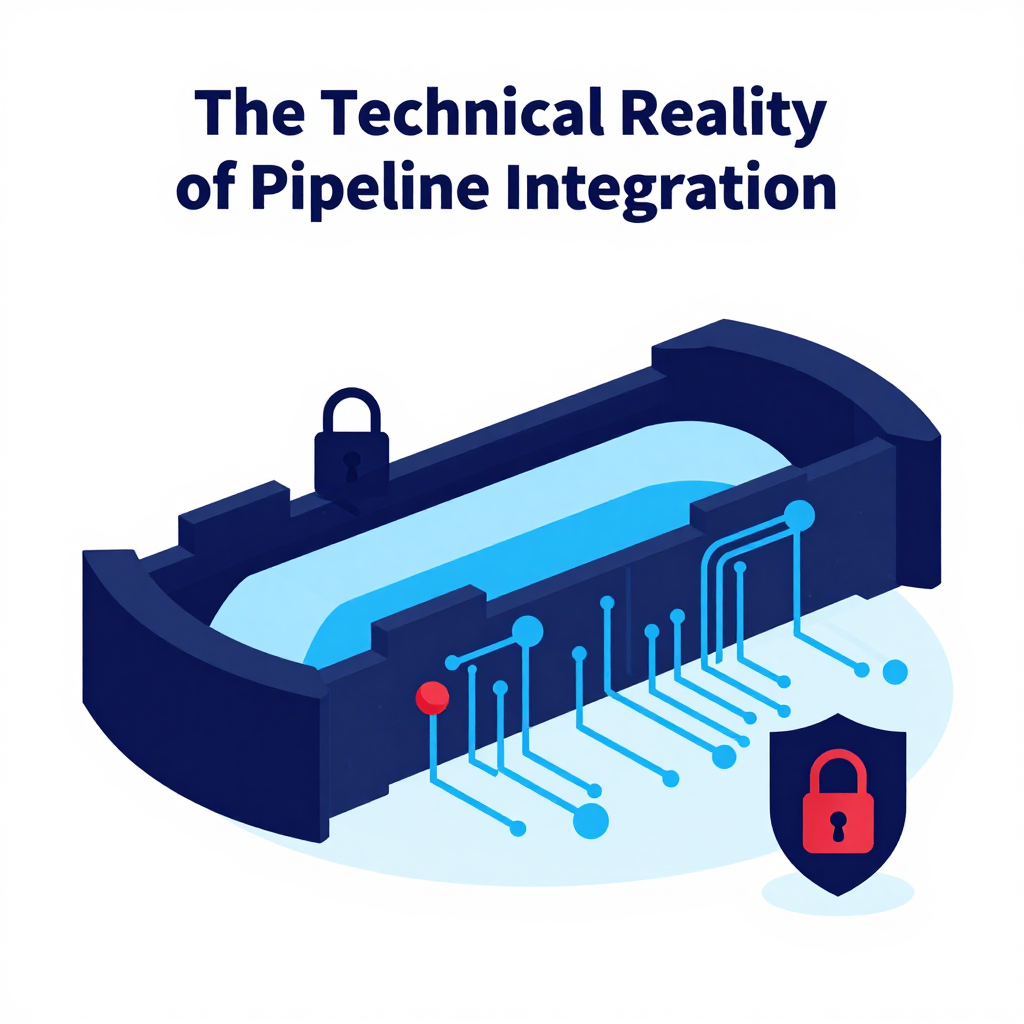
The Technical Reality of Pipeline Integration
What makes Native Reranking different from previous approaches isn't just that it exists—it's where it lives. Running inside the MongoDB aggregation pipeline means reranking happens as part of your existing query flow, not as a separate API call that introduces latency and failure modes.
Voyage AI provides the embedding models and rerankers that power this capability. Their models are designed specifically for retrieval-augmented generation systems, which means you're not getting a generic solution bolted onto MongoDB. It's built for this use case.
The 30% retrieval quality improvement that MongoDB cites comes from better relevance scoring. Traditional vector search relies on cosine similarity or dot product distance, which can miss semantic nuances. Reranking models understand context better and can reorder results based on actual relevance to the query, not just vector proximity.
But here's what the demo doesn't show: you still need to think about your embedding strategy, your chunking approach, and how you structure your data for retrieval. Native Reranking doesn't solve bad data hygiene. It just makes good data work better.
The Agentic AI Complication
Chaturvedi's point about agentic workflows deserves more attention. In traditional RAG, you retrieve context, feed it to a model, get an answer. One call, one cost.
In agentic systems, the AI makes decisions sequentially. It retrieves information, acts on it, retrieves more information, acts again. Each step can trigger additional retrieval calls. If the first retrieval is wrong, you don't just get a bad answer—you get a wrong action, which might trigger more retrieval, more actions, and a cascade of token consumption.
This is why retrieval optimization matters more now than it did six months ago. As enterprises move from chatbots to agents that actually do things, the cost of bad retrieval compounds with every step.
Native Reranking addresses this by improving the quality of each individual retrieval call. Better first-pass results mean fewer retries, fewer wrong steps, and lower overall token consumption. It's not a silver bullet for agentic failures, but it removes one source of them.
The Governance Angle
Walter's point about governance is worth sitting with. Every additional AI service creates another place to govern, secure, monitor, and pay for. That's not just an engineering concern—it's a compliance concern.
If you're in regulated industry, every service endpoint is another thing that needs to be documented, audited, and secured. Another API key to rotate. Another vendor to sign a BAA with. Another system that could leak data if misconfigured.
Native Reranking reduces the attack surface by eliminating one service from your stack. That's not nothing for security teams, even if it doesn't make headlines.
The Pricing Question
MongoDB hasn't publicly disclosed the pricing for Native Reranking yet. That's important context. When you're evaluating this, you need to understand:
- Is it included in your existing Atlas tier?
- Is it priced per query, per document, or as a flat fee?
- How does it compare to running Voyage AI's API directly?
Until that information is available, you're making a decision based on architectural preference rather than cost optimization. That's fine, but be honest about it.
The Migration Path
If you decide Native Reranking is right for your use case, the migration path should be straightforward. Since it runs inside the aggregation pipeline, you're not rewriting your entire retrieval layer. You're adding a stage to existing queries.
But don't skip the evaluation phase. Test retrieval quality with and without reranking on your actual data. Measure the latency impact. Calculate the token savings based on your query patterns.
The 30% improvement MongoDB cites is an average. Your mileage will vary based on your data quality, your query patterns, and how well your embeddings capture semantic meaning.
The Bigger Picture
This announcement is part of a larger trend: databases becoming AI platforms. EDB, pgEdge, Databricks, and now MongoDB are all consolidating AI capabilities into their data platforms. The message is consistent: stop assembling specialized services and start using integrated solutions.
Is this the right move? It depends on your perspective. If you value simplicity and reduced operational overhead, yes. If you value flexibility and the ability to swap components, maybe not.
There's no universally correct answer. But the industry is clearly moving in this direction, and understanding why will help you make better decisions about your own stack.