
Cloud Security Incidents
Articles about cloud security breaches, credential theft, and incident response
Anthropic's Agent SDK Billing Pause: What Security Teams Need to Watch
Anthropic paused a planned billing change for its Claude Agent SDK that would have shifted automation-focused usage from subscription pools to token-based pricing, following significant pushback from developers and third-party tool makers who relied on generous subscription limits for heavy agent workflows.

AI Voice-Cloning Scams: Why Your Brain Can't Trust What It Hears
A University of Cincinnati study reveals that AI voice-cloning scams exploit vocal timbre—a biometric fingerprint—to bypass human skepticism. Scammers need less than 10 seconds of audio to clone a voice and override your critical judgment, making traditional verification essential for 365-day security.
NAIC Clarifies: ShinyHunters' PeopleSoft Breach Exposed Only Public Regulatory Data
The National Association of Insurance Commissioners says the ShinyHunters extortion group's PeopleSoft zero-day breach stole only publicly available statutory filings, outdated logs, and configuration files — directly disputing hacker claims of compromised critical regulatory platforms like SERFF and OPTins.
AI Hallucinations as a Vector for Domain Hijacking Attacks
Why a security & compliance analyst must audit Large Language Model outputs to prevent attackers from registering hallucinated domains for hijacking.

Bending Spoons: The Secret Giant Serving Over a Billion People — and Why You’ve Never Heard of It
How a bootstrapped Milan firm, unknown outside tech circles, built a $25B AI-powered conglomerate that quietly owns AOL, Vimeo, Eventbrite—and everything in between.
When Voices Become a Survival Strategy: New Clinical Tools Challenge Panic-Driven Psychiatry
University of Birmingham researchers and Mind in Camden have launched a practical guide and documentary film reframing hearing voices as an adaptive response to trauma — and showing how coercive interventions often worsen the very distress they aim to prevent.
Sub-Second Rhythms: Why a Security & Compliance Analyst Studies Infant Response Latency
A PLOS One study reveals maternal vocal latency at 12 months is an early predictor of childhood ADHD, drawing surprising parallels with how alert sync loops operate in cloud security.
Why a Security & Compliance Analyst Audits Ad Platform Tracking and Attributable Value
A measurement framework for comparing ad platform performance fairly—using layered validation, attribution models, and incrementality testing to defend budget allocations without exposing customer data.
South Korea's $1 Trillion Chip and Robot Bet: What It Means for Cloud Security Incident Response Playbooks
South Korea's government and top tech companies are committing $1 trillion to flagship megaprojects focused on expanding memory chip production capacity and advancing humanoid robot development — a move that reshapes the attack surface for cloud security incident response playbooks worldwide.
Oracle Lays Off 21,000 as AI Takes Over — SEC Filing Confirms
Oracle laid off 21,000 employees over the past year — not as a result of failing sales or leadership shake-ups, but because AI systems began handling the very tasks those people once performed. A new Securities and Exchange Commission filing, filed Monday, finally spells out how the company’s embrace of artificial intelligence reshaped its workforce at scale. Here's what we know about how a security & compliance leader ended up rewriting job descriptions one redundancy at a time.
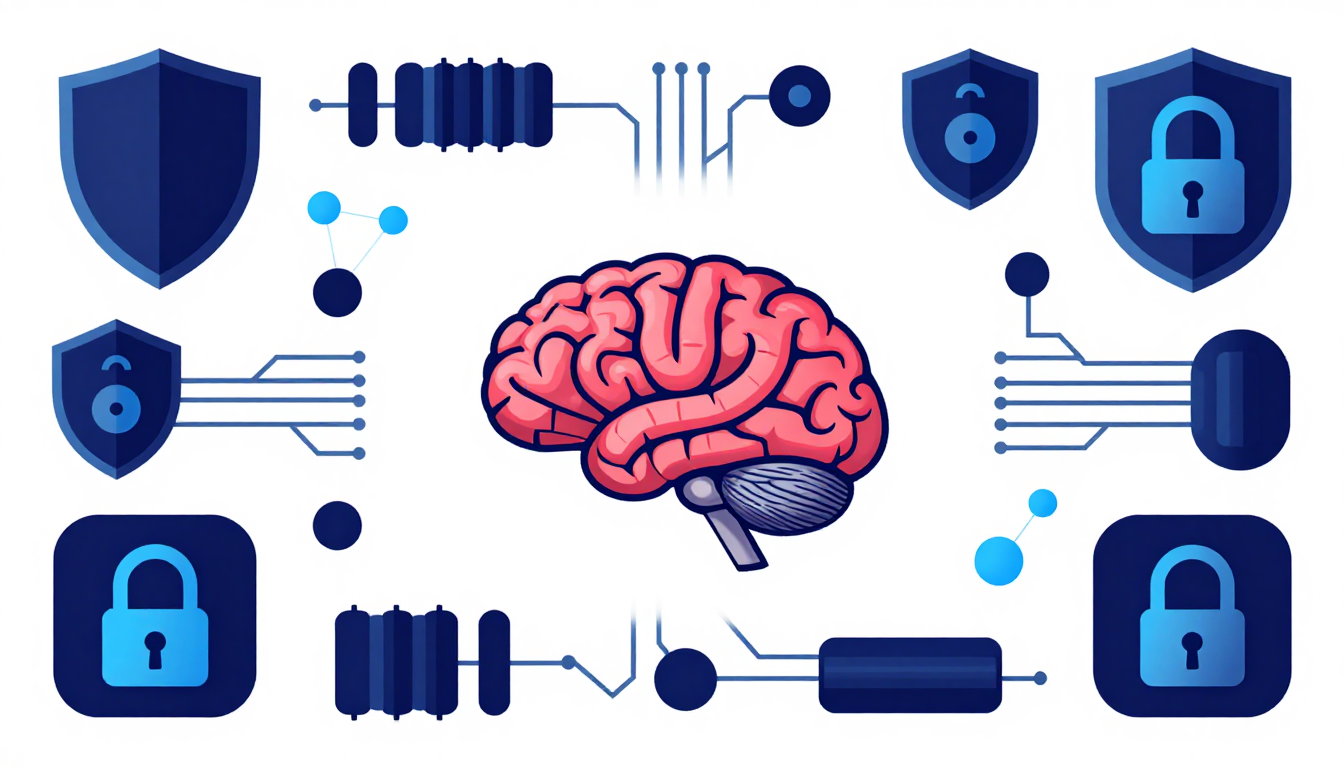
How a Brain Reflex Center Cut AI's Energy Use by 10,000 Times
Northwestern engineers built a cerebellum-inspired memtransistor from atomically thin molybdenum disulfide that ignores routine data and flags the unexpected — detecting heart arrhythmias within a fraction of a heartbeat using 10,000-fold fewer operations than conventional AI.
Security & Compliance Analysts Warn: Mainframe Sales Eroded by AI Hardware FOMO
IBM’s Infrastructure revenue fell 7% in Q2 as enterprise customers—spooked by AI infrastructure demand and supply constraints—diverted mainframe budgets to hoard servers, storage, and memory. CEO Krishna admits the company didn’t act quickly enough.