
Forget the AI Panic — Look at the Data
Here's a headline that should keep every security leader up at night: remote work is doing more damage to early-career development than artificial intelligence ever could. And I don't say that lightly, because I've spent the last decade watching organizations treat AI as this existential threat to their security workforce while completely ignoring what's actually happening in their hybrid offices.
A landmark study by Lambert and Schindler at the University of Warwick tracked 243 million hires and 407 million online job postings across the US, UK, Canada, and Australia from 2017 to 2025. When they ran the numbers with both AI exposure and remote work trends in the same model, something striking happened — the independent effect of AI on junior hiring just vanished. The real culprit? Highly digital roles being done from home.
I know what you're thinking. This sounds like another anti-remote-work piece. But hear me out, because from a security and compliance standpoint, the implications are far more serious than career development alone. When you break the mentorship pipeline for young professionals entering cloud security, incident response, and compliance roles, you don't just lose talent. You create gaps in your defenses that attackers will exploit within months.
The data doesn't lie. Entry-level hiring collapsed sharply starting in late 2022 across white-collar fields, and software engineering and professional services took some of the hardest hits. But here's what most people miss: these aren't just HR problems. They're security posture problems.
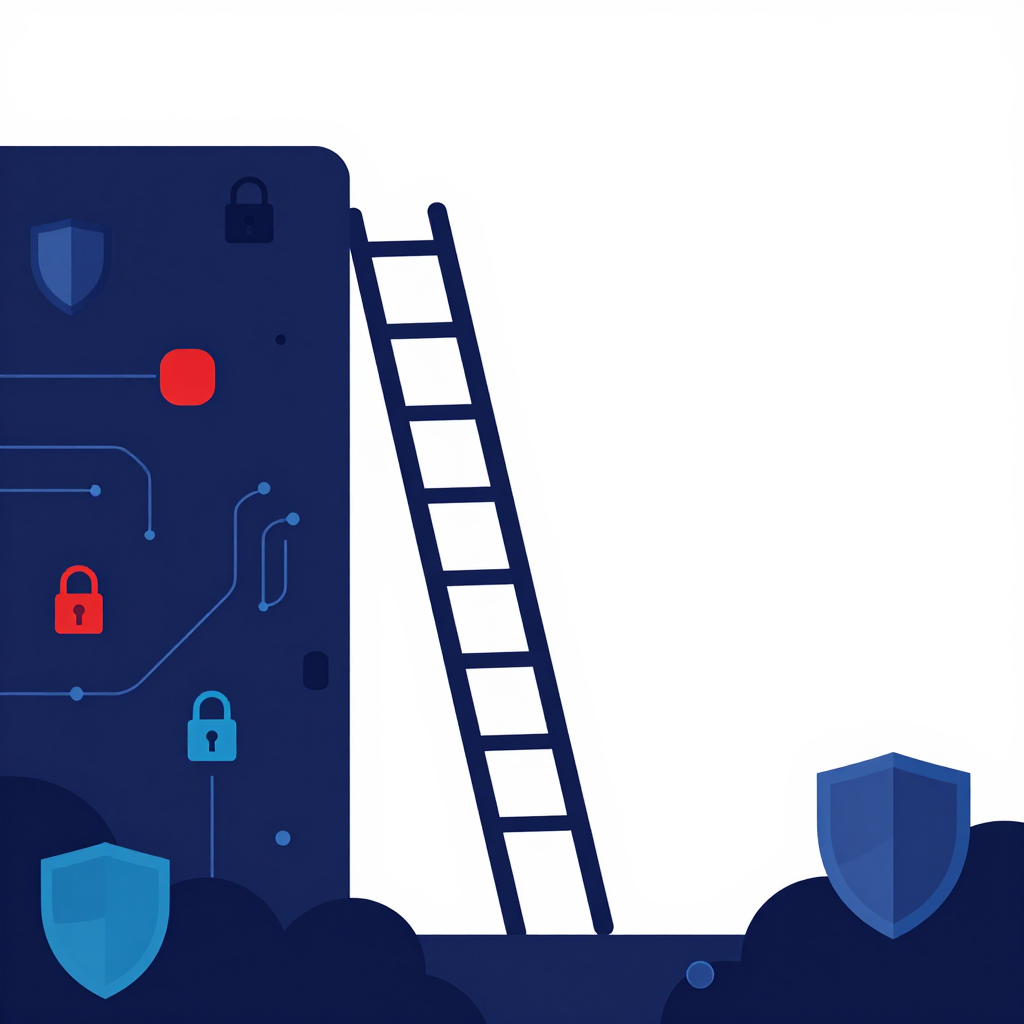
The Broken Ladder in Security Teams
Let me paint you a picture most CISOs would rather not see. Your senior cloud security analyst has been mentoring three junior analysts for the past two years. Not through a formal program, not through documented processes — but through osmosis. They watched how the senior analyst triaged a credential theft incident at 2 AM. They observed how she paused before clicking that suspicious link in an Office 365 admin portal, noticed the subtle URL mismatch, and walked them through the verification process in real time.
That junior analyst learned more from those three months of casual observation than they would have from any training module. Bandura's Social Learning Theory, published back in 1977 and still holding up remarkably well, identifies four mediational processes: attention, retention, reproduction, and motivation. You have to notice the behavior first. Then form a mental representation of it. Then be capable of performing it yourself. And finally, have a reason to act — driven by seeing someone else get reinforced for doing it right.
Now take that junior analyst and put them on Zoom calls. Watch what happens to those four processes. Attention fragments across six different screens. Retention suffers because there's no physical context anchoring the memory. Reproduction becomes guesswork when you can't see the senior analyst's thought process unfolding in real time. Motivation drops because vicarious reinforcement — watching your mentor get praised for catching something others missed — loses its impact through a speaker.
I've seen this play out in incident response scenarios where a young analyst, working remotely for eight months without proper structured onboarding, missed a subtle indicator of compromise in their cloud security incident response playbook that would have been obvious to anyone who'd sat through even two real incidents alongside a seasoned professional.
Why Remote Work Kills Junior Hiring
The Lambert and Schindler research identified two mechanisms driving this collapse, and both hit security teams particularly hard.
First, remote work dramatically increases management burden. In a physical office, when a junior analyst is struggling with something — say, configuring conditional access policies in Microsoft 365 or interpreting alerts from a Veeam backup security scan — they get redirected through casual daily course corrections. You notice their confusion over coffee. You catch them staring at a dashboard with the wrong filters. You pull up a chair and walk through it.
In isolation, mistakes go unnoticed longer. They take more effort to fix later. And they disrupt digital workflows in ways that are harder to contain. A misconfigured security group doesn't just affect one person's access — it cascades through your entire Office 365 tenant, potentially exposing sensitive data to unauthorized users. The risks are real: Chinese espionage groups have already exploited misconfigured 365 environments to deploy persistent backdoors across enterprise tenants.
Second, and this is the part that really stings for early-career professionals: flexible remote arrangements have made it easier for older, experienced professionals to delay retirement. They stay in the workforce longer without the draining daily commute eating into their personal time. And when you're a manager choosing between hiring an independent expert with ten years of cloud security experience or taking on the costly training risk of a junior analyst, you know what most managers choose?
Experience. Every time.
It's not malicious. It's rational resource allocation under pressure. But the cumulative effect is a talent pipeline that's completely dried up for anyone trying to break into security and compliance roles.
The Learning Gap Nobody's Talking About
Here's where this gets really uncomfortable for organizations that think they've solved the problem with formal training programs.
Ma, Nakab and Vidart published a National Bureau of Economic Research working paper in 2026 identifying two sources of professional learning: internal learning, which is absorbing knowledge from coworkers through casual interaction, and external learning, which is formal structured training. Young employees rely heavily on that internal learning channel — the watercooler conversations, the over-the-shoulder moments, the impromptu problem-solving sessions that happen when you're all in the same room.
Remote environments disrupt this organic process completely. You can't replicate the serendipity of walking past someone's desk and watching them handle a difficult conversation with a vendor about compliance requirements. You can't recreate the learning that happens when a junior analyst observes how a senior colleague navigates a security incident with executive leadership.
I've reviewed enough cloud security incident response playbooks to know that the best ones aren't written documents sitting on a SharePoint site. They're living processes internalized through observation and practice. The nuance of when to escalate, how to communicate with stakeholders during a breach, what questions to ask during post-incident reviews — these are learned behaviors that require active modeling. Bandura was right seventy years ago, and remote work has made his theory more relevant than ever.
The result? Young security professionals entering the workforce today are missing foundational learning that previous generations absorbed almost unconsciously. They have the certifications. They may even have the technical skills. But they lack the contextual judgment that comes from watching experienced professionals navigate real-world complexity day after day.
What Actually Works
I'm not going to sit here and tell you to send everyone back to the office five days a week. That's not realistic, and it ignores the legitimate benefits of flexible work arrangements.
What works is intentional design. The research shows that structured onboarding helps new hires reach full productivity up to two months faster. That's not a small margin — in security operations, those two months could mean the difference between catching an active threat and discovering a breach after data exfiltration.
Formal mentorship programs with clear timelines — six to twelve months, biweekly sessions minimum — can offset the losses from informal mentoring. But here's the catch: these programs need to be structured around actual work, not abstract development goals. Pair a junior analyst with a senior colleague for real incident response shifts. Have them review security configurations together in Office 365 admin portals. Walk through cloud security incident response playbook scenarios side by side.
Coordinated office schedules work better than unstructured choose-your-own-days hybrid arrangements. I've seen organizations implement shared collaboration days where the entire team is in the office for workshops, mentoring sessions, and complex problem-solving. Remote days are reserved for focused individual work. The structure sends a clear message: we value your flexibility, but we also value the irreplaceable learning that happens when you're physically present.
The organizations that get this right aren't being nostalgic. They're being strategic about building a security workforce that can actually respond to threats effectively.
The Bottom Line
No single factor explains the collapse of entry-level hiring. AI anxiety played a role, economic uncertainty played a role, cultural shifts around work-life balance all played roles. But the data is clear: remote work does more harm than good for early-career development, and that damage is most acute in fields like security and compliance where contextual learning matters as much as technical knowledge.
If you're a security leader reading this and feeling defensive, ask yourself: when was the last time you noticed your junior analysts learning something from watching you work? Not from a training module, not from a recorded webinar — but from observing your actual decision-making in real time?
Rebuilding the talent pipeline requires intentional design. It requires recognizing that some forms of professional learning can't be digitized away. And it requires accepting that the office you left behind might have been doing more good for your organization's security posture than you realized.
The attackers aren't waiting for AI to make their jobs easier. They're already here, and they're counting on your security team being understaffed, undertrained, and unable to respond effectively because you broke the mentorship pipeline three years ago.