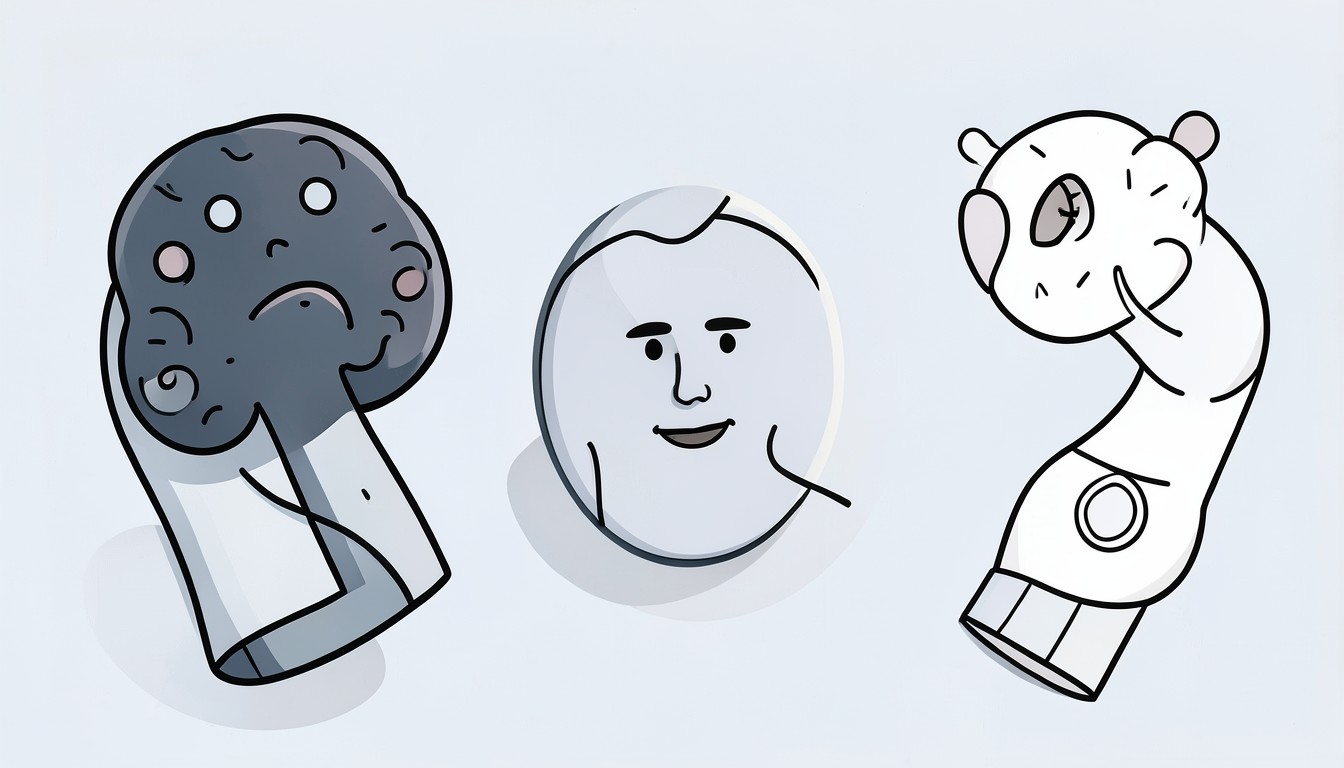
Some types of loss announce themselves only in retrospect. Too late. You reach for a word in your mind, and it has gone. You try to navigate a city you once knew without your phone and realize the map has quietly dissolved from your internal landscape. You want to watch a movie and open Netflix relying on recommendations. Small disappearances, barely registered. But multiply those moments, widen the frame from one person to an entire civilization, and the urgency of this moment becomes apparent. What happens to human beings when machines do the thinking for them?
Is Memory a Cognitive Function?
Memory is a cognitive function. That sounds like a tautology until you sit across from a room of engineers who treat biological recall as a legacy data store waiting to be deprecated. Students, journalists, and product managers casually talk about the brain as if it were a faulty hard drive that simply needs external cloud backups.
In cognitive psychology, memory is not a passive filing cabinet where discrete facts sit untouched until summoned. It is an active, constructive architecture for encoding, storing, consolidating, and retrieving information across sensory, working, and long-term structures. Does cognition include memory? It doesn't just include it; memory is the bedrock upon which every other cognitive act rests. Without memory, reasoning has no raw material, problem-solving has no context, and decision-making floats in a vacuum.
When we talk about cognitive offloading—delegating the storage or computation of information to external tools like calendars, calculation apps, and generative AI—we are tinkering with this delicate biological machinery. For decades, offloading was relatively benign. Writing a grocery list on a scrap of paper doesn't fundamentally alter your neural architecture. But offloading complex synthesis, real-time navigation, and iterative reasoning to large language models is an entirely different beast. We aren't just shifting a shopping list; we're outsourcing the very friction that forces neural adaptation.
Examples of Cognitive Offloading and Mental Atrophy
Consider everyday examples of cognitive offloading. You no longer memorize phone numbers because your smartphone stores your contacts. You no longer retain spatial layouts because turn-by-turn GPS directions dictate every turn in real time. You no longer synthesize research papers because an LLM can summarize thirty pages in three seconds.
Individually, each of these conveniences feels like a triumph of efficiency. Collectively, they trigger what Walther (2026) terms agency decay—an incremental loss of independent capacity that operates quietly until you need mental strength and find it absent.
Daniel Kahneman famously mapped the two speeds of human thought: System 1 (fast, intuitive, effortless) and System 2 (slow, deliberate, analytical). Recent psychological research points to a troubling third mode: artificial thinking. Rather than sliding between fast intuition and slow analysis, we increasingly default to delegating the cognitive act itself to a machine. We absorb the output as if it were our own reasoned conclusion.
The danger lies in the feedback loop. System 1 builds on accumulated experience. System 2 builds on the willingness to struggle through difficult problems and tolerate the discomfort of being wrong. When algorithms step in to bypass that struggle, you miss the repetitions required to build robust cognitive resilience. You never develop the stamina for deep analysis because the machine handled the friction. The brain operates much like muscle tissue: use it or lose it.
Cognitive Health Technologies and the Hybrid Tipping Zone
We are currently navigating what researchers call a Hybrid Tipping Zone. The transition from curious AI exploration to routine integration, and finally to dependency, happens so gradually that most people don't notice the shift until their independent capacity has eroded significantly.
It's tempting to view cognitive health technologies purely as therapeutic interventions or productivity boosters. But when software is engineered to maximize user engagement rather than cognitive sovereignty, the incentives misalign with human flourishing. Every small replacement of human judgment by machine judgment makes sense in isolation. Companies automate to cut operational costs. Governments adopt algorithmic governance for administrative speed. Attention platforms optimize for clicks.
No one votes for disempowerment. It accumulates through millions of frictionless micro-decisions. And unlike historical technological shifts—like the calculator or the printing press—generative AI replaces the generative process itself. It doesn't just calculate numbers; it drafts arguments, synthesizes perspectives, and makes narrative choices.
Preserving Cognitive Sovereignty in an Automated World
If cognitive erosion operates like muscle atrophy, the remedy isn't Luddite withdrawal from technology. You can't un-invent large language models, nor should you want to. The challenge is structural and intentional.
We need to move beyond passive reliance toward active engagement. That means carving out deliberate spaces in your daily workflow where you do the hard thinking first—before opening an AI prompt or checking a navigation app. It means drafting your own outlines, struggling with your own prose, and forcing your working memory to hold conflicting hypotheses without immediately outsourcing the synthesis.
Cognitive advantage in the coming decade won't belong to the person who offloads the most tasks to a machine. It will belong to the individual who knows precisely when to engage the tool and when to protect the biological friction that keeps their own mind sharp. Memory and cognition are use-it-or-lose-it systems. Guard them accordingly before the quiet atrophy becomes permanent.