
The 2 A.M. Social Post-Mortem
It is 2:14 in the morning. The ceiling fan is a hypnotic blur. You are wide awake because your brain has decided to run a high-definition, frame-by-frame replay of a conversation from last Tuesday. Specifically, a half-aborted joke that died in the elevator. You check the replay. You isolate the frame where your colleague micro-flinched. Then you run it again. It feels urgent, like running the simulation one more time will somehow compile a cleaner output. It won't. You can't rewrite past runtime data. But your brain doesn't care about the rules of linear time; it just wants to fix what it perceives as broken code.
We all do it. And usually, we beat ourselves up for doing it, assuming it is just high anxiety or some sort of defect in our emotional design. But the systems engineering view of the human brain tells a very different story. Your brain is not trying to embarrass you. It isn't dragging you through this late-night cringe session to torture you. It is running a diagnostic. It's trying to extract software updates from a system crash so you don't repeat the error next time (Beachboard, 2026).
The Brain as a Predictive Model
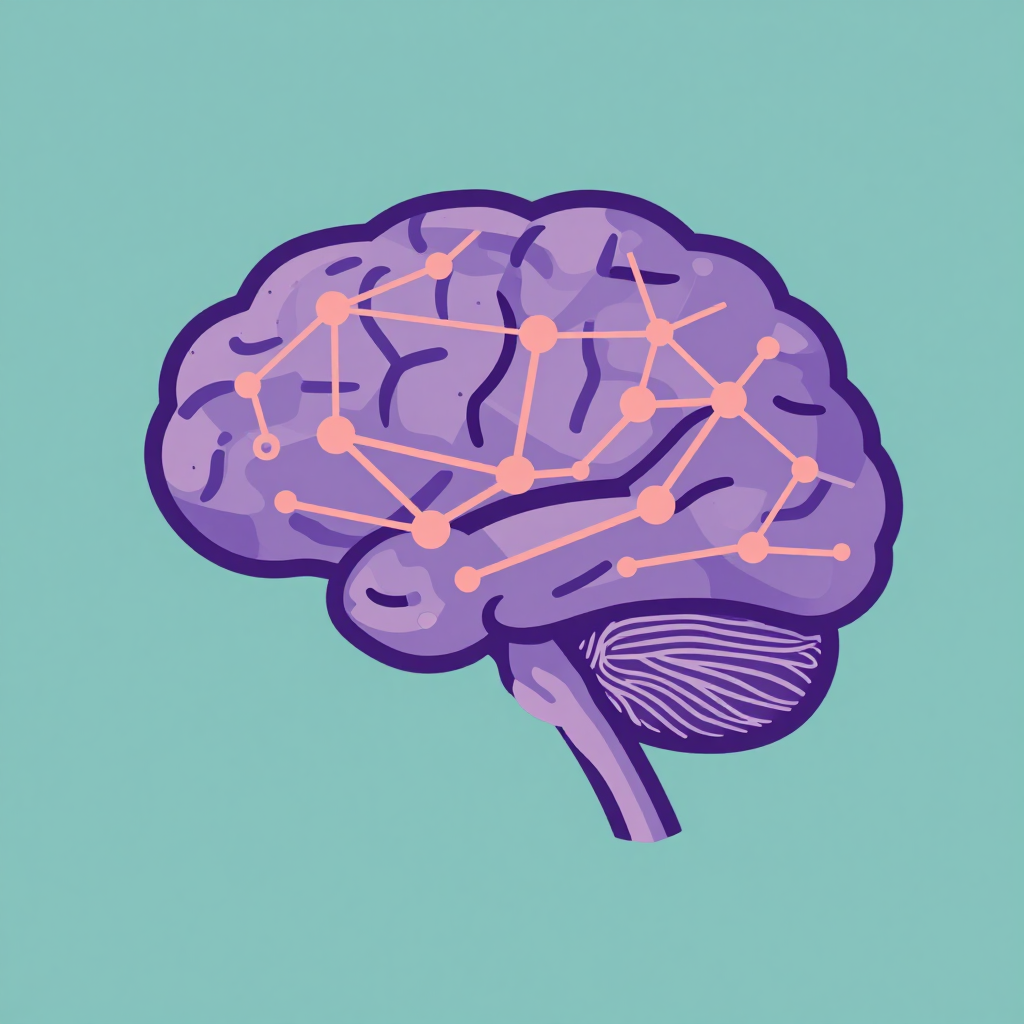
We have this flat, linear idea of memory. We think of it like an old filing cabinet. You pull out a folder, read the invoice of what happened, and slide it back. But neuroscientists have spent decades proving that this isn't how human gray matter operates. Memory is not a dusty archive of historical transactions. It is a highly active predictive simulation machine (Raichle, 2015).
Your brain's main job is survival. And in the modern world, survival is almost entirely social. Keeping your position in the tribe means reading cues, anticipating needs, and maintaining alignment. When you hit a conversational snag—an awkward silence, a joke that fell flat, a perceived slight—your brain registers it as a system anomaly. A glitch in the social compiler.
To prevent that glitch from happening again, the predictive engine goes to work. It pulls up the memory of the conversation and treats it like training data. The brain asks: What did I miss? Why did they look away? How do I adjust the weights of my predictive model so I don't trigger this error at the next meeting? It is an active calibration process. Every awkward moment is just raw telemetry. It's data to help you calculate better steps when you are back in the field tomorrow. In contrast, synthetic systems face their own attention limits, as explored in our analysis of synthetic attention bottlenecks.
The Zeigarnik Effect: Social Operations
In 1927, psychologist Bluma Zeigarnik noticed something strange while sitting in a busy Berlin café. The waiters had phenomenal memory for unpaid bills. They could tell you exactly who ordered the Wiener Schnitzel, who wanted their coffee black, and who was waiting for their strudel. But the second the bill was paid? The memory evaporated. It was wiped clean from their local cache (Zeigarnik, 1927).
This is the Zeigarnik effect: your working memory keeps unfinished tasks active because your cognitive processing unit demands closure.
When a social interaction goes smoothly, your brain considers the ticket closed. It archives the transaction. But when a conversation feels unresolved—when you don't know if your friend took your humor the wrong way, or you left a critical point unmade in a project review—the ticket stays open. There is no final confirmation. There is no handshake protocol.
Because the system doesn't get that 'completed' signal, the unresolved conversation stays in active memory. It sits there, taking up background processing cycles. When your daily life slows down in the evening, the system notices this open ticket and yanks it back to the foreground. You rehearse what you should have said because the brain is desperately trying to write a patch for an open-ended transaction. You want closure, and your brain thinks it can simulate its way to a resolution (Zeigarnik, 1927).
Why Everything Gets Louder at Night: The DMN
During the day, you have external scripts to run. You are answering emails, driving through traffic, cooking dinner, or keeping up with Slack. Your attention is bound to the external environment. Your executive control network is holding the steering wheel. But when you lie down in a dark room at 2:00 a.m. and turn off the lights, the sensory inputs drop to zero. The external scripts terminate.
This is when the Default Mode Network (DMN) boots up (Raichle, 2015).
The DMN is a large-scale brain network that activates when you are not focused on the outside world. It is the seat of self-reflection, autobiographical memory, and future planning. It is your brain's background planning committee. It meets when the office is quiet to review the day's events and build simulations of what might happen next.
But the DMN has a major design flaw: it doesn't know when to shut down. Left to own devices, the DMN will run the same negative feedback loops over and over. Psychologists call this unproductive loop rumination (Nolen-Hoeksema et al., 2008). While the DMN might be responsible for nighttime rumination, objective measures of fatigue like our report on saliva-based testing can provide insights into how sleep deprivation impacts our ability to manage those loops. Instead of extracting a useful lesson, the DMN gets stuck in a recursive loop, checking the same broken variables without executing a resolution. It is like an infinite loop running on a server, consuming resources, draining your battery, and leaving you exhausted by sunrise.
Debugging the Loop: Rumination vs. Reflection
There is a massive difference between useful reflection and destructive rumination. Reflection is active debugging. You look at the code, identify the bug, write a patch, and move on. It is constructive (Watkins, 2008). Rumination is just reloading the crashed page hoping it magically displays the correct layout. It does not.
When you ruminate, you are cataloging your flaws without any path to correction. You ask passive, unconstructive questions: Why do I always say stupid things? Why am I so awkward? These questions have no actionable answers. They just spiral into self-doubt.
To break the cycle, you have to force the DMN to switch states. You need to transition the system from passive simulation to structured processing. If the brain keeps replaying the event because it is trying to learn, you must actually give it the lesson it wants. You must extract the single, concrete takeaway from that awkward social exchange. If you realized you sounded too abrupt in that email, the lesson isn't 'I am bad at communication.' The lesson is 'Next time, I will spend two minutes reviewing the tone of my replies before clicking send.' Once the lesson is compiled, the system can finally close the open ticket (Nolen-Hoeksema et al., 2008).
Closing the Loop: The Power of Cognitive Offloading
How do you physically stop your brain from running these midnight scripts? You have to flush the cache.
The most effective tool we have for this is expressive writing (Pennebaker & Smyth, 2016). When you keep the replay in your head, it remains an unstructured, chaotic simulation. The thoughts bounce around the DMN, gaining momentum and triggering and retriggering your nervous system's stress responses.
By writing it down on paper (or typing it out in a simple text file), you force your consciousness to organize the experience. You have to translate abstract feelings and chaotic replays into linear, physical syntax. Writing signals to your brain that the data has been securely saved to disk. The working memory can unload it.
James Pennebaker's decades of research show that translating emotional upheaval into structured narrative actually dampens the activity of the brain's alarm center (Pennebaker & Smyth, 2016). It tells the DMN: The loop is closed. We have isolated the lesson, documented the recovery protocol, and saved the record. You can safely clear this from the running memory buffer.
So next time you are staring at the ceiling at 2:00 a.m., do not try to fight the replay. Do not try to force yourself to 'just sleep.' The system is in an active loop and will not let go. Instead, get up, grab a pen, and write down these three things:
- What happened: Write down the raw, objective events of the awkward interaction. No catastrophizing. Just the facts.
- The lesson learned: Write down the single, actionable thing you would do differently in the future.
- The commit signal: Explicitly tell yourself, 'The file is saved. I'm closing the ticket.'
It sounds simplistic, but it is standard systems hygiene. Give the predictive engine the data it is looking for, secure the lesson, and let your DMN finally go offline for the night.