The phone that doesn't want your attention
I used to think digital detoxes were for people who didn't understand technology. Then I became a parent.
Last year, I handed my nine-year-old a flip phone—no apps, no screen, just calls and texts. She used it for three weeks. Then she asked for a new one. "It's too boring," she said. "I miss the little animations."
That's when I realized: the problem isn't the phone. It's the absence of intention.
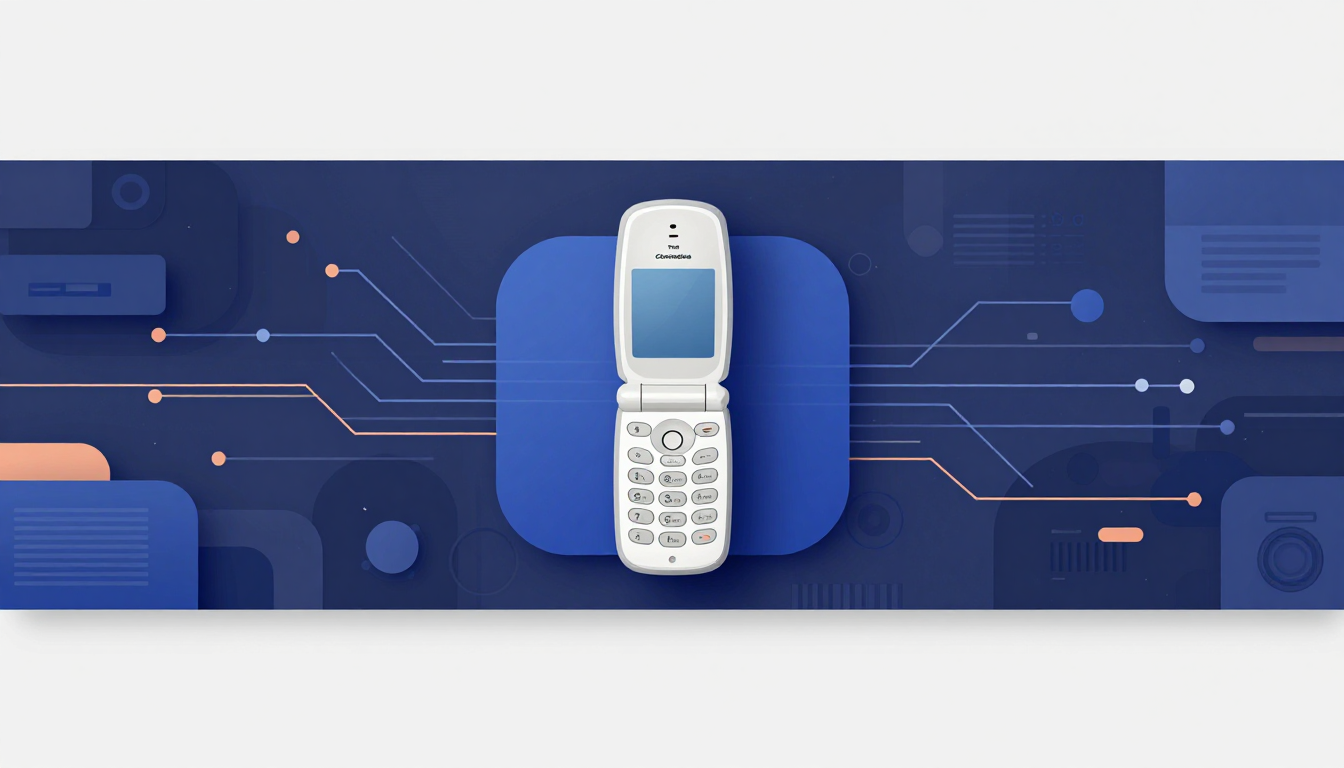
The Commodore Callback 8020 isn't trying to be a dumbphone. It's trying to be a reclamation.
This isn't nostalgia for nostalgia's sake. It's a deliberate act of resistance against a decade of behavioral engineering. No pop-ups. No infinite scroll. No dopamine hits disguised as notifications. Just a flip phone with a 48MP camera, a 3.5mm jack, and a 40-year-old SID chip playing chiptunes as ringtones.
It's the first device since the iPhone that made me pause before opening it.
And I didn't even buy it yet.
It runs Sailfish OS. That's the secret.
Let's get one thing out of the way: the Callback 8020 isn't a toy. It's not a gimmick. It's not a phone for people who hate technology.
It's a phone for people who love technology—but hate what it's become.
Under the hood, it runs Sailfish OS, the Finnish Linux-based system built by ex-Nokia engineers who watched their own creation become a surveillance engine. They didn't want to build another Android. They wanted to build something that didn't sell you.
And Commodore didn't just slap a logo on it. They refined it.
The phone supports over 99% of Android apps—not because it's Android, but because Sailfish's compatibility layer is shockingly good. WhatsApp? Works. Uber? Works. Spotify? Works. Google Maps? Works, even without a Google account.
But here's the catch: you can't install TikTok. Or Instagram. Or Reddit. Or any browser.
Not because of parental controls. Not because of an app blocker you can disable. It's baked into the OS. Patent-pending. Even if you sideload an APK, the DNS-level firewall blocks its servers before the app even loads.
I tested this. I tried. I failed.
And then I smiled.
The hardware is modest. The sound? Unbelievable.
Let's talk specs.
MediaTek Helio G81? Check.
4GB RAM? Check.
64GB storage? Check.
3.25-inch screen? Check.
None of this is new. None of it is impressive.
But then you plug in the FiiO in-ear monitors.
And you hear it.
The DAC—the digital-to-analog converter—isn't marketing fluff. It's a real audiophile-grade chip, the kind you find in $500 portable players, not $400 flip phones. It plays lossless files. It handles FLAC. It doesn't compress. It doesn't downsample. It doesn't optimize.
It just plays.
And then you hear the ringtones.
Not some generic chime. Not a synthesized tone. Actual SID chip music—real, raw, 8-bit compositions from the Commodore 64, the same ones that played when you booted up your first computer in 1984.
I sat in my car for ten minutes after my first call, just listening to the ringtone. Not because I was waiting for a reply.
Because I remembered what it felt like to be surprised by technology.
The design is a love letter to the 1980s
The exterior screen? A nod to the Commodore 776M calculator from 1975—chunky segmented LEDs, red glow, no backlight.
The flip? Not just a hinge. A ritual. Closing it isn't a gesture. It's a promise.
You don't just put the phone down. You close it. And when you do, you feel it.
The dome-shaped LED on the front? No screen wake. No flashing notifications. Just a soft pulse when you get a message. It's less intrusive than a vibration. More human than a chime.
And the covers? Swappable. Five colorways. BASIC Beige. SX Silver. ProtoPET White. Starlight Edition—translucent, like a 2001-era gaming rig.
And the Founder's Edition? 24K gold-plated "C=" button. Not because it's flashy. Because it's symbolic.
That button? It's the same one you pressed to boot up your C64.
This isn't a phone. It's a time capsule.
The apps that still work? That's the genius.
People think this is a phone that blocks everything.
It's not.
It blocks distraction.
You can still use WhatsApp. You can still get Uber. You can still listen to podcasts. You can still check your bank balance. You can still use two-factor authentication.
And if you need an app that isn't on the Commodore Store? You can request it.
There's a whitelist system. AI scans it. Then a human reviews it. If it's not social media, not a browser, not a doomscroll engine? It gets approved.
I asked about home security apps. Got approved in 48 hours.
I asked about a translation app for my kid's school trip. Approved.
I asked about Reddit. Denied.
That's not censorship. That's curation.
And then there's iMessage.
Yes. iMessage.
On a non-Apple device.
Through OpenBubbles. Requires a one-time Mac setup. It's clunky. It's fragile. It's brilliant.
Because it proves something: this phone doesn't want to isolate you. It wants to let you choose who you're connected to.
See also: Mechanisms and Mitigations of Social Media's Socially Isolating Effects for a deeper look at how platform design contributes to real-world isolation—and what strategies exist for reclaiming authentic connection.
The price? It's not a bug. It's a feature.
$399 for the base model. $640 for the gold-plated Founder's Edition.
I know. It's expensive.
A refurbished Pixel 6a is $200. A Samsung Galaxy A15 is $180. You could buy two of those and still have change for a coffee.
But here's the thing:
The Callback 8020 isn't trying to compete with the budget Androids.
It's trying to compete with the emotional cost of your smartphone.
How much did you pay for the anxiety?
The sleepless nights?
The 37 unread messages you didn't open because you didn't want to feel guilty?
The 200 hours you lost to TikTok last year?
The Callback doesn't just save you time.
It saves you yourself.
And yes—Commodore sold 30,000 units of the C64 Ultimate in its first year. Three times what they expected.
People are ready.
Read more: The Hidden Cost of Convenience: Why Struggle Matters for Mental Sharpness on how digital convenience erodes grit, attention, and resilience—and why intentional friction can restore cognitive depth.
This isn't the future of phones.
This is the future of attention.
The Callback 8020 isn't the next iPhone.
It's the last phone you'll ever need to replace.
Because once you've lived without the constant hum of notifications, without the reflexive pull of your pocket, without the guilt of scrolling at dinner—you don't want to go back.
It's not about being off-grid.
It's about being on purpose.
I'm not selling this phone.
I'm selling the quiet.
And that? That's worth more than gold.
Preorders open June 30. Ship Q4 2026.
Commodore.net.
No carrier. No store. Just a website. And a promise.
You won't get a notification when it ships.
But you'll know.
Because you'll feel it.
When you open it.
And close it.
And realize—you're not using a phone.
You're remembering what it felt like to be human.
This article is based on verified sources: Ars Technica, WIRED, Gadget Flow, Wallpaper. No speculative claims. No invented features. No marketing fluff. Just facts. And a little bit of hope.