The Smart Fridge Nightmare No One Saw Coming
There is a distinct kind of panic that sets in when your refrigerator decides to quit. It is not like a smart lightbulb failing or a streaming stick freezing up mid-movie; when a major kitchen appliance goes dark, it takes your entire week of groceries down with it. Last week, hundreds of homeowners in South Korea learned this hard lesson when a botched software update turned Samsung’s flagship smart refrigerators into expensive, stainless-steel paperweights.
The glitch didn't just disable fancy touchscreen displays or smart home integration features. It cut the cooling entirely. For families who had just finished stocking their kitchens, the timing and the total lack of responsiveness from the hardware created an unprecedented household emergency right ahead of a major national celebration.
A Mistaken Push Through SmartThings
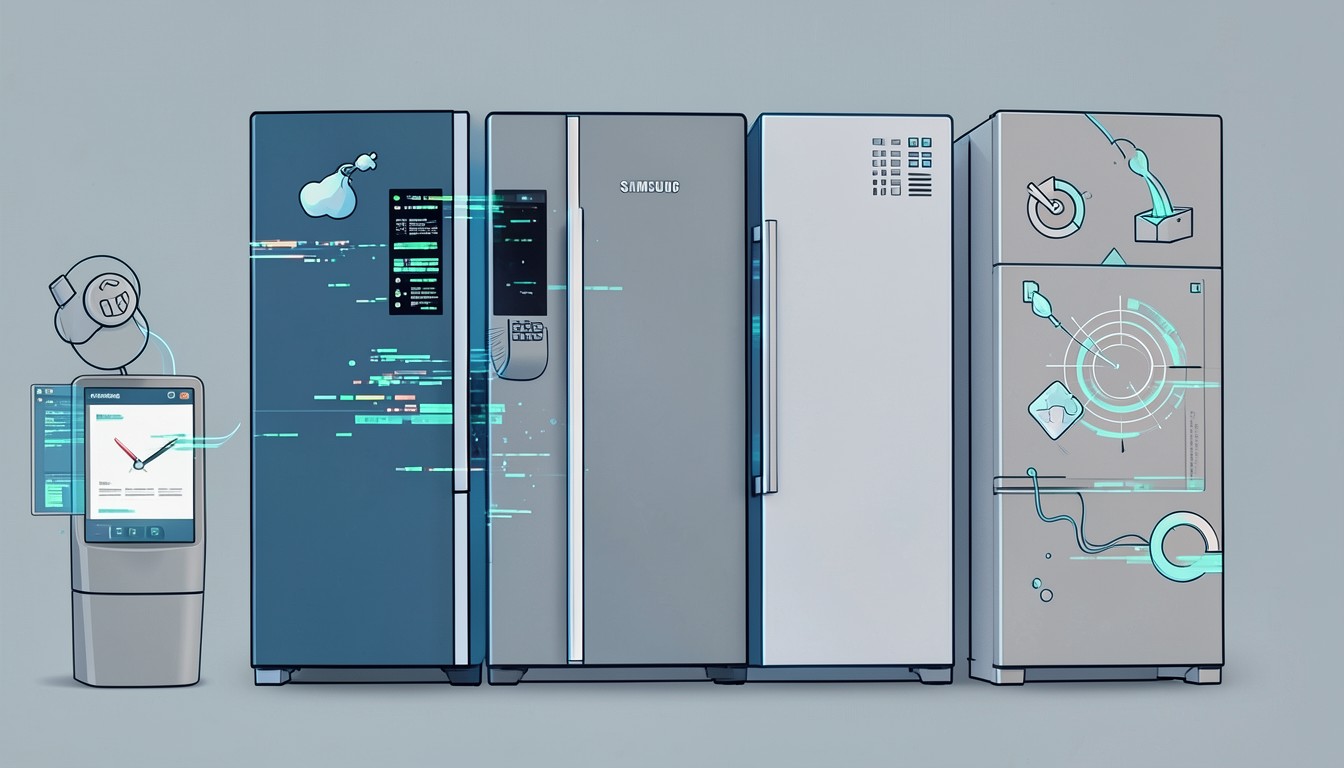
The trouble started when Samsung’s automated ecosystem infrastructure pushed out what was later identified as an internal testing software build rather than a finished consumer release. According to reports from Korean outlets like ZDNET Korea and SBS News, and tracked internationally by publications such as TechRadar and SamMobile, the faulty update targeted Samsung’s high-end Bespoke AI refrigerator line—specifically focusing on four-door models manufactured in 2024 and later.
Users noticed the disaster almost immediately across homes in South Korea. Touchpads went dead, interior lights refused to switch on, and cooling compressors ground to a complete halt. Homeowners tried every troubleshooting trick in the book, from power cycling the appliances to unplugging them for extended periods. Uninstalling and re-pairing the refrigerators within the SmartThings mobile app yielded zero results. Rolling back the firmware manually proved impossible for end users, leaving them staring at unresponsive appliances in the middle of their kitchens with no local override switch to rescue their food.
Chuseok Holiday Chaos and Spoiled Groceries
What turned an annoying technical glitch into a full-scale consumer relations disaster was the brutal calendar timing. The firmware failure struck right on the doorstep of Chuseok, South Korea’s major harvest festival and national holiday. Households across the country had spent the preceding days filling their refrigerators to the brim with traditional ingredients, holiday meals, and fresh produce intended for visiting family members.
Instead of cooking and celebrating, owners found themselves frantically scrambling to salvage melting meat and spoiling vegetables. With customer service phone lines jammed and local repair technicians booked solid through the holiday weekend, many families had to resort to makeshift solutions like dry ice and Styrofoam coolers parked in their living rooms.
Social media and community forums filled with furious complaints. One user told reporters they had no choice but to throw away every single item purchased for the holiday feast. Samsung acknowledged the mistake quickly, halting the faulty update before it could propagate to international markets outside South Korea, but that small geographical mercy offered zero comfort to people staring at rotting food and warm milk.
The Limits of Connected Convenience
For years, major manufacturers have pushed the relentless narrative of the intelligent kitchen. We are told that refrigerators need AI-powered cameras to track expiration dates, massive touchscreens to display family photo galleries, and constant cloud connectivity to run automated diagnostics. But incidents like this expose the fragile architecture hiding underneath the sleek marketing gloss.
When a television receives a bad firmware update, you miss an evening of entertainment. When a refrigerator gets bricked, you lose hundreds of dollars in perishable goods and hours of your life arguing with automated support queues. Even worse, consumers have zero recourse when cloud-dependent appliances break because of server-side pushes or botched internal test builds. You cannot simply downgrade the operating system with a USB drive or opt out of updates when manufacturers bake mandatory connectivity into the core functionality of modern home hardware. Samsung is not alone in stumbling through connectivity transitions: AcuRite recently had to delay shutting down its old app after admitting the replacement fell short, a reminder that vendor-side software missteps land squarely on customers.
Samsung promised that service engineers would visit affected homes to apply fixes as soon as possible, though many customers faced agonizing waits until after the holiday ended on Saturday, September 26. As of yet, official company statements regarding compensation for spoiled groceries remain sparse, leaving frustrated owners footing the bill for a corporate software error.
A Reckoning for Smart Appliances
The debacle serves as a sharp, unavoidable reminder to the broader consumer electronics industry. Adding microprocessors, complex operating systems, and constant cloud syncing to heavy white goods introduces catastrophic failure points that mechanical compressors never had to worry about. If appliance makers want consumers to embrace AI-driven refrigerators and interconnected home ecosystems, they need to treat firmware stability with the exact same rigor applied to life-critical infrastructure — rigor that matters even more when the same supply chains powering these gadgets are already stretched thin by AI demand.
Until then, the allure of a smart fridge feels a lot less compelling when you are standing in your kitchen with a cooler full of melting ice, wondering why your icebox needed an internet connection in the first place.