

The Cybercrime Factory Scaling Past Everyone
Let’s cut to the chase. TA4922 isn’t a typical threat actor operation. It’s an assembly line. When Proofpoint reported that this Chinese-speaking group has run more unique campaigns than any other tracked cybercrime actor since April, it wasn’t an anomaly. It’s their business model. They are scaling, and they are doing it with corporate-level logistics. They’ve got writers producing regional phishing lures, developers spinning out custom loaders, and operators targeting victims directly on chat platforms.
For security teams, the threat is no longer about high-end zero-days. It's about sheer, exhausting volume. They are betting that if they fire enough rounds, your defenses will eventually choke on the noise. And they aren’t wrong. As a risk analyst, I look at this and see a massive exposure problem: when a threat group operates at this tempo, standard endpoint alerts become a blur, and that’s exactly when they slip under the fence.


The Rapid Shift From Europe to a Global Stage
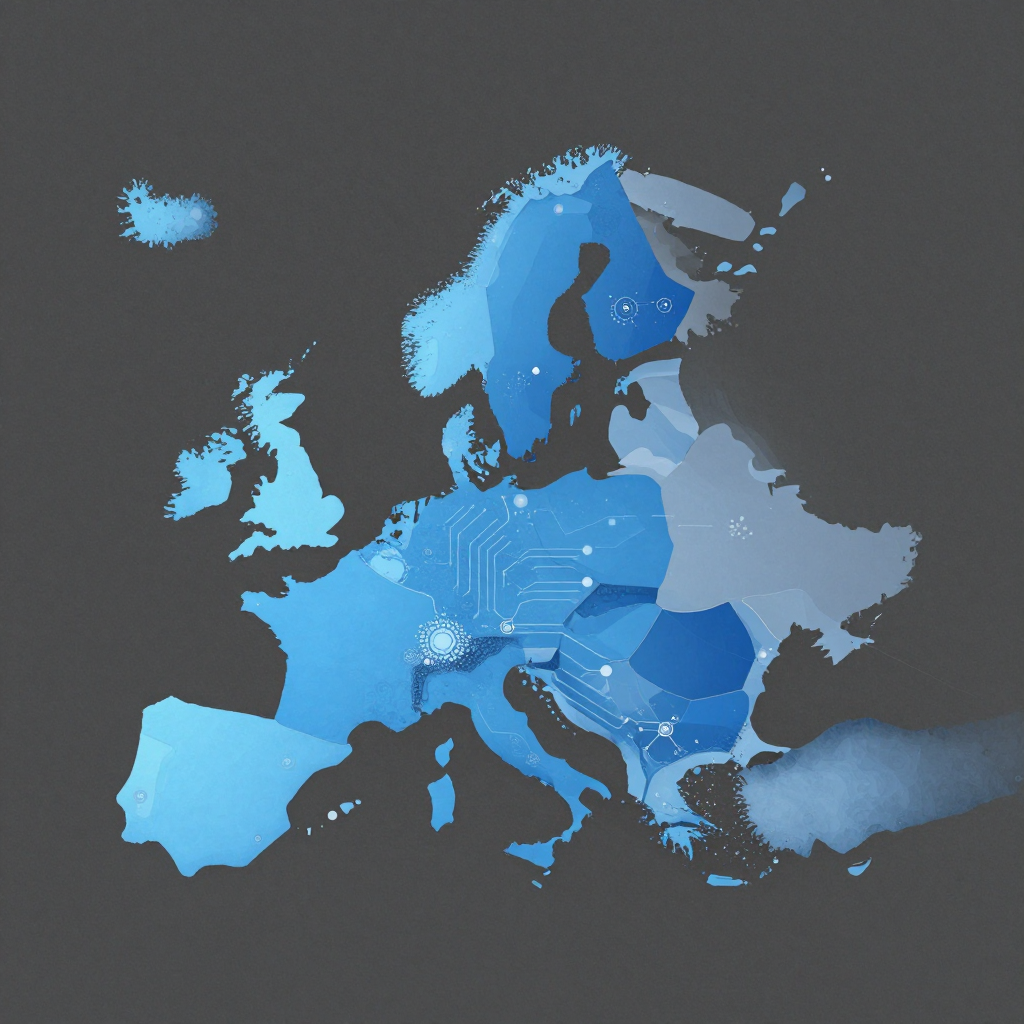
It started in East Asia. Then they moved heavily into Europe—hitting organizations across Germany, Italy, and the UK. Now? They’ve gone global. We are seeing campaigns in South Africa, Southeast Asia, and beyond. This isn't just about expanding their IP pools. They are adapting their entry vectors to match the local culture of the organizations they target.
They aren't just copy-pasting Google Translate templates anymore. They are utilizing localized tax forms, VAT filings, and invoices. In the UK, they impersonate government registry services. In Germany, they send fake compliance audits. When an attacker localizes their lure this well, it bypasses the primary human defense line. Employees click because the email looks exactly like the state tax notice they get every quarter. And once they click, the clock starts ticking on your GDPR window.

Inside Atlas RAT and Its Anti-Analysis Tricks
Once they are in, they drop the Atlas backdoor. Let’s be clear: Atlas RAT isn’t a masterpiece of coding. It’s practical. It handles the usual dirty work: keylogging, grabbing screenshots, capturing audio and webcam feeds, stealing files, and downloading secondary payloads. But what makes it annoying is how it handles analysis.
Rather than using complex evasion math, Atlas RAT runs simple, almost crude checks to see if it’s being watched. It looks for Microsoft Defender Application Guard registry keys. It checks for the "CExecSvc" service. It calls home with the OS UUID. If it senses a sandbox, it shuts down. These checks aren't high science, but they work because they waste your analysts' time. While your team spends an hour troubleshooting why their sandbox failed to detonate a sample, the attacker is already moving laterally through the network.
SyncFuture in Germany and RomulusLoader's Playbook
To get Atlas RAT onto endpoints, TA4922 relies on RomulusLoader. This loader uses classic tricks like process hollowing and shellcode injection to slip under legacy antiviruses. But the strange part is what they deploy alongside it. In campaigns targeting German organizations, Proofpoint found RomulusLoader dropping SyncFuture.
For context, SyncFuture is a remote monitoring tool popular in China. Dropping it on a corporate network in Munich makes no sense at first glance. Why use a tool that points directly back to your home turf? It’s a deliberate layer of noise. They want defenders to see it and think it is just a routine, low-risk administrative tool rather than an active intrusion. By utility-jacking legitimate remote access tools like AnyDesk and SyncFuture, they blend into daily traffic, making containment a nightmare.
SilentRunLoader's Python-Based Chrome Theft
While RomulusLoader targets the system root, SilentRunLoader goes after the credentials. It’s a python-based loader and information stealer that TA4922 has been deploying against organizations in the UK and Southeast Asia. It doesn't write complex registry persistence. It doesn't need to.
Instead, SilentRunLoader has one job: scan Google Chrome’s directories, pull out data, and steal session cookies, passwords, and saved credentials. Once it has them, it exfiltrates them and leaves. By the time your audit logs notice a suspicious session from a new IP, the cookies are already sold or used to log into your cloud portal. Under CCPA and GDPR, this is the worst-case scenario. It isn't just a system breach; it is a direct compromise of customer PII, meaning you have to start drafting breach notifications immediately.
Skipping Firewalls via Teams and WhatsApp
But the real shift in TA4922's playbook is how they reach users. They aren't just relying on email. They are bypassing corporate mail gateways altogether by sending lures over WhatsApp, the LINE messenger, and Microsoft Teams.
Think about your current stack. You probably spent millions on email gateways that scan every incoming link. But what scans the PDF sent to an employee’s corporate WhatsApp? Nothing. What checks the link dropped in a shared Microsoft Teams channel? Often, very little. TA4922 is exploiting the trusted channel bias. People assume that if a message comes through Teams or WhatsApp, it has already been vetted. It’s a massive blind spot that turns every chat window into an unmonitored entry point.
AI Scaffolding and the Speed of Malware Iteration
How does a threat actor keep up this campaign volume? Proofpoint's analysts suspect TA4922 is using Large Language Models (LLMs) to write their code. They found clear indicators in their loader code: placeholder variables, structured comments, and coding syntax typical of AI generation.
They aren't letting an AI run their operations, but they are using it as a force multiplier. If your developers can write boilerplate code five times faster with an LLM, so can theirs. They use AI to generate the skeleton of a new loader, tweak it manually to bypass specific signatures, and push it live within hours. This dynamic malware development completely breaks the old model of signature-based defense. If the hash of the loader changes with every single campaign because an LLM rebuilt the wrapper, blocklists are useless.
The Supply Chain and GDPR Exposure
Here is where my risk hats come on. This isn't just a technical headache; it’s a compliance disaster waiting to happen. TA4922’s high-volume tactics are perfect for targeting secondary vendors—marketing agencies, small accounting partners, and logistics firms that have direct access to your network.
If they steal session cookies via SilentRunLoader from a third-party vendor, they don’t need to hack you; they just use the vendor’s active session to walk into your Salesforce or your databases. Once that customer PII leaves your control, the regulatory clock starts. Under GDPR, you have exactly 72 hours to report the breach once you become aware of it. If the breach occurred through a third-party vendor who took two weeks to realize they were compromised, you are already violating compliance timelines. We have already seen similar patterns in operations like the JDY Botnet, where threat actors mapped out targeted networks for future entry via compromised edge devices.
Four Actions to Take on the Defensive Side
If you want to survive this volume of campaigns, you have to change your detection posture.
First, restrict public-facing remote management tools. If your team is running AnyDesk or if you see SyncFuture traffic on a network where it shouldn't be, terminate the connection immediately. Second, monitor Chrome's Local State file access. Set up EDR rules that flag any non-standard process—especially Python scripts—trying to read or copy files from local browser directories. Third, audit your chat applications. If employees are using WhatsApp or LINE on corporate devices, you must implement endpoint protection tools that can scan links and files within those applications. Fourth, enforce strict session lifetime limits. If a session token is stolen, make sure it expires within hours, not weeks, to minimize the window of opportunity.
The Blurred Line Between Espionage and Crime
Finally, we need to address the elephant in the room. Proofpoint points out that the capabilities of the malware used by TA4922 could easily be used by or sold to state-sponsored espionage groups. The boundary between state actors and cybercriminals has entirely dissolved.
A group like TA4922 operates as a service provider. They collect credentials, build access pathways, and test loaders. If a state actor needs access to an industrial firm in Germany, they don’t need to spend months planning. They can buy the access from TA4922. In the risk calculation, this means every minor financial cyber incident must be treated as a potential gateway for espionage. The factory is open, they’re scaling, and your vendors are the target list.