The Ancient Alarm That Never Turns Off
Here's a fact that rearranges how you see yourself: the part of your brain that fires when you're left out of the group chat is the same part that fires when you stub your toe. Not adjacent. Not similar. The same.
For roughly two hundred thousand years of human existence, being cast out meant dying. Not metaphorically. Literally. A lone human on the Pleistocene savanna was a dead human within days. So evolution built a surveillance system into our neural hardware — a system so insistent, so loud, that it co-opts the body's own pain circuitry to make the message impossible to ignore. You've been excommunicated from the tribe. Fix this. Now.
That system still runs. It runs when a colleague leaves you off a meeting invite. It runs when a friend's story disappears from your feed before you see it. And in an era where artificial intelligence increasingly mediates our social interactions, the impact of AI on human psychology is not just a question of screen time or algorithmic bias. It's a question of whether we're accidentally weaponizing two-hundred-thousand-year-old survival machinery against ourselves.
Social Pain Lives in the Same Neighborhood as Physical Pain
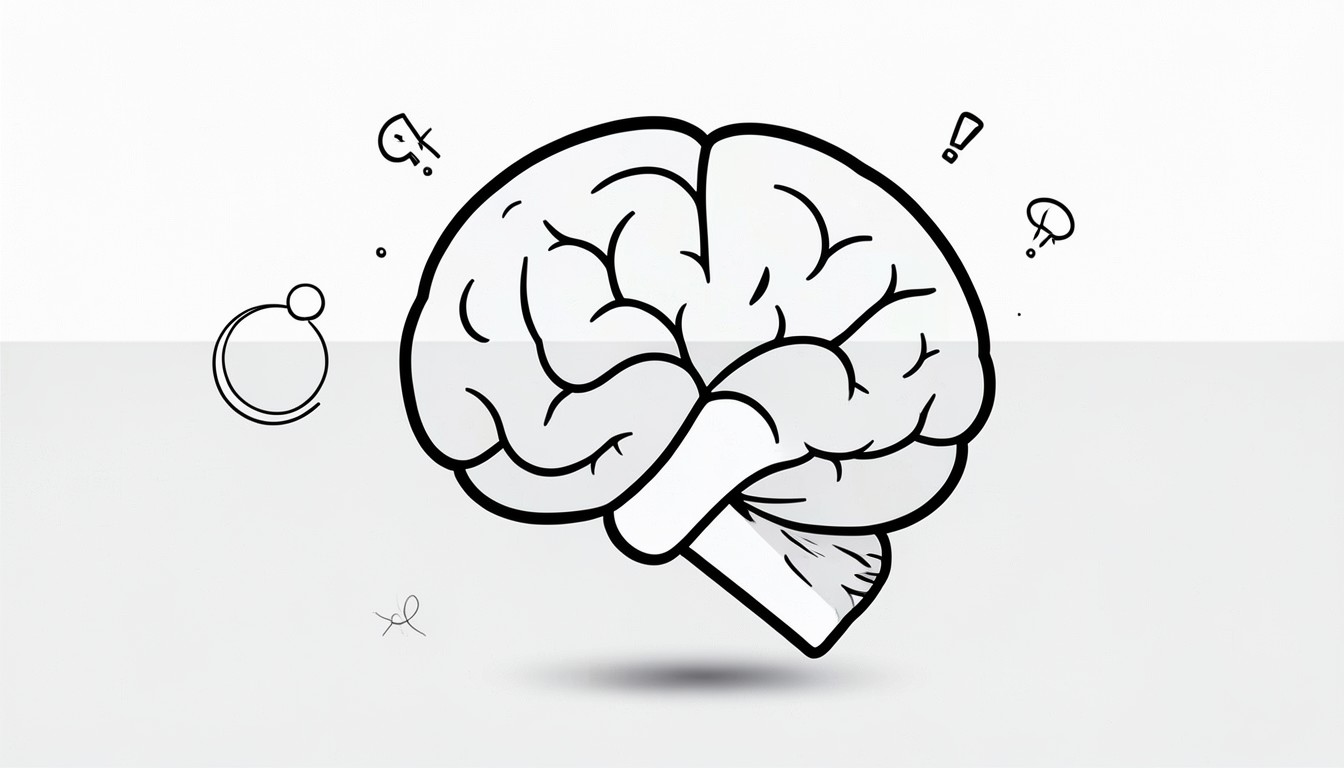
The neuroscience here is genuinely striking. When researchers put people in fMRI machines and induced social exclusion — simple things, like telling participants they wouldn't be included by others in a group task — the anterior cingulate cortex and the anterior insula lit up. These are the same regions that process the unpleasantness of physical pain. Not the sensory location of pain. The suffering component. The "this is awful and I want it to stop" component.
This isn't a metaphor. The brain genuinely doesn't fully distinguish between "I was excluded" and "I was hurt."
What makes this finding more unsettling is what happens when the system malfunctions. Researchers studying psychopathic traits found that the insula — that social-pain hub — shows unusual connectivity patterns in highly psychopathic individuals. These people register their own social pain normally. They feel rejection. But the empathic mirror that should let them feel another person's social pain? It short-circuits. The ventral striatum, a pleasure region, actually activates when they imagine others suffering.
So the machinery that makes us abide by group rules, that makes us feel a pang of guilt when we've wronged someone, can be selectively damaged. We're not dealing with a philosophical abstraction here. We're dealing with a biological enforcement mechanism.
Guilt and Shame: Two Enforcers, Two Different Jobs
Most people use "guilt" and "shame" interchangeably. They shouldn't. The distinction matters enormously for understanding how social control operates inside your own skull.
Guilt says: you did something bad. It's action-oriented, specific, and it points toward repair. You violated a norm, and guilt is the internal nudge that says go fix it, apologize, make amends. It's the emotion evolution designed to keep you in the group after a transgression.
Shame says: you are bad. It's identity-level. Global. It doesn't point toward a specific corrective action because it's not about what you did, it's about what you fundamentally are. And this is where things get dark. Shame operates largely below conscious awareness. It doesn't announce itself as "I am now feeling shame." It arrives disguised as a vague dread, a background hum of inadequacy, a sense that you don't belong and something is wrong with you that you can't quite name.
When innate needs for safety and belonging go unmet, and they go unmet constantly in modern life, these emotions intensify. The guilt gets stickier. The shame gets louder. And because shame hides, you often end up treating its symptoms (anxiety, withdrawal, people-pleasing) without ever addressing the actual source.
Recognizing and naming the underlying emotional state is the first move toward responding adaptively rather than reactively. Sounds simple. Isn't.
How AI Reshapes the Social Playing Field
This is where the conversation about AI's impact on human psychology gets genuinely interesting, not in the sci-fi sense, but in the evolutionary-mismatch sense.
Our brains evolved to navigate small groups. Fifty people, maybe a hundred. Everyone knew everyone. Exclusion was rare, dramatic, and unambiguous. You were either in the tribe or you weren't.
What does artificial intelligence do to this landscape? It creates an environment of continuous, low-grade, ambiguous social evaluation at a scale our nervous systems never evolved to handle. Algorithmic feeds decide who sees your posts. AI-moderated platforms decide what counts as a violation. Predictive text and AI-assisted communication mean you're always performing for an audience that includes machines, not just humans.
And the machine doesn't forgive the way a human forgives. A human might notice you snapped at them, decide you were tired, and let it go. An AI system doesn't have a memory of your good character to draw on. It just flags the violation. This isn't consciousness being cruel, it's the absence of the social cushioning that our ancestral groups provided.
When I think about what AI means for human psychology, I keep coming back to this: we've built systems that can simulate exclusion at industrial scale, and we've pointed them at brains that evolved to treat exclusion as a mortal threat. That's not a technology problem. That's a biology problem wearing a technology costume.
The Question Nobody's Answering Well
"Can AI understand human psychology?" is the wrong question. AI doesn't need to understand anything to exploit what your brain does understand. The systems that keep us scrolling, that make us feel left out, that trigger our shame-dread loops, they don't model your inner life. They model behavioral outputs that correlate with engagement. And they're good enough at that to keep the ancient alarm system ringing.
What is AI in psychology, really? In this context, it's a new kind of social environment. One that our guilt-and-shame machinery cannot parse correctly. One that triggers tribal-exclusion responses to things that aren't actually tribal exclusions at all.
Rewiring the Response, Not the Wiring
Here's some genuinely hopeful neuroscience: the insula, that social-pain hub, appears to be malleable. Emerging evidence suggests that loving-kindness meditation and mindfulness practice can reshape insular structure and function over time. Not by accident or by wishful thinking. By actually changing the tissue.
You can't delete the ancient alarm. You're not going to reach back into your genome and remove the two-hundred-thousand-year-old fear of being thrown to the wolves. But you can change how much volume the alarm has. You can learn to notice the shame-dread and name it. You can build a relationship with your own social pain that doesn't require you to solve a tribal crisis that isn't actually happening.
The AI environment isn't going away. But understanding that your nervous system is running ancestral software in an unprecedented social landscape? That's not nothing. That's actually a pretty good starting point.
Source
- Guilt and shame are felt more intensely when one's innate needs for safety and belonging are unmet.
- Emotions like shame and guilt operate in the subconscious, instilling an underlying dread and feeling of inadequacy.
- Recognizing and identifying underlying emotional states allows individuals to respond more adaptively.
Source
- Social exclusion activates the anterior cingulate cortex and anterior insula, the same regions that process the unpleasantness of physical pain.
- Psychopathic traits show unusual connectivity in the insula; high-psychopathy individuals register their own pain but fail to mirror others' social or physical pain.
- Mindfulness and loving-kindness meditation can reshape insular structure over time.