What the Cloud Actually Is
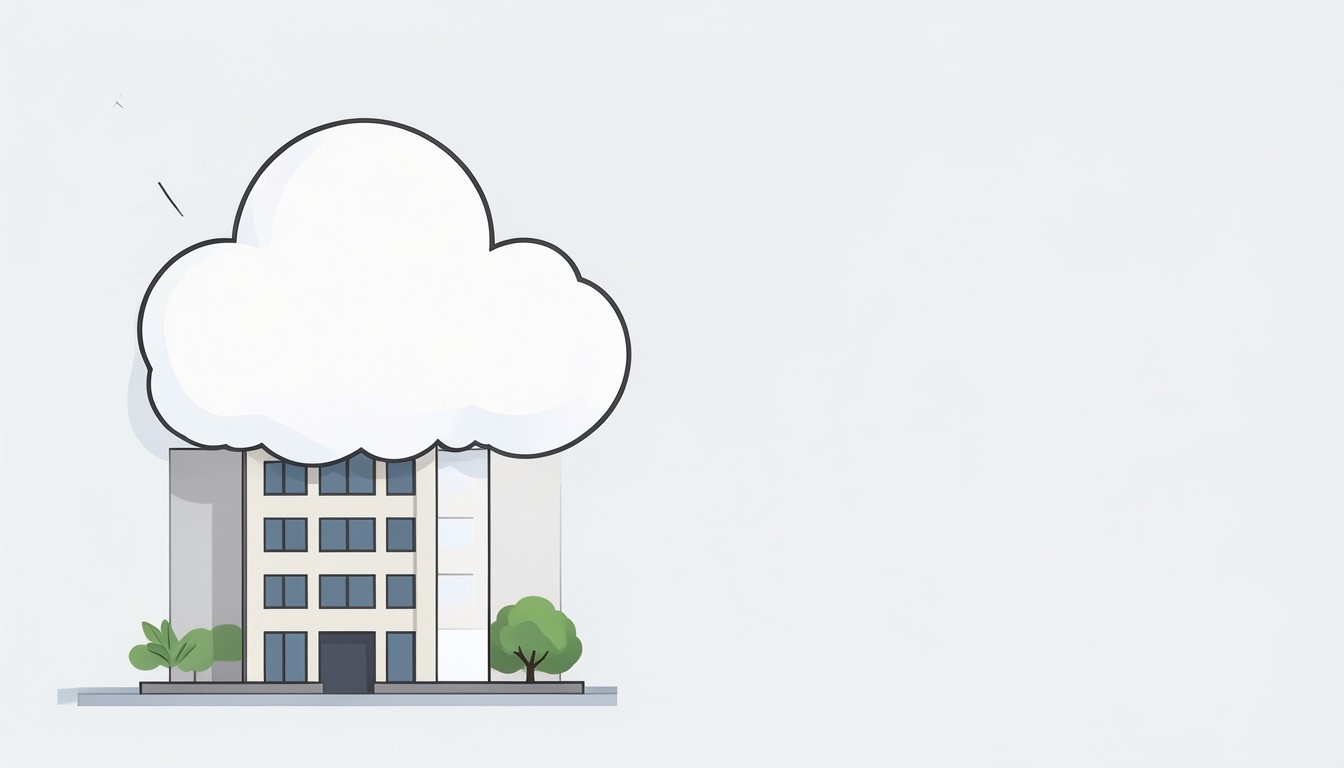
There is no cloud. There never was. What people mean when they say their photographs, spreadsheets, or applications are “in the cloud” is that those files sit on a server in a building—a real building with concrete floors, industrial HVAC units, backup diesel generators, and security guards who check badges at 2 AM.
When you stream a movie or pull up a shared document on your laptop, your device isn't communicating with thin air. It is establishing a TCP connection across local routers and fiber-optic cables that terminates at a hyperscale data center operated by Amazon Web Services, Microsoft Azure, Google Cloud, or another provider. The metaphor of the cloud was cooked up by marketing teams to soften the cold, heavy reality of server racks and electrical substations into something ethereal and comforting. But beneath the fluffy name lies the largest industrial infrastructure humanity has ever assembled.
Inside the Physical Data Center
Walk into a modern hyperscale facility and you won't hear the gentle hum of magic. You will hear a wall of sound—thousands of cooling fans screaming to keep high-density server racks from melting.
These buildings are optimized for three things above all else: power, cooling, and connectivity. A single facility can draw as much electricity as a small city, backed up by rows of V12 diesel generators that fire up automatically if the grid stutters. Inside the server halls, standardized server blades sit neatly in racks, packed with multicore processors, dense memory arrays, and solid-state storage drives.
Networking gear connects these racks with redundant 100-gigabit or 400-gigabit links. Across continents, submarine cables and terrestrial fiber trunk lines carry packets from Oregon to Dublin, or from Tokyo to Frankfurt, in milliseconds. The cloud is global, but its anchor is anchored in reinforced concrete and silicon.
Virtualization: The Magic Trick of the Cloud
If physical servers are the bricks, virtualization is the architecture that makes the cloud useful. Without virtualization, running software meant buying a dedicated physical machine for a single operating system and hoping it didn't sit idle 80% of the time.
Virtualization introduces a hypervisor—a thin layer of software that abstracts physical hardware. A single physical server can host dozens of virtual machines (VMs), each running its own operating system and isolated applications. If one VM needs more RAM or CPU cores, the hypervisor shifts resources on the fly without touching physical screws.
This abstraction enables multi-tenancy: multiple unrelated customers share the same physical hardware without ever seeing or interfering with each other's data. Security boundaries are enforced at the hypervisor and network virtualization layers, ensuring strict isolation between tenants.
Service Models: IaaS, PaaS, and SaaS
Cloud computing isn't a monolith; it is layered into distinct service models that shift responsibility between the customer and the provider.
- Infrastructure as a Service (IaaS): This is the raw computing bedrock. Providers rent out virtual servers, storage blocks, and networking primitives. You manage the operating system, middleware, and application runtime, while the provider maintains the physical facility, hardware, and hypervisors.
- Platform as a Service (PaaS): Here, the provider manages the underlying infrastructure and operating systems, handing developers a managed runtime environment—such as a managed database, a Kubernetes cluster, or a serverless function runner. You write code; the platform handles scaling, patching, and availability.
- Software as a Service (SaaS): The entire stack is managed by the vendor. You open a browser or an API client and use the application directly, whether it's an enterprise CRM, an email client, or a collaborative spreadsheet.
Deployment Models: Public, Private, and Hybrid
Organizations choose how to deploy their workloads based on security, compliance, and cost constraints.
The public cloud relies on shared infrastructure owned by third-party providers. It offers near-infinite elasticity—you can spin up ten thousand servers in ten seconds and spin them down just as fast.
Private cloud infrastructure, by contrast, is dedicated entirely to a single organization. It can sit on-premises in the company's own data center or be hosted in a private partition of a public cloud provider's facility. Highly regulated sectors like banking and defense often rely on private or sovereign clouds to maintain absolute control over data residency.
Most modern enterprises settle on a hybrid or multi-cloud strategy, distributing workloads across public hyperscalers, private datacenters, and edge locations to balance cost, performance, and risk.
The Economics and Realities of Cloud Scale
The primary pitch of cloud computing is agility. Instead of forecasting hardware needs three years in advance and sinking capital expenditure into server hardware that depreciates in a closet, companies treat infrastructure as an operating expense. You pay for what you use, down to the second or the gigabyte.
Yet, as organizations mature, they discover the hidden bills of convenience. Unmanaged cloud spending can spiral rapidly when developers leave idle test environments running or provision oversized instances. This realization has fueled the rise of FinOps—cloud financial management—and occasional waves of cloud repatriation, where mature companies pull predictable workloads back to leased data centers to slash long-term margins.
Ultimately, understanding the cloud means stripping away the marketing fog. It is a triumph of engineering, logistics, and distributed systems—a global machine humming 24 hours a day to keep our digital lives in motion.